How Real-Time Data Insights Can Transform Business Decision Making
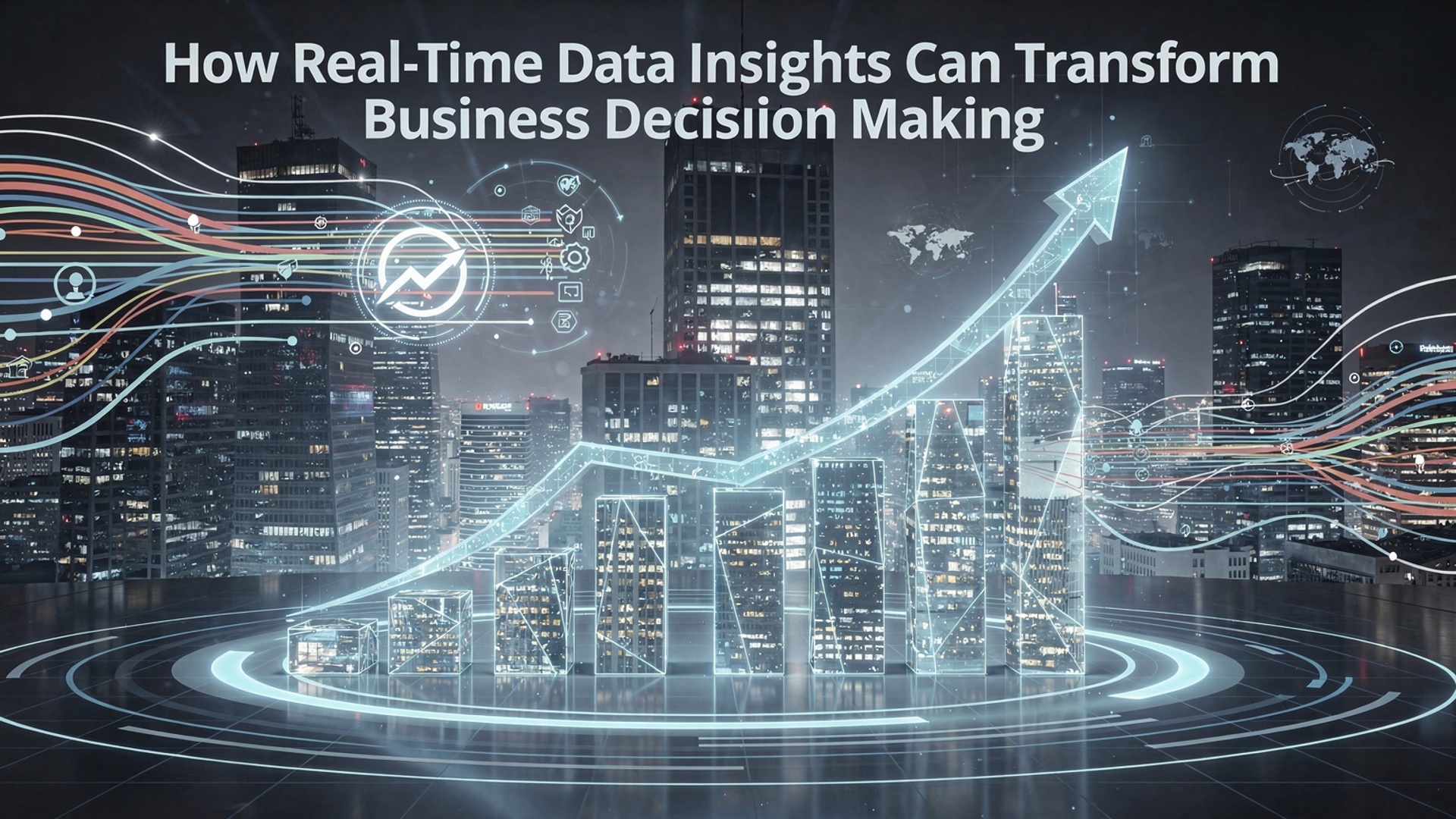
Imagine a world where businesses can instantly adapt to market shifts, anticipate customer needs and outpace competitors – all powered by real-time data insights. With data now flowing from IoT devices, social media. transaction systems, organizations are no longer limited to static reports or outdated metrics. Instead, technologies like AI-driven analytics and cloud computing enable decision-makers to access actionable insights as events unfold. For example, in retail, real-time inventory tracking allows companies to prevent stock outs and dynamically adjust pricing based on demand fluctuations. Similarly, financial institutions leverage instant fraud detection systems to protect assets and enhance customer trust. As industries embrace this shift, real-time data insights are becoming the backbone of agile decision-making, offering not just reactive solutions but predictive capabilities that redefine how businesses operate. In today’s fast-paced environment, leveraging these insights isn’t just a competitive advantage – it’s a necessity for long-term success.
Understanding Real-Time Data Insights
- Definition: Real-time data insights refer to the immediate analysis and interpretation of data as it is generated or collected. This allows businesses to access actionable insights without delays, enabling quick decision-making.
- Key Components:
- Data Streaming: The continuous flow of data from various sources such as IoT devices, social media platforms, transactional systems. sensors.
- Analytics Engine: Sophisticated algorithms that process raw data into actionable insights in real time.
- Visualization Tools: Dashboards and graphical representations that make data insights easily digestible for decision-makers.
How Real-Time Data Insights Work
- Data is collected from multiple sources, including online transactions, customer interactions and device sensors.
- The data is processed through high-speed analytics platforms, such as Apache Kafka or Spark Streaming.
- Patterns, anomalies, or trends are identified using machine learning models or predictive analytics.
- Insights are presented in user-friendly dashboards or reports to enable prompt decision-making.
Comparison: Real-Time Data Insights vs Traditional Data Analysis
| Aspect | Real-Time Data Insights | Traditional Data Analysis |
|---|---|---|
| Data Processing Speed | Instantaneous | Requires hours, days, or even weeks |
| Decision-Making | Immediate and dynamic | Retrospective and static |
| Use Cases | Fraud detection, real-time inventory management, personalized marketing | Quarterly reporting, historical trend analysis |
| Technologies Involved | Streaming platforms, AI models, real-time dashboards | Data warehouses, batch processing, spreadsheets |
Technologies Powering Real-Time Data Insights
- Data Streaming Platforms: Tools like Apache Kafka, Amazon Kinesis. Google Pub/Sub enable the seamless flow of real-time data.
- Machine Learning Models: Algorithms designed to detect patterns, forecast trends. classify data instantly.
- Cloud Computing: Platforms such as AWS, Microsoft Azure. Google Cloud provide the scalability and computational speed required for processing vast amounts of real-time data.
- Visualization Software: Tools like Tableau, Power BI and QlikSense allow companies to transform raw data into actionable insights for business leaders.
Applications of Real-Time Data Insights in Business
- Fraud Detection: Financial institutions use real-time analytics to identify suspicious activities and mitigate fraud risks instantly.
- Customer Experience: Retailers leverage real-time insights to personalize customer interactions, recommend products. optimize marketing campaigns.
- Supply Chain Optimization: Logistics companies monitor inventory levels and delivery routes in real time to ensure smooth operations and reduce costs.
- Healthcare Monitoring: IoT-enabled medical devices provide real-time patient data to healthcare professionals, enabling quicker diagnoses and treatments.
Benefits of Real-Time Data Insights in Decision Making
- Speed: Enables businesses to react to market changes and customer needs instantly.
- Accuracy: Reduces errors caused by outdated or incomplete data.
- Efficiency: Automates decision-making processes, saving time and resources.
- Competitive Edge: Provides businesses with actionable insights to outpace competitors in dynamic markets.
Challenges and Solutions for Implementing Real-Time Data Insights
- Data Overload: Managing vast quantities of data can overwhelm systems. Solution: Implement scalable cloud platforms to handle data effectively.
- Integration Complexity: Real-time systems need to integrate with existing tools and workflows. Solution: Employ middleware solutions or APIs for seamless integration.
- Security Risks: Real-time data systems are vulnerable to breaches. Solution: Use robust encryption, access controls. secure transmission protocols.
- Cost: Building real-time systems can be expensive. Solution: Adopt pay-as-you-go cloud models to reduce upfront costs.
Conclusion
Harnessing real-time data insights is no longer a luxury for businesses; it’s a necessity in today’s rapidly evolving digital landscape. By leveraging real-time analytics, companies can not only react promptly to changing market dynamics but also predict trends and forge proactive strategies. For instance, tools that integrate machine learning are now refining marketing efforts, delivering personalized experiences and even improving inventory management. The transformative power of real-time data lies in its ability to offer clarity amidst the noise of big data. The key takeaway here is to start small – invest in scalable technologies that align with your business goals and focus on integrating systems that offer actionable data. Don’t forget the human element; data insights are most impactful when paired with creative problem-solving and strategic thinking.
More Articles
How AI-Powered Analytics Is Changing Marketing Strategy
How to Overcome Big Data Challenges with Effective Strategies
Must-Have AI Tools for Content, SEO. Performance Marketing
How API Publishing Powers Automated Content at Enterprise Scale

FAQs
What is real-time data and why does it matter?
Real-time data refers to details that’s available instantly as events occur. It matters because it helps businesses respond quickly to changes, improving decision-making and agility.
How can real-time insights improve business decisions?
They provide up-to-date insights, helping businesses make informed choices, identify trends early. avoid relying on outdated or inaccurate data.
Can real-time data help identify customer preferences?
Yes, it can. By analyzing customer behavior as it happens, businesses can grasp preferences, tailor offerings. enhance customer satisfaction.
Is real-time data only useful for big companies?
Not at all. Real-time data is valuable for businesses of all sizes because it offers actionable insights that can improve efficiency and profitability.
What tools are available to gather real-time data?
There are many tools, like analytics platforms, dashboards, IoT devices. APIs, which businesses can use to collect and examine real-time data.
How does real-time data support better forecasting?
By constantly updating and analyzing live data, businesses can make more accurate predictions and adjust plans based on current trends or shifts in the market.
Are there risks or challenges with using real-time data?
Yes, challenges include ensuring data accuracy, managing large amounts of data. having the right tools and expertise to interpret it effectively.
Can real-time insights help reduce operational costs?
Definitely! Real-time data can pinpoint inefficiencies, optimize processes. improve resource allocation, which can lead to lower costs.