Data Analysis Automations vs Manual Processes Which is More Efficient
In today’s rapidly evolving data-driven world, the efficiency of data analysis is a critical success factor for businesses across industries. As organizations face increasingly complex datasets, the debate between leveraging data analysis automations and relying on manual processes has never been more relevant. Automation tools powered by artificial intelligence and machine learning are transforming how data is processed by delivering faster insights, reducing human error and enhancing scalability. For instance, platforms like Python-based pandas or cloud services such as AWS Glue allow for real-time data handling at a scale manual processes cannot match. Meanwhile, the traditional manual approach, though thorough, struggles to keep up with the sheer volume and velocity of modern data streams. With recent advancements in automation technologies, the balance between precision and speed is shifting, prompting organizations to reevaluate their strategies for staying competitive. Understanding these tools’ capabilities is essential to navigating this technological shift effectively.
What Is Data Analysis Automation?
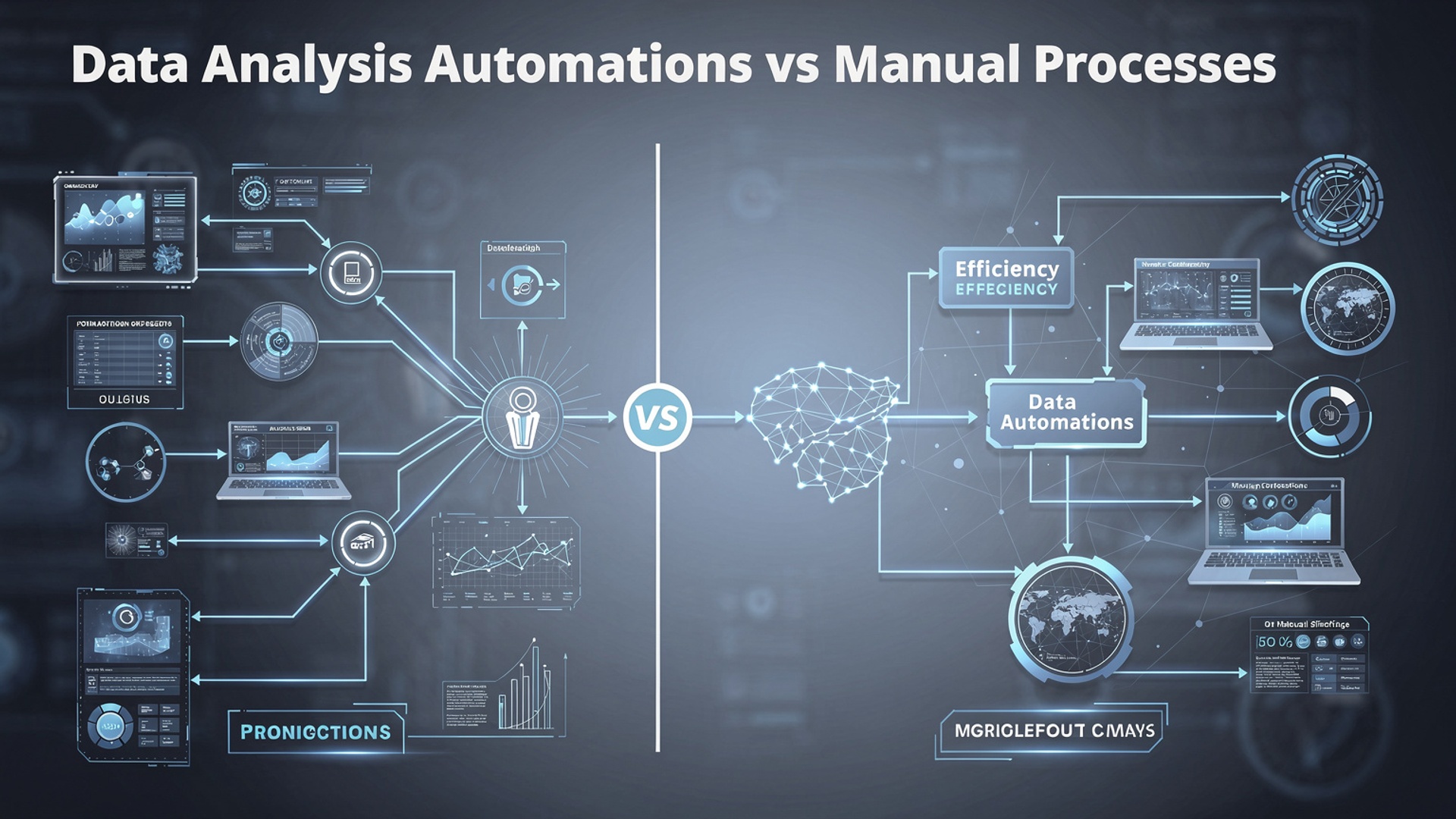
Data analysis automation refers to the use of advanced technologies and software tools to streamline and execute data processing, analysis and reporting tasks with minimal human intervention. These automation tools leverage technologies such as machine learning, artificial intelligence (AI) and rule-based algorithms to process vast amounts of structured and unstructured data efficiently.
What Are Manual Data Analysis Processes?
Manual data analysis processes involve the traditional, hands-on approach to collecting, sorting, analyzing and interpreting data. Analysts use tools like spreadsheets, statistical software, or database management systems but perform all operations themselves. This method requires a significant amount of human effort and expertise.
Key Components of Data Analysis Automations
- Automated Data Collection
- Automations pull data from multiple sources (e. g. , databases, APIs. files) without manual intervention.
- Preprocessing
- Advanced tools clean, normalize and prepare raw data for further analysis automatically.
- Analytics Algorithms
- AI and machine learning models identify patterns, correlations and trends within datasets.
- Visualization Tools
- Automated visualization engines produce graphs, charts and dashboards that give insights at a glance.
- Reporting
- Automatically generated reports provide summaries and actionable insights.
Comparison of Efficiency: Automations vs Manual Processes
| Aspect | Data Analysis Automations | Manual Processes |
|---|---|---|
| Speed | Automations process data in real-time or at high speeds, reducing turnaround time. | Manual processes are time-consuming and highly dependent on the analyst’s pace. |
| Accuracy | High accuracy due to reduced human error in tasks such as data entry. | Prone to mistakes, especially in repetitive or large-scale tasks. |
| Scalability | Scalable for large datasets, making it ideal for big data analysis. | Limited scalability due to resource constraints. |
| Cost | Initial investment in tools may be high and long-term costs are lower. | Lower upfront costs and human labor makes it expensive over time. |
| Flexibility | Automations are less flexible in handling unexpected or unstructured data. | Highly flexible, allowing for customization and adaptation to unique datasets. |
Technologies Powering Data Analysis Automations
- Artificial Intelligence (AI)
- AI algorithms examine data intelligently and predict outcomes based on historical trends.
- Machine Learning (ML)
- ML models learn from data and improve their accuracy over time.
- Natural Language Processing (NLP)
- NLP tools assess textual data to extract insights.
- Cloud Computing
- Cloud platforms facilitate scalable and fast processing of large datasets.
- Robotic Process Automation (RPA)
- RPA automates repetitive tasks such as data entry and validation.
Real-World Applications of Data Analysis Automations
- Marketing Analytics
- Review customer behaviors to optimize campaigns and improve targeting.
- Healthcare
- Automate diagnostic predictions using patient data and historical cases.
- Finance
- Detect fraud and predict market trends using real-time data processing.
- Supply Chain Management
- Optimize logistics and inventory using data-driven insights.
- E-commerce
- Provide personalized shopping experiences based on user data.
Common Challenges in Data Analysis Automations
- Data Quality
- Automations require high-quality data; poor data can lead to inaccurate outcomes.
- Initial Setup Costs
- Implementing automation tools can be expensive upfront.
- Lack of Flexibility
- Automated systems may struggle with unique or edge-case scenarios.
- Skill Gap
- Companies need skilled professionals to manage automation tools effectively.
- Security Concerns
- Automated systems store sensitive data, making cybersecurity essential.
When Should You Use Manual Processes?
- Exploratory Analysis
- When datasets are small and require personalized attention.
- Customization
- For unique problem-solving that requires human intuition.
- Low Budget
- When automation tools are not economically feasible.
- Unstructured Data
- For datasets that are difficult to standardize for automated tools.
- For datasets that are difficult to standardize for automated tools.
Actionable Takeaways
- Invest in data analysis automations for repetitive, large-scale tasks to save time and improve accuracy.
- Use manual processes when personalization and flexibility are critical.
- Balance automation and manual methods to optimize efficiency without compromising quality.
- Train employees to handle automation tools effectively while maintaining basic analytical skills.
- Prioritize data security and integrity when implementing automation solutions.
Conclusion
The debate between data analysis automation and manual processes highlights the ever-evolving balance between efficiency and precision. While manual processes offer valuable insights rooted in human intuition, they are often constrained by time, scalability and potential for error. On the other hand, automation leverages advanced algorithms and real-time data processing, enabling businesses to make faster, data-driven decisions with a higher degree of accuracy. For example, AI-powered analytics tools streamline complex datasets, saving businesses countless hours on repetitive tasks while uncovering patterns that might otherwise go unnoticed. As organizations increasingly lean toward automation, current trends emphasize the importance of integrating human oversight to maintain contextual understanding and ethical considerations. Ultimately, efficiency in data analysis stems from recognizing when to harness the power of technology and when to rely on human expertise. The future belongs to those who embrace innovation while maintaining a human touch, transforming data into actionable, meaningful results. As you explore automation, never lose sight of the synergy between technology and human intelligence.
More Articles
How Real-Time Data Insights Can Transform Business Decision Making
How AI-Powered Analytics Is Changing Marketing Strategy
How to Overcome Big Data Challenges with Effective Strategies
How to Overcome Common API Integration Challenges for Seamless Connectivity
How to Create Engaging Content That Captures Your Audience’s Attention

FAQs
What is data analysis automation?
Data analysis automation involves using software and tools to examine data without needing constant manual intervention.
How does automation compare to manual processes in terms of speed?
Automation is generally much faster as it eliminates repetitive tasks and processes data continuously without breaks.
Does automation reduce human error?
Yes, automation minimizes the risk of human error by following predefined algorithms and workflows.
What are the downsides of manual data analysis?
Manual processes can be time-consuming, prone to mistakes and less efficient for handling large datasets.
Is automation always the better choice over manual processes?
Not necessarily. Automation is great for repetitive tasks. manual processes may be better for situations requiring judgment or creativity.
Can automation handle complex data analysis tasks?
Yes. it depends on the sophistication of the tools. Advanced automation software can manage complex tasks, though some may need human oversight.
Are there upfront costs with automation tools?
Yes, setting up automation tools can involve initial costs like software purchases, training and implementation.
What’s better for small projects: automation or manual work?
For small projects, manual processes might be more practical and cost-effective unless automation tools are readily available.