What Is a Content Strategy Framework and How Does It Guide Better Decisions
Modern content teams face fragmented channels, AI-accelerated production and shifting search behaviors, making ad hoc decisions costly and inconsistent. A content strategy framework provides the structured logic that connects business goals to audience needs, workflows and measurable outcomes, turning content into a repeatable system rather than a series of campaigns. For example, organizations adopting composable architectures and headless CMS platforms now use frameworks to decide what content gets modularized for reuse across web, apps and emerging AI-powered search experiences. As generative AI tools automate drafts and personalization at scale, a clear framework governs quality, voice, compliance and lifecycle management, ensuring automation supports strategy instead of diluting it. By aligning data, governance and performance signals, a content strategy framework enables faster, evidence-based decisions that keep content relevant in a rapidly evolving digital ecosystem.
Understanding the Concept of a Content Strategy Framework
A content strategy framework is a structured system that defines how content is planned, created, distributed, governed and evaluated to achieve specific business and user goals. It acts as a decision-making blueprint, ensuring that every piece of content serves a clear purpose rather than existing in isolation. In professional practice, I have seen organizations produce large volumes of content without measurable impact because decisions were made ad hoc. A content strategy framework prevents this by aligning content efforts with documented objectives, audience needs and performance metrics. According to the Content Marketing Institute (CMI), organizations with a documented content strategy are significantly more likely to report success than those without one. At its core, a content strategy framework answers four fundamental questions:
- Why are we creating this content?
- Who is it for?
- Where and how will it be delivered?
- How will success be measured?
Core Components of a Content Strategy Framework
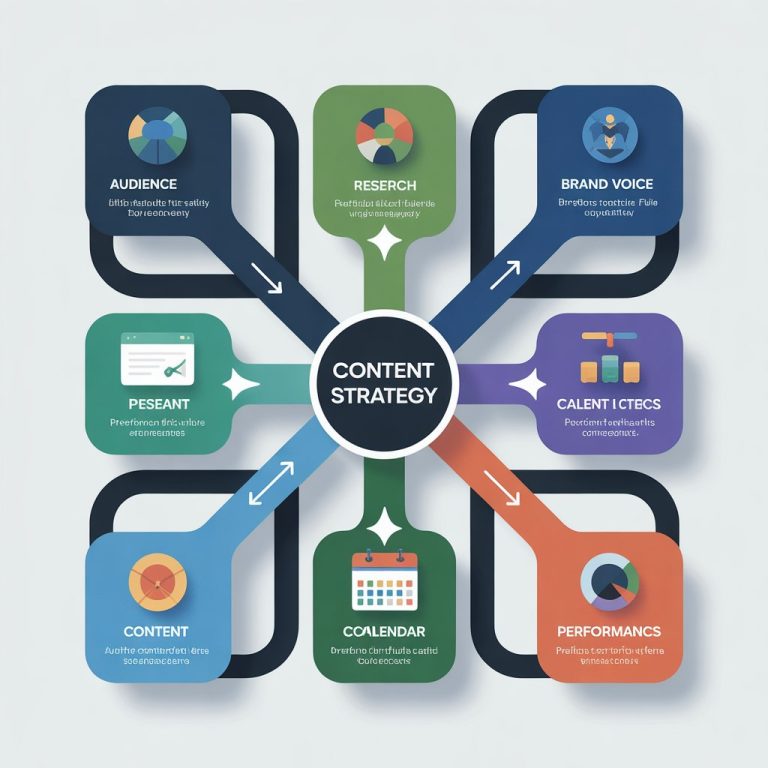
A well-designed content strategy framework is composed of interconnected components that guide decision-making at every stage of the content lifecycle.
- Business Goals
- Clear objectives such as brand awareness, lead generation, customer retention, or product education.
- Audience Research
- Documented insights into user demographics, behaviors, pain points and content preferences.
- Content Governance
- Defined roles, responsibilities, workflows and approval processes.
- Content Types and Channels
- Selection of formats (blogs, videos, whitepapers) and distribution platforms.
- Measurement and Optimization
- Key performance indicators (KPIs) and feedback loops.
These components work together to ensure consistency and scalability, particularly as teams and content libraries grow.
How a Content Strategy Framework Guides Better Decision-Making
A content strategy framework transforms subjective choices into informed decisions backed by data and documented standards. Instead of debating what “feels right,” teams can evaluate options against agreed criteria. For example, when deciding whether to launch a new blog series, the framework provides guidance by checking:
- Alignment with strategic goals
- Relevance to priority audience segments
- Availability of internal expertise and resources
- Expected performance based on historical data
In my experience working with a mid-sized SaaS company, introducing a formal framework reduced content production time by nearly 25% because fewer revisions were required and approvals followed a defined process.
Key Terms and Concepts Explained
Understanding the terminology used within a content strategy framework is essential for effective collaboration.
- Content Audit
- A systematic review of existing content to assess quality, relevance and performance.
- Content Lifecycle
- The stages content goes through, from ideation and creation to maintenance and retirement.
- User Journey
- The path users take from awareness to conversion and beyond.
- KPIs
- Quantifiable metrics such as engagement rate, conversion rate, or time on page.
The Nielsen Norman Group, a recognized authority in user experience research, emphasizes that content decisions should always be grounded in user context and intent, not just organizational preferences.
Comparison: Content Strategy Framework vs. Content Plan
While often used interchangeably, a content strategy framework and a content plan serve different purposes.
| Aspect | Content Strategy Framework | Content Plan |
|---|---|---|
| Scope | High-level, long-term | Tactical, short-term |
| Purpose | Guides decisions and governance | Schedules specific content pieces |
| Flexibility | Adaptable over time | Fixed to a defined period |
| Audience Focus | Deeply researched and documented | Applied based on framework insights |
A content plan operates within the boundaries set by the content strategy framework, ensuring consistency without limiting creativity.
Real-World Applications and Use Cases
Organizations across industries use a content strategy framework to improve efficiency and outcomes.
- Higher Education
- Universities use frameworks to align academic content, marketing materials and student support resources.
- E-commerce
- Retail brands apply frameworks to ensure product descriptions, guides and promotional content support the buying journey.
- Healthcare
- Providers rely on frameworks to maintain accuracy, compliance and accessibility.
One notable example is IBM, which has publicly discussed its structured content strategy approach to managing large-scale, multi-channel content ecosystems, as documented in industry case studies and conference presentations.
Building a Practical Content Strategy Framework
Creating a functional content strategy framework requires methodical planning rather than assumptions.
- Conduct stakeholder interviews to clarify goals.
- Perform audience research using analytics, surveys and interviews.
- Audit existing content to identify gaps and redundancies.
- Define governance models and workflows.
- Select measurable KPIs aligned with business objectives.
Below is a simplified example of how a framework might be documented internally:
Business Goal: Increase qualified leads by 20%
Primary Audience: Mid-level IT managers
Content Types: Blog articles, case studies, webinars
Primary Channels: Website, LinkedIn, email
KPIs: Conversion rate, content-assisted leads
Common Challenges and How to Address Them
Even with a solid content strategy framework, teams may encounter obstacles.
- Lack of buy-in
- Address this by presenting data and clear benefits to stakeholders.
- Inconsistent execution
- Solve through documented guidelines and training.
- Measurement gaps
- Ensure analytics tools are properly configured and reviewed regularly.
The Harvard Business Review notes that strategic frameworks fail not due to poor design but due to weak implementation and accountability. Regular reviews and updates help maintain relevance.
Actionable Takeaways for Content Teams
A content strategy framework is most effective when actively used rather than archived.
- Review the framework quarterly to ensure alignment with changing goals.
- Use it as a reference during content ideation and approvals.
- Educate new team members on its purpose and structure.
- Integrate insights from performance data to refine decisions.
When applied consistently, a content strategy framework becomes a shared language for better decisions, reducing inefficiencies and increasing the overall impact of content initiatives.
Conclusion
A content strategy framework turns intuition into informed action by giving every idea a clear purpose, audience and measurement. In practice, I’ve seen teams move faster simply by mapping content to real decisions – what to publish, where to invest and when to stop. With AI-driven insights and cloud-based planning now shaping how content performs, frameworks help you adapt without chasing every new trend.
More Articles
A Practical Roadmap to Improve Visibility in AI Search Results
10 Ways AI is Revolutionizing Data Analytics for Better Decision-Making
Data Analysis Automations vs Manual Processes
How to Boost ROI with AIO Tools for Smarter Business Decisions
Cloud Content Strategy Versus Traditional Content Planning

FAQs
What is a content strategy framework, in simple terms?
A content strategy framework is a structured way to plan, create, manage and evaluate content. It helps teams grasp why they are creating content, who it is for and how it supports business and user goals.
How does a content strategy framework help with decision-making?
It gives clear guidelines and priorities, so decisions are based on goals, audience needs and performance data rather than opinions or guesswork. This makes choices about topics, formats and channels more consistent.
What key elements are usually included in a content strategy framework?
Most frameworks include audience insights, goals, brand voice, content types, distribution channels, governance rules and success metrics. Together, these elements create a shared reference for everyone involved.
Is a content strategy framework only useful for large teams?
No, it is useful for teams of any size. Small teams and solo creators benefit because it reduces wasted effort and keeps content focused, even with limited time and resources.
How does it improve content quality over time?
By setting standards and tracking what works, the framework encourages learning and improvement. Teams can refine topics, tone and formats based on results instead of repeating the same mistakes.
Can a content strategy framework change as the business grows?
Yes, it should evolve. As goals, audiences, or channels change, the framework can be updated to stay relevant while still providing structure and clarity.
What happens if you create content without a framework?
Content often becomes inconsistent, reactive and harder to measure. Without a framework, teams may produce more content but see weaker results and unclear impact.