How to Optimize Content for Zero Click SEO and Win More Search Visibility
Understanding Zero-Click SEO
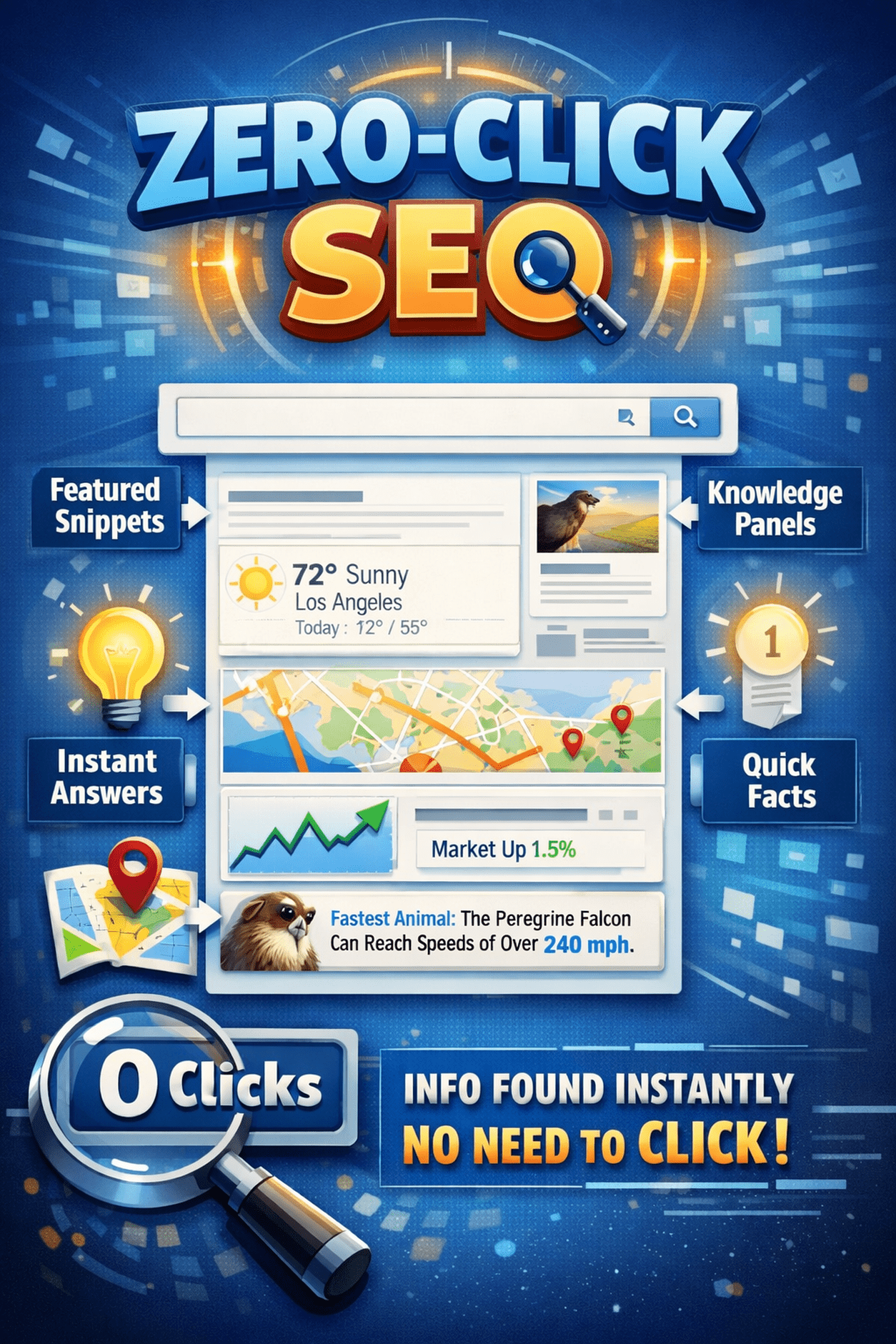
Zero-Click SEO is the practice of optimizing content for visibility directly on search engine results pages (SERPs), even when users do not click through to a website. Modern search behavior increasingly favors immediate answers, driven by features like AI-generated summaries, featured snippets, knowledge panels, and People Also Ask boxes. This shift does not diminish SEO’s value; rather, it redefines success. Visibility, authority, and brand recall now matter as much as traffic.
Industry research from SparkToro and SimilarWeb has shown that a significant portion of searches end without a click. Search engines, particularly Google, aim to resolve queries instantly by presenting structured, relevant information. In this environment, brands that provide clear, machine-readable answers can gain prominence without requiring visits.
Why Zero-Click SEO Matters Today
Search engines are evolving into answer engines. AI Overviews, entity recognition, and semantic ranking systems prioritize precision and clarity over traditional keyword matching alone. As a result, organic traffic patterns are changing. Pages may see stable or even reduced clicks while impressions and brand exposure increase.
This transformation shifts SEO strategy from purely acquisition-focused metrics toward visibility-driven outcomes. Appearing in SERP features can strengthen perceived expertise, reinforce trust, and drive future branded searches. Many organizations observe that users first encounter a brand in snippets or panels before converting later through direct or assisted channels.
SERP Features That Drive Zero-Click Behavior
Zero-click interactions are largely shaped by specific SERP components:
Featured Snippets
Concise answer boxes extracted from web content, typically answering questions directly.
Knowledge Panels
Entity-based information displays aggregating trusted data about organizations, people, or concepts.
People Also Ask (PAA)
Expandable questions offering multiple opportunities for visibility across related queries.
Local Packs
Map-driven results addressing location-based intent, often resolving practical needs instantly.
Instant Tools and Converters
Calculators, definitions, and quick utilities embedded directly into search results.
Search documentation from Google consistently indicates that structured, factual, and clearly organized content improves eligibility for these placements.
Zero-Click SEO vs Traditional SEO
Traditional SEO emphasizes rankings and click-through rates. Zero-Click SEO, by contrast, prioritizes exposure and authority within the SERP itself.
Traditional SEO focuses on driving sessions and conversions through page visits. Zero-Click SEO concentrates on impressions, brand familiarity, and answer visibility. These approaches are not competing strategies; they are complementary. High-performing content ecosystems integrate both.
Optimizing for Featured Snippets
Featured snippets remain one of the most impactful zero-click opportunities. Search engines frequently select passages that answer a query directly in a compact format.
Effective optimization practices include:
- Use question-oriented subheadings aligned with real queries
- Provide immediate, concise answers beneath headings
- Structure processes using ordered lists
- Present definitions with clear, direct language
- Maintain factual accuracy and credibility
Search engines often favor responses that fall within roughly 40–60 words, though clarity is more important than strict length.
The Role of Structured Data
Structured data helps search engines interpret context and relationships within content. While schema markup does not guarantee SERP features, it improves content comprehension and eligibility.
Commonly used schema types include:
- FAQPage
- HowTo
- Article
- Organization
- Product
Best practices emphasize alignment between structured markup and visible on-page content. Markup should describe information users can actually see, maintaining consistency and compliance.
Entity-Based SEO and Authority Signals
Zero-Click SEO is closely tied to entity recognition. Search engines increasingly evaluate concepts, brands, and people as distinct entities rather than strings of keywords.
Strengthening entity signals involves:
- Consistent brand naming and identity
- Detailed author profiles and credentials
- Mentions from reputable publications
- Accurate organizational information across platforms
Quality frameworks referenced by Google, particularly E-E-A-T (Experience, Expertise, Authoritativeness, Trustworthiness), directly influence how content is evaluated for visibility features.
Capturing People Also Ask Visibility
People Also Ask boxes represent layered opportunities to appear multiple times within a single results page. Each question functions as a potential micro-snippet.
Effective tactics include:
- Researching recurring PAA questions
- Creating targeted FAQ sections
- Answering succinctly and directly
- Maintaining semantic relevance
Tools such as Ahrefs and Semrush are frequently used to identify question patterns and intent clusters.
Measuring Success Beyond Clicks
Conventional SEO metrics alone cannot fully capture zero-click performance. A broader evaluation model is required.
Key indicators include:
- Search impressions
- Average position
- Growth in branded searches
- Assisted conversions
- Engagement across owned channels
Platforms like Google Search Console, Google Analytics 4, Moz, and Search Engine Journal frequently highlight the growing importance of visibility and brand lift metrics.
Real-World Applications Across Industries
Zero-Click SEO is not confined to a single sector. Its impact spans multiple industries:
Healthcare
Users often seek immediate definitions and symptom explanations.
Education
Concept summaries and quick-reference answers drive visibility.
SaaS
Feature comparisons and terminology clarification support decision-making.
Local Businesses
Practical details such as hours and locations resolve intent instantly.
In many cases, enhanced SERP visibility leads to increased trust and downstream engagement, even when immediate clicks remain unchanged.
Balancing Visibility and Traffic Strategies
Zero-Click SEO should enhance, not replace, traffic-driven optimization. Sustainable strategies combine visibility with deeper engagement pathways.
Effective integration includes:
- Using concise answer sections to gain SERP exposure
- Linking snippet-friendly passages to detailed resources
- Preserving high-value conversion pages
This approach allows organizations to capture attention at the moment of query resolution while still guiding users toward richer interactions.
Conclusion
Zero-Click SEO reflects the natural evolution of search behavior. As AI-generated summaries, snippets, and entity-driven features become central to discovery, success depends on answering clearly and authoritatively. Visibility itself becomes a strategic asset, shaping perception, credibility, and long-term brand growth.
Brands that adapt by structuring precise answers, reinforcing entity signals, and measuring performance beyond clicks can thrive in this landscape. Search is no longer only a traffic channel; it is a visibility engine where trust and authority are established in real time.
More Articles
A Practical Roadmap to Improve Visibility in AI Search Results
GEO vs SEO vs AEO Which Strategy Drives More Visibility for Modern Websites
Cloud Content Strategy Versus Traditional Content Planning
How Can SEO Conversion Optimization Turn Visitors Into Customers
Ethical AI Marketing Checklist to Build Trust

FAQs
What is zero-click SEO. Why does it matter now?
Zero-click SEO focuses on optimizing content so it appears directly in search results, like featured snippets, knowledge panels, or People Also Ask boxes. It matters because many users get their answers without clicking a website, so visibility and brand recognition happen before traffic.
How can I optimize content for featured snippets?
Use clear, concise answers near the top of your content, structure sections with descriptive headings and format details using lists, tables, or short paragraphs. Directly answering common questions increases the chance of being pulled into a snippet.
Does zero-click SEO mean less website traffic?
Not necessarily. While some clicks may decrease, zero-click results can increase brand awareness and trust. Users often remember the source and may return later when they need deeper data or are ready to take action.
What types of content work best for zero-click search results?
How-to guides, definitions, FAQs, comparisons and quick explanations perform well. Content that answers specific questions clearly and quickly is more likely to be featured directly in search results.
How crucial is search intent for zero-click optimization?
Search intent is critical. You need to comprehend whether users want a quick answer, a list, or a brief explanation. Matching your content format and depth to that intent increases the chances of earning zero-click visibility.
Should I still optimize title tags and meta descriptions?
Yes. Strong titles and meta descriptions help search engines comprehend your content and influence how it appears in results. Even in zero-click scenarios, they can reinforce credibility and encourage future clicks.
How can I measure success if users don’t click?
Look beyond clicks by tracking impressions, keyword visibility, branded searches and engagement trends over time. These metrics help show whether your content is gaining visibility and authority in search results.