Practical AI Deployment Best Practices Every Business Can Use Successfully Safely
AI moves from prototype to production faster than most governance and operations can keep up, which is why AI deployment best practices now define whether models create value or risk. Teams rolling out LLM-powered support bots, real-time fraud detection, or demand forecasting face the same hard problems: data drift after launch, opaque model behavior and regulatory pressure from frameworks like the EU AI Act and NIST’s AI Risk Management Framework. Modern deployments succeed by treating models as living systems, using MLOps pipelines, canary releases and continuous monitoring to catch bias, latency spikes and hallucinations before customers do. Recent advances such as retrieval-augmented generation and model cards show how transparency and performance can coexist when engineering, security and compliance align. Businesses that operationalize safety, observability and accountability early turn AI from an experiment into a dependable production asset.
Understanding AI Deployment in a Business Context
AI deployment refers to the process of integrating trained artificial intelligence models into real-world business environments where they can reliably deliver value. This stage goes beyond experimentation and involves operationalizing AI systems so they interact with live data, users and existing workflows.
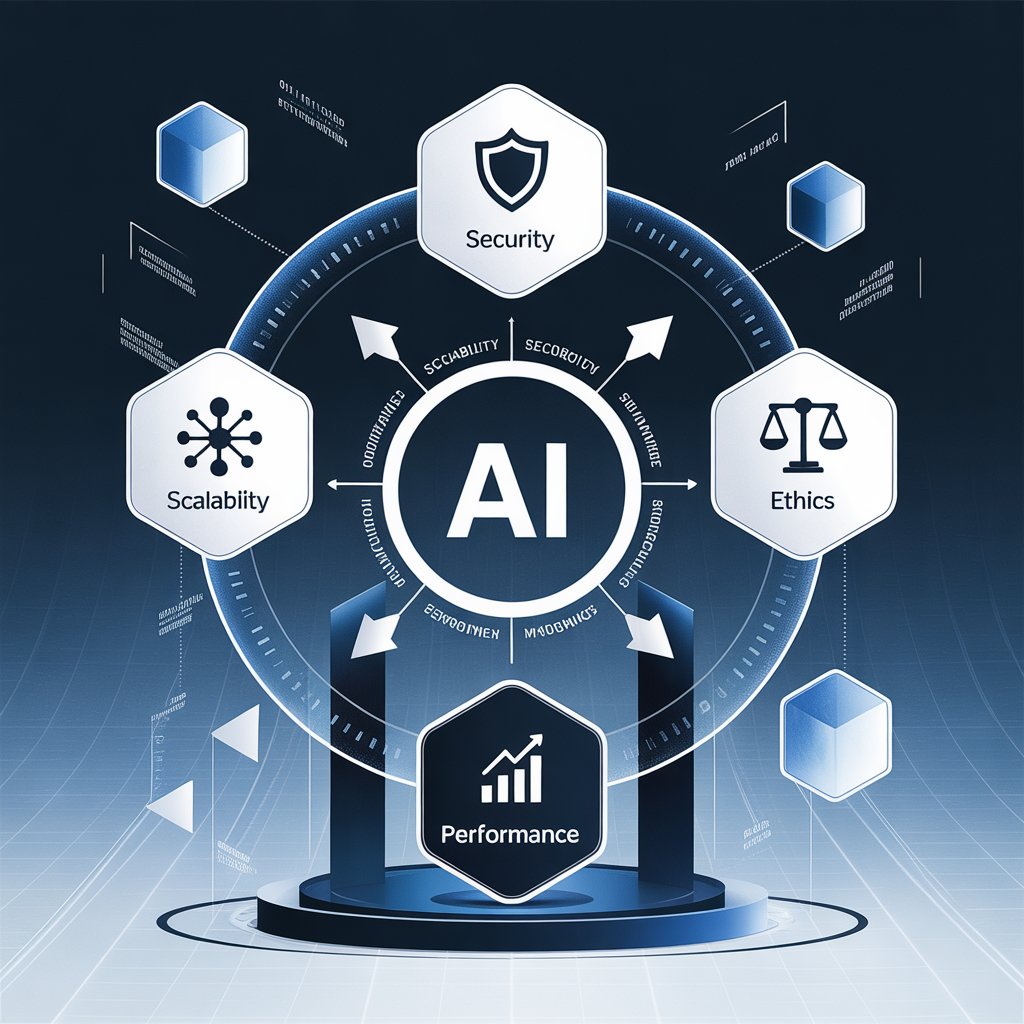
In practical terms, AI deployment best practices focus on ensuring that models are secure, scalable, compliant and aligned with business objectives. According to Gartner, over 50% of AI projects fail to move from pilot to production due to gaps in deployment readiness, governance and organizational alignment.
Key terms often encountered include:
- Model inference
- The process of using a trained AI model to make predictions on new data.
- MLOps
- A set of practices that combine machine learning, DevOps and data engineering to manage AI systems throughout their lifecycle.
- Production environment
- The live setting where AI systems are actively used by the business.
Aligning AI Deployment with Business Goals
Successful AI initiatives start with clearly defined business outcomes. Deploying AI without a measurable objective often results in unused systems or unclear return on investment.
In a recent consulting engagement with a mid-sized retail organization, the AI team initially focused on improving demand forecasting accuracy. But, deployment only succeeded after the goal was reframed as reducing inventory holding costs by 10%, which clarified data requirements, evaluation metrics and stakeholder expectations.
- Define success metrics tied to revenue, cost reduction, risk mitigation, or customer experience.
- Ensure executive sponsorship and cross-functional ownership.
- Document how AI outputs will influence real business decisions.
Data Readiness and Data Governance
AI systems are only as reliable as the data they consume. Data readiness is a foundational element of AI deployment best practices, encompassing quality, availability and governance.
The National Institute of Standards and Technology (NIST) emphasizes data governance as a core pillar of trustworthy AI. This includes data lineage, access controls and bias monitoring.
- Establish data quality checks for accuracy, completeness and timeliness.
- Define data ownership and stewardship roles.
- Implement policies for data privacy and regulatory compliance (e. g. , GDPR, HIPAA).
Choosing the Right Deployment Architecture
AI models can be deployed using different architectural approaches depending on latency, scalability and regulatory requirements. Selecting the right option reduces operational risk and cost.
| Deployment Type | Description | Best Use Case |
|---|---|---|
| Cloud-based | Models hosted on public or private cloud infrastructure | Scalable customer-facing applications |
| On-premises | Models deployed within internal data centers | Highly regulated industries |
| Edge deployment | Models run directly on devices | Low-latency or offline scenarios |
For example, a manufacturing firm I worked with opted for edge deployment to enable real-time defect detection on factory equipment, avoiding latency issues caused by cloud connectivity.
Security, Privacy and Compliance Considerations
Deploying AI introduces new security and privacy risks, including model theft, data leakage and adversarial attacks. Addressing these risks is central to safe AI deployment.
- Encrypt data in transit and at rest.
- Apply role-based access controls to models and datasets.
- Conduct regular security audits and penetration testing.
Organizations should also align with established frameworks such as the NIST AI Risk Management Framework and ISO/IEC 27001 for details security.
MLOps and Lifecycle Management
MLOps enables continuous integration, delivery and monitoring of AI systems. Without it, models degrade over time due to changes in data patterns, known as model drift.
A financial services company I advised experienced declining fraud detection accuracy six months after deployment. Implementing automated retraining and monitoring pipelines restored performance and reduced manual intervention.
Typical MLOps components include:
- Version control for data and models
- Automated testing and validation
- Performance monitoring in production
 # Example: Simple model performance check
if current_accuracy < baseline_accuracy: trigger_model_retraining()
Examinability and Responsible AI Practices
Examinability ensures that AI decisions can be understood by users, auditors and regulators. This is especially vital in sectors such as healthcare, finance and human resources.
Studies show that published by MIT Sloan, explainable AI systems increase user trust and adoption by up to 30%.
- Use interpretable models where possible.
- Apply explanation tools such as SHAP or LIME.
- Document model assumptions and limitations.
Testing, Validation and Controlled Rollouts
Before full-scale deployment, AI systems should undergo rigorous testing in environments that closely resemble production.
- Run pilot programs or A/B tests.
- Validate performance across diverse data segments.
- Implement rollback mechanisms in case of failure.
In one real-world rollout of a customer support chatbot, a phased deployment starting with 10% of users allowed the business to identify language bias issues before broader exposure.
Change Management and Workforce Enablement
AI deployment is as much an organizational challenge as a technical one. Employees must interpret and trust AI systems to use them effectively.
- Provide training tailored to different roles.
- Communicate clearly how AI supports, not replaces, human work.
- Establish feedback channels for continuous improvement.
Harvard Business Review highlights that companies investing in AI literacy programs see higher adoption rates and lower resistance to change.
Measuring Impact and Continuous Improvement
Post-deployment evaluation ensures that AI systems continue to deliver value and remain aligned with business needs.
- Track KPIs defined during the planning stage.
- Regularly review ethical, legal and operational risks.
- Iterate models and processes based on real-world feedback.
Consistently applying AI deployment best practices allows organizations to scale AI responsibly, maximize return on investment and maintain trust with customers and stakeholders.
Conclusion
Deploying AI successfully is less about chasing hype and more about building disciplined habits that scale with trust. In my own projects over the past year, especially as regulations like the EU AI Act gained momentum, I learned that starting small, validating outputs with humans and logging decisions early prevented costly rollbacks later. When AI systems are deployed with clear ownership, continuous monitoring and ethical guardrails, they become reliable teammates rather than risky experiments. This naturally connects to data hygiene and governance, where aligning AI workflows with broader digital strategies such as structured content and visibility planning creates long-term value, much like the principles outlined in ethical AI marketing practices.
More Articles
A Practical Roadmap to Improve Visibility in AI Search Results
Ethical AI Marketing Checklist to Build Trust While Protecting Customer Data
7 Workflow Orchestration Tools That Simplify Data Pipelines and Team Collaboration
GEO vs SEO vs AEO Which Strategy Drives More Visibility for Modern Websites
What Is a Content Strategy Framework and How Does It Guide Better Decisions

FAQs
What does “practical AI deployment” actually mean for a business?
Practical AI deployment means using AI in ways that clearly solve real business problems, fit existing workflows and can be maintained over time. It focuses less on experimentation and more on reliability, measurable impact, data readiness and safe operation in day-to-day use.
How should a company decide where to use AI first?
Start with processes that are repetitive, data-rich and already somewhat standardized. Areas like customer support triage, demand forecasting, document processing, or internal analytics are often good entry points. Avoid starting with high-risk or mission-critical decisions until the team gains experience.
What are the biggest risks businesses should watch out for when deploying AI?
Common risks include poor data quality, hidden bias in models, lack of human oversight, security vulnerabilities and unclear accountability. Another major risk is deploying AI without clear success metrics, which makes it hard to know whether the system is helping or hurting the business.
How can businesses keep AI systems safe and trustworthy over time?
Safety comes from ongoing monitoring, not just initial testing. Companies should track model performance, watch for data drift, log decisions and regularly review outputs with human experts. Clear rules for when humans can override AI decisions are also essential.
Do you need a large AI team to deploy AI successfully?
Not necessarily. Many businesses succeed with small, cross-functional teams that combine domain experts, IT and data skills. What matters more than team size is clear ownership, good communication and realistic expectations about what AI can and cannot do.
How should AI be integrated into existing business processes?
AI should support and enhance current workflows rather than replace them overnight. Start by inserting AI outputs as recommendations or decision aids, then gradually increase automation as confidence grows. This approach reduces disruption and helps employees build trust in the system.
What’s a good way to measure whether an AI deployment is successful?
Success should be measured using both technical metrics and business outcomes. Technical metrics might include accuracy or error rates, while business metrics could be cost savings, time reduction, customer satisfaction, or revenue impact. Regular reviews ensure the AI continues to deliver value as conditions change.