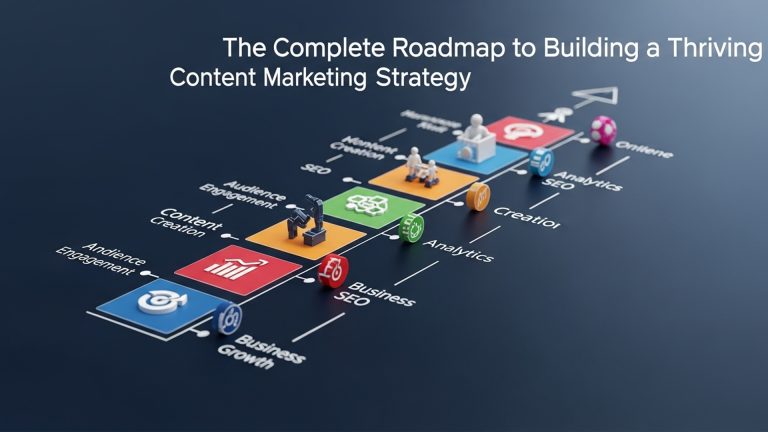
Your Step-by-Step Roadmap to Building a Winning Content Strategy
Building a High-Impact Content Strategy in the Age of AI Optimization
A strong digital presence no longer depends solely on publishing frequent content or following conventional SEO tactics. In the era of AI Optimization (AIO), content strategy has evolved into a sophisticated discipline driven by machine learning, semantic understanding, and continuous performance feedback. Modern search systems and recommendation engines increasingly rely on intent modeling, contextual relevance, and user behavior patterns. As a result, success requires an adaptive, data-driven framework rather than static content planning.
AI is not simply accelerating content production – it is reshaping how content is ideated, personalized, distributed, and refined. Organizations that understand this shift move from creating isolated assets toward building dynamic, self-optimizing content ecosystems capable of evolving alongside algorithms and audience expectations.

Defining AIO-Driven Objectives and Measurable Outcomes
Any AI-enabled content strategy must begin with clearly defined objectives. Traditional metrics such as page views or impressions are insufficient when AI systems actively optimize for engagement, conversions, and user satisfaction. Instead, goals must be expressed as quantifiable outcomes that intelligent systems can evaluate and improve.
Business priorities should be translated into measurable content OKRs. For example, a revenue growth target can become a content objective focused on improving conversion rates through personalized experiences. Key results might include increasing click-through rates on AI-recommended modules or shortening the content-assisted sales cycle.
These metrics serve a deeper technical purpose. They shape how AI models evaluate success by influencing reward functions and optimization targets. Without precise measurement frameworks, AI systems lack the feedback loops necessary for refinement.
However, over-optimization presents risks. Maximizing a single metric such as CTR may encourage low-quality engagement if not balanced by relevance and credibility signals. In highly regulated sectors, accuracy and compliance may take precedence over aggressive optimization.
Advanced Audience Segmentation with AI
Conventional segmentation methods rely on demographics and broad interest categories. AI-driven segmentation, by contrast, analyzes behavioral signals across high-dimensional datasets. This approach reveals patterns invisible to manual analysis.
Machine learning clustering techniques evaluate variables such as content consumption depth, interaction patterns, device usage, sentiment signals, and contextual data. Algorithms group users based on similarity rather than predefined labels, enabling far more precise targeting.
For instance, AI may identify a segment characterized by long reading sessions, preference for technical resources, and high completion rates. Content and recommendations can then be aligned with these behaviors instead of generic personas.
Yet this sophistication introduces challenges. Privacy regulations demand responsible data collection and anonymization practices. Computational requirements can also increase significantly, particularly for real-time segmentation pipelines. Excessive micro-segmentation may further reduce strategic usefulness if clusters become too narrow.
Validation requires experimentation. Comparing engagement and conversion metrics between AI-segmented audiences and traditionally defined groups reveals whether the additional complexity produces meaningful gains.
Predictive Topic Ideation and Semantic Research
AI Optimization transforms topic discovery and keyword research from manual exploration into predictive analytics. Rather than reacting to visible trends, intelligent systems analyze semantic relationships and forecast emerging interests.
Natural language processing models examine search patterns, competitor content, user queries, and conversational data sources to detect latent themes. Time-series forecasting techniques then project shifts in demand, highlighting high-potential opportunities before they peak.
Knowledge graph structures further enhance this process by mapping entities and relationships within a domain. This enables strategic topic clustering, improves contextual authority, and strengthens algorithmic visibility.
While predictive systems can substantially improve discovery accuracy, they remain dependent on data quality. Biases in training datasets may skew recommendations. Rare or disruptive trends may also escape detection if historical signals are weak. Computational overhead is another practical constraint.
Performance verification involves comparing real-world engagement outcomes between AI-identified topics and manually selected themes. Monitoring forecasting accuracy ensures models remain reliable over time.
AI-Powered Content Creation and Modular Workflows
Generative AI has dramatically accelerated content production, but its true strategic value lies in integration rather than automation alone. High-performing workflows treat AI as a collaborative system guided by human expertise.
Fine-tuning language models on proprietary datasets, brand guidelines, and domain-specific terminology improves stylistic alignment and technical precision. AI-generated drafts reduce creation time, allowing human contributors to focus on validation, refinement, and originality.
Beyond generation, AI enhances modular content architectures. Knowledge graphs populated with reusable content components enable dynamic assembly of personalized responses or articles. This improves consistency, scalability, and content reuse efficiency.
Despite these advantages, risks remain. Hallucinations, factual inaccuracies, and ethical concerns require rigorous human oversight. Over-reliance on AI may also diminish originality and brand differentiation. Infrastructure and computational costs must be considered as well.
Verification strategies include expert review processes, retrieval-augmented generation mechanisms, and controlled performance comparisons between AI-generated and human-authored content.
Intelligent Distribution and Personalization Systems
Content impact depends not only on creation but also on precision delivery. AI-driven recommendation engines and dynamic content optimization systems enable context-aware distribution strategies.
Recommendation algorithms evaluate real-time behavior, historical interactions, and user profiles to predict relevance. Hybrid models combine collaborative and content-based filtering for greater accuracy. Dynamic optimization techniques adjust headlines, visuals, or calls-to-action according to contextual signals.
These mechanisms can significantly increase engagement, reduce bounce rates, and improve conversion efficiency. However, excessive personalization risks narrowing exposure diversity and creating echo-chamber effects. Real-time data processing also introduces technical complexity and latency considerations.
Effectiveness should be measured through controlled experiments tracking engagement deltas, conversion lift, and behavioral changes associated with personalized experiences.
Performance Analytics and Continuous Optimization
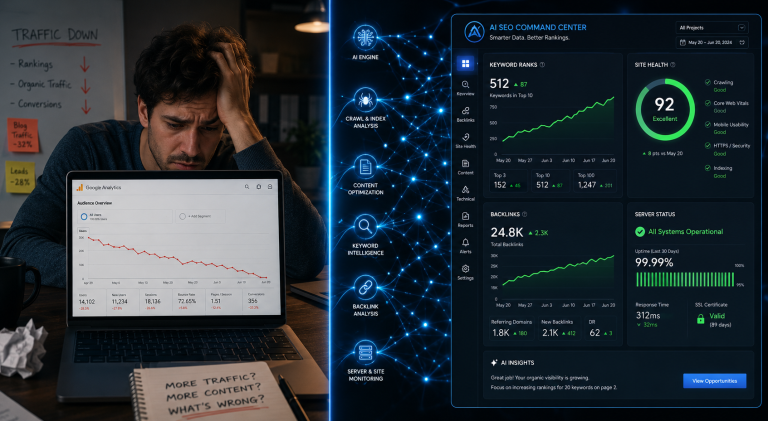
AI Optimization extends beyond measurement dashboards into predictive and diagnostic intelligence. Advanced analytics systems identify patterns, detect anomalies, and recommend improvements.
Predictive models forecast content performance trajectories, guiding resource allocation and update cycles. Anomaly detection algorithms flag unexpected deviations in metrics, while causal inference techniques help determine underlying drivers.
This analytical depth reduces diagnostic latency and supports proactive optimization. Still, success depends heavily on clean, representative data. Complex models may also present interpretability challenges, requiring explainable AI techniques to clarify decision logic.
Validation involves empirical testing of AI-recommended adjustments and ongoing monitoring of model accuracy and drift.
Ethical AI and Governance Considerations
Embedding AI across content workflows necessitates strong ethical and governance frameworks. Fairness, transparency, accountability, and privacy protection become core strategic priorities rather than peripheral concerns.
Bias detection tools evaluate model outputs and distribution patterns to prevent systemic imbalances. Data governance policies ensure responsible data sourcing and usage. Privacy-preserving techniques protect user information while enabling analytical insight.
Human oversight mechanisms remain essential, particularly in sensitive or high-stakes domains. Yet implementing ethical AI increases operational complexity and requires specialized expertise. Defining fairness metrics can also be inherently nuanced.
Verification requires periodic audits, adversarial testing, user feedback channels, and continuous monitoring of compliance indicators.
Conclusion: Content Strategy as a Living System
A modern content strategy is not a static plan but a continuously evolving system shaped by data, algorithms, and user behavior. AI Optimization amplifies both opportunity and responsibility, enabling unprecedented precision while demanding rigorous measurement, validation, and governance.
Organizations that embrace iterative experimentation, semantic intelligence, and ethical safeguards transform content from isolated assets into adaptive growth engines. Sustained success depends on maintaining this cycle of learning, refinement, and strategic alignment.
More Articles
What Is a Content Strategy Framework and How Does It Guide Better Decisions
A Practical Roadmap to Mastering SEO Ranking Factors That Drive Sustainable Traffic
How to Optimize Product Pages That Increase Conversions and Improve Search Rankings
How to Improve AI Search Visibility for Your Website Without Technical Complexity
How a Meta Tag Analyzer Improves SEO Click Through Rates for Websites

FAQs
What’s this roadmap all about?
It’s a clear guide that walks you through every essential stage of creating an effective content strategy, from understanding your audience to measuring your success. Think of it as your personal blueprint for better content.
Why should I even bother with a content strategy?
A well-thought-out strategy helps you attract the right people, build trust and ultimately achieve your business goals. Without one, you’re just guessing, which often wastes time and resources on content that doesn’t hit the mark.
Where do I actually start when building this strategy?
You kick things off by really getting to know your audience and defining your specific goals. Who are you trying to reach? what do you want them to do? That foundational understanding will guide all your next steps.
How can I tell what kind of content my audience will actually care about?
It’s all about research! Look at their pain points, common questions and interests. You can use surveys, website analytics, social listening and even just talk to them directly. Understanding their needs is key to creating truly valuable content.
So, once I have a strategy, what happens next for content creation?
After the strategy is solid, you move into planning and creation. This involves brainstorming specific topics, deciding on the best content formats (like blogs, videos, or social posts). scheduling everything out. Consistency is super essential here.
How do I know if my content strategy is actually doing well?
You’ll need to track key metrics! This includes things like website traffic, engagement rates, lead conversions. even sales. Regularly review your data to see what’s working, what needs tweaking and where you can improve.
Is this roadmap useful for beginners or smaller businesses too?
Absolutely! This roadmap is designed to be adaptable. Whether you’re just starting out with content or looking to refine an existing approach, the step-by-step guidance makes it accessible and effective for businesses of all sizes and experience levels.