How to Streamline Your IT Workflows for Maximum Business Efficiency
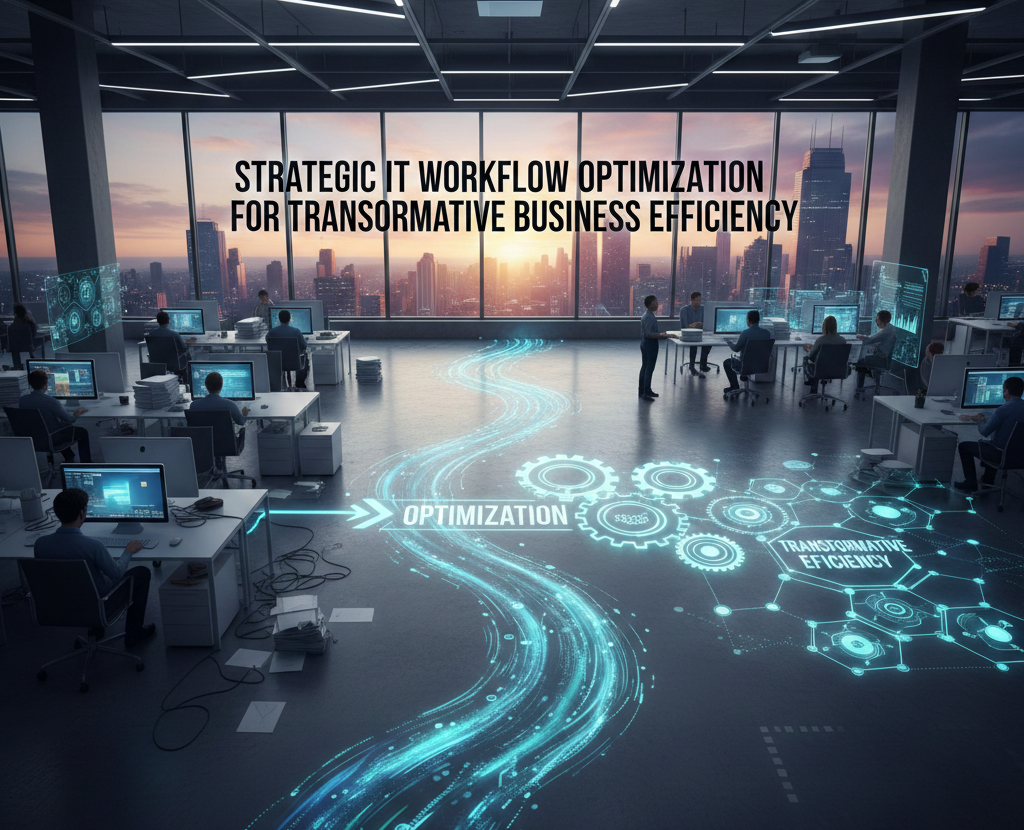
Strategic IT Workflow Optimization for Transformative Business Efficiency
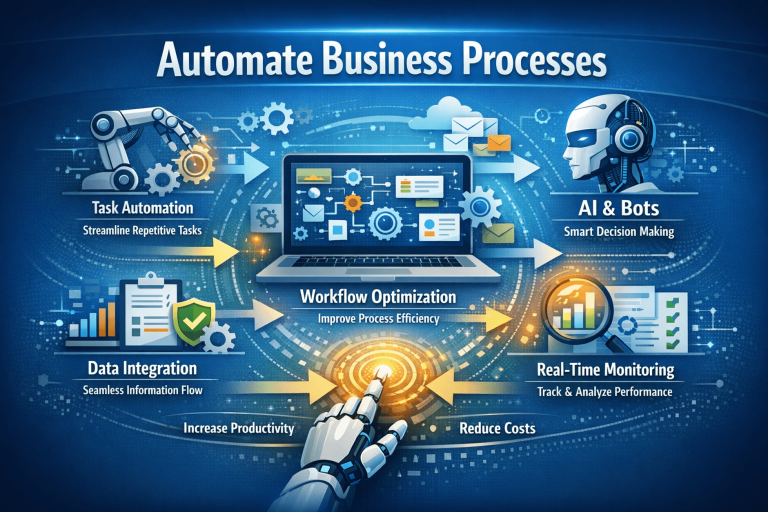
Modern organizations no longer view IT workflows as back-office mechanics. They are now central to business agility, resilience, and competitive advantage. True workflow optimization is not simply about automating tasks. It is a systematic redesign of how systems, people, and processes interact. When executed correctly, optimization reduces latency, improves reliability, and converts IT from a reactive support function into a proactive value driver.
Rethinking Workflow Optimization
IT workflow optimization extends beyond scripting or isolated automation initiatives. It requires examining the architectural structure of operational pipelines, identifying systemic inefficiencies, and engineering workflows that scale predictably. The focus shifts from accelerating individual tasks to improving the behavior of the entire system.
Well-optimized workflows:
- Eliminate redundant handoffs
- Reduce human-induced variability
- Align with Service Level Objectives (SLOs)
- Improve resource utilization
- Enhance fault tolerance
Instead of incremental improvements, organizations achieve measurable gains by redesigning workflow logic, orchestration patterns, and feedback loops.
Intelligent Automation as a Core Enabler
Intelligent automation combines Robotic Process Automation (RPA), Artificial Intelligence (AI), and Machine Learning (ML) to handle both structured and semi-structured processes. Unlike traditional scripts, these systems interpret data, classify inputs, and adapt decisions based on learned patterns.
RPA bots excel at repetitive, rules-based operations such as:
- Data extraction and validation
- System-to-system synchronization
- Transaction processing
- Ticket triage and routing
When augmented with ML models, automation systems can categorize incidents, predict failure conditions, and recommend resolutions. This significantly reduces Mean Time to Resolution (MTTR) while minimizing manual intervention.
However, automation without prior process optimization can simply accelerate inefficiency. Stability, predictability, and rule clarity must precede automation. Fragile workflows or frequently changing interfaces introduce maintenance overhead and potential operational risk.
Architectural Impact: Synchronous vs Asynchronous Flows
Workflow performance is heavily influenced by orchestration design. Synchronous processes create blocking dependencies, increasing latency and failure propagation. Asynchronous workflows decouple components, improving scalability and resilience.
Asynchronous patterns enable:
- Parallel task execution
- Improved fault isolation
- Reduced cascading failures
- Better handling of workload spikes
Event-driven architectures, message queues, and state machines allow workflows to react dynamically to system conditions. This design philosophy supports modern distributed systems where reliability and elasticity are critical.
Infrastructure as Code and Declarative Operations
Infrastructure as Code (IaC) replaces manual provisioning with version-controlled, declarative configurations. Instead of describing procedural steps, IaC defines the desired system state. Automation tools then reconcile differences between intended and actual environments.
Key advantages include:
- Idempotent infrastructure management
- Reduced configuration drift
- Rapid environment replication
- Improved auditability
GitOps builds upon IaC by using Git repositories as the authoritative source of truth. Infrastructure and deployment changes pass through standard development workflows, enabling peer review, rollback, and traceability.
Despite its benefits, IaC adoption introduces complexities:
- State management challenges
- Secrets handling requirements
- Legacy integration constraints
- Learning curve for declarative models
Successful implementations rely on strict repository discipline, policy controls, and automated validation pipelines.
Incident Management and Automated Remediation
Traditional incident response models depend heavily on human correlation and manual execution. Modern optimization integrates observability, anomaly detection, and automated remediation to compress detection and recovery timelines.
Optimized incident workflows leverage:
- Centralized telemetry collection
- Machine learning–driven alert correlation
- Noise reduction mechanisms
- Automated runbooks
Automated remediation can proactively scale resources, restart services, or apply corrective actions before users experience degradation. This reduces operational fatigue while preserving system stability.
Yet over-automation introduces risk. Remediation logic must be idempotent, reversible, and governed by safeguards. Human oversight remains essential for high-impact or ambiguous scenarios.
Accelerating Change Management with CI/CD
Lengthy release cycles and manual approvals create significant bottlenecks. Continuous Integration and Continuous Delivery (CI/CD) pipelines streamline change propagation by embedding validation directly into the development lifecycle.
Effective pipelines provide:
- Rapid feedback loops
- Consistent deployment behavior
- Reduced change failure rates
- Smaller, lower-risk releases
Automation ensures every commit undergoes build, test, and verification stages. This minimizes integration surprises and supports frequent, predictable releases.
However, pipeline efficiency depends on testing strategy. Over-reliance on slow end-to-end tests or poorly maintained test suites can negate CI/CD advantages. Optimization requires balancing speed, coverage, and reliability.
Embedding Security into Workflows
Security automation shifts defense mechanisms from reactive inspection to continuous enforcement. Integrating security checks across development, deployment, and infrastructure workflows reduces vulnerability exposure and remediation costs.
Automated security workflows may include:
- Static analysis and dependency scanning
- Infrastructure configuration validation
- Policy-as-code enforcement
- Compliance verification
This “shift-left” model prevents insecure artifacts from progressing through the pipeline. Instead of detecting issues post-deployment, organizations block them at the source.
Trade-offs include false positives, increased pipeline runtime, and policy management complexity. Continuous tuning and human review remain essential components.
Data-Driven Continuous Improvement
Workflow optimization is not a one-time initiative. Sustainable efficiency requires ongoing measurement, analysis, and refinement. Telemetry from workflows, deployments, and incidents forms the basis for informed decision-making.
Critical performance indicators include:
- Lead time for changes
- Deployment frequency
- Change failure rate
- Mean Time to Repair (MTTR)
- Resource utilization
Correlating technical metrics with business outcomes reveals systemic constraints. Optimization priorities should emerge from data rather than assumptions or isolated observations.
Without disciplined governance, organizations risk accumulating excessive telemetry with limited actionable insight. Metrics must remain purposeful, contextual, and aligned with strategic objectives.
Navigating Legacy System Constraints
Legacy systems often resist modern automation paradigms due to monolithic designs, proprietary protocols, or missing APIs. Workflow optimization strategies must accommodate these constraints without introducing excessive disruption.
Common approaches include:
- Encapsulation through modern interfaces
- Integration via adapters or automation bots
- Gradual replacement using phased patterns
While integration layers enable progress, they also add operational complexity. Decisions regarding modernization versus containment demand careful cost-benefit analysis.
From Automation to Transformation
Workflow optimization ultimately concerns systemic design rather than tooling choices. Automation technologies amplify efficiency only when aligned with architectural clarity, performance metrics, and operational discipline.
Organizations that succeed:
- Treat workflows as evolving systems
- Validate changes through measurement
- Balance automation with resilience
- Continuously refine orchestration logic
The result is not merely faster operations, but a fundamentally more adaptive and reliable IT ecosystem.
More Articles
Your Roadmap to Calculating Automation ROI and Justifying Its Value
Your Step by Step Roadmap to Calculating Automation ROI Successfully
How to Design a Resilient Serverless Architecture for Reliable Applications
How to Build Scalable App Infrastructure for Future Growth and High Traffic
Public Cloud Versus Private Cloud Which Option Suits Your Business Best

FAQs
What does ‘streamlining IT workflows’ really mean for a business?
Essentially, it’s about making your IT tasks and processes smoother, faster and more effective. This involves identifying and eliminating bottlenecks, automating repetitive work and improving communication and collaboration within IT and with other departments. The goal is to get things done with less effort, fewer errors and quicker results.
Why is it such a big deal for my business to bother with streamlining IT?
It’s a huge deal because it directly impacts your bottom line and overall operational health. Streamlined IT means faster problem resolution, quicker project delivery, reduced operational costs and happier employees and customers. It frees up your IT team to focus on innovation instead of firefighting, giving your business a significant competitive edge.
Where do we even begin when trying to streamline our IT processes?
A great starting point is to identify your biggest pain points and bottlenecks. Map out your current processes for critical tasks, pinpoint where delays or manual steps occur and then prioritize which areas will give you the most bang for your buck. Start with a small, manageable project to build momentum and learn.
Are there any specific technologies or tools that can help us out?
Absolutely! Automation platforms for routine tasks, robust service desk software for managing requests, integration platforms to connect disparate systems and collaboration tools are all incredibly useful. Don’t forget about cloud services and AI-driven analytics, which can provide insights and further automate processes.
How can we tell if our streamlining efforts are actually working?
You’ll want to track key metrics. Look for improvements in things like reduced incident resolution times, fewer errors in deployments, faster project completion rates, increased employee satisfaction (especially with IT services) and a decrease in manual, repetitive tasks. Quantifiable results are your best indicators.
What are some common challenges we might face during this process?
Expect some bumps! Common challenges include resistance to change from team members, a lack of clear goals or executive buy-in, difficulties integrating new tools with existing legacy systems and simply not having enough time or resources. Clear communication and a phased approach can help overcome many of these.
How does efficient IT directly contribute to overall business growth?
Efficient IT fuels growth by enabling faster innovation, improving customer experience through reliable services and providing better data for strategic decision-making. When IT runs smoothly, the entire business can operate more effectively, respond quicker to market changes and dedicate resources to new opportunities rather than fixing problems, ultimately driving revenue and expansion.