Your Essential Checklist to Answer Customer Questions Clearly and Completely
The Shift from Keywords to Answer-Centric Search
Search has evolved far beyond keyword matching. Modern systems prioritize intent, context, and semantic meaning, aiming to deliver direct answers instead of simple link lists. Advances in natural language processing and generative AI have reshaped how content is interpreted, ranked, and presented. Technologies deployed by Google increasingly evaluate whether a page resolves a user’s underlying question rather than merely containing matching phrases.
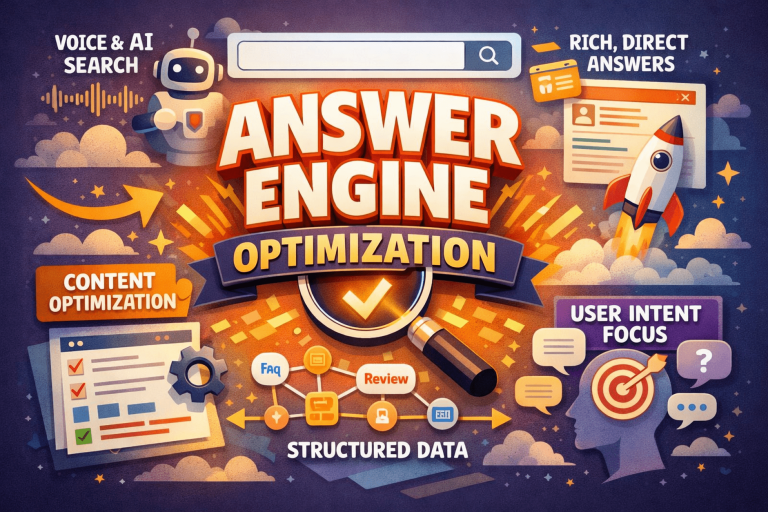
For content creators and SEO professionals, this marks a critical transition. Visibility now depends on how clearly, precisely, and comprehensively a page communicates answers. Pages that structure knowledge effectively are more likely to surface in featured snippets, knowledge panels, and AI-generated summaries. Ignoring this shift risks losing high-value search exposure to competitors who align content with answer engine optimization (AEO) principles.
Understanding User Intent at a Deeper Level
Effective AEO begins with decoding user intent. Queries are rarely isolated strings of words; they represent problems, needs, and expectations. Search engines analyze syntax, semantics, and historical behavior to determine what a user truly seeks.
Consider the contrast:
- “Best CRM for small business” implies evaluation and comparison.
- “How to integrate CRM with accounting software” signals procedural guidance.
Accurate intent mapping improves engagement, satisfaction, and conversions. Tools such as Google Search Console reveal real-world queries and behavioral signals, while platforms like SEMrush and Ahrefs help cluster keywords by intent patterns. Behavioral analytics tools including Hotjar and FullStory add another layer, showing whether users actually find answers or continue searching.
The strategic challenge lies in balancing specificity and breadth. Over-focusing on narrow interpretations may exclude valuable related intents. Advanced practitioners often analyze query datasets using clustering approaches to uncover nuanced question groups and content opportunities.
Designing Content for Direct Answers
Answer engines reward clarity and extractability. Content should be structured so that both humans and algorithms can quickly isolate key insights. Logical hierarchy, concise definitions, and modular explanations increase eligibility for prominent search features.
Well-architected pages typically include:
- Clear headings reflecting distinct questions
- Short, information-dense paragraphs
- Lists or tables for scannable concepts
- Explicit definitions and contextual framing
For example, an explanation of Largest Contentful Paint (LCP) benefits from separating definition, significance, and influencing factors. This modularity improves machine interpretation while reducing cognitive load for readers.
Excessively dense or monolithic text blocks weaken answer extraction. Even long-form content should segment ideas into discrete, self-contained units that directly correspond to potential queries.
Leveraging Structured Data and Semantic Markup
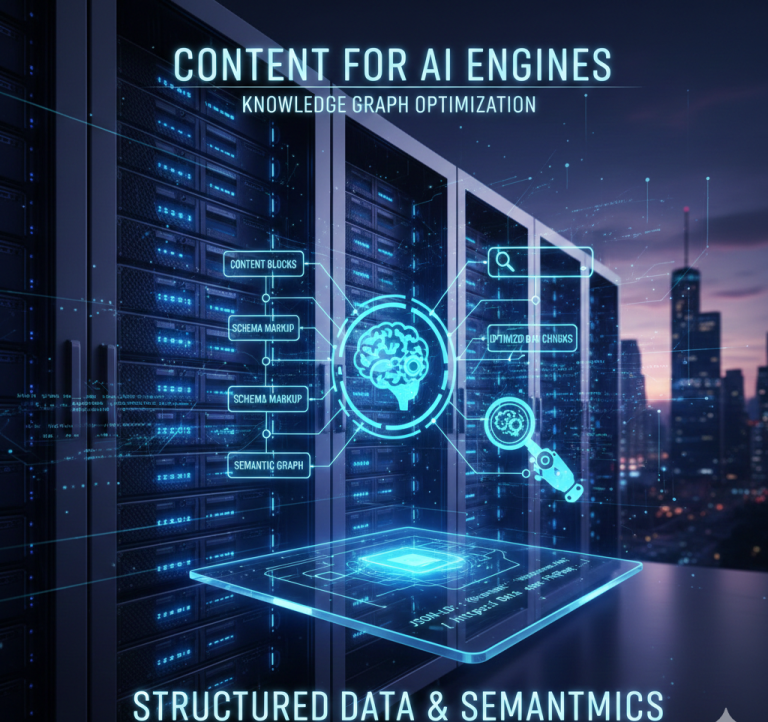
Structured data plays a pivotal role in AEO. Schema vocabulary allows publishers to provide explicit semantic signals that assist search engines in identifying answer components. Implementations such as FAQPage, HowTo, and Article markup clarify content meaning and relationships.
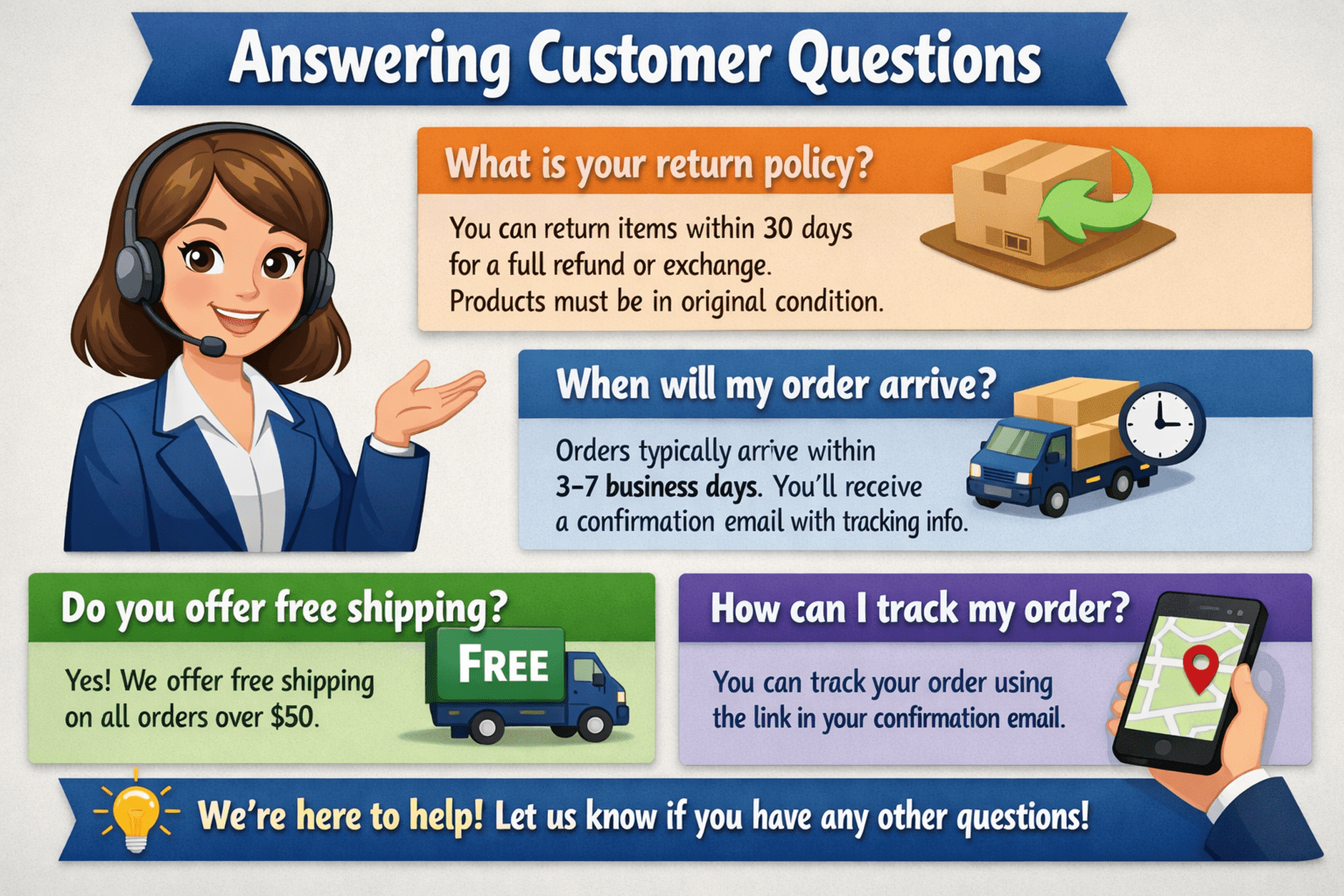
Correct schema deployment can significantly improve search presentation. FAQ markup, for instance, often enhances visibility by enabling rich results that display multiple question–answer pairs directly in search interfaces.
However, accuracy is critical. Misleading or irrelevant structured data may be ignored or penalized. Validation tools and careful testing are essential to ensure markup integrity and eligibility.
Precision, Completeness, and Semantic Depth
Answer engines assess more than correctness. High-performing content demonstrates semantic completeness — resolving the immediate question while anticipating natural follow-ups. An effective response explains what something is, why it matters, and how it connects to broader concepts.
Yet brevity remains vital. Overly verbose explanations reduce extractability and dilute relevance. The objective is informational density: delivering maximum clarity with minimal friction.
Internal linking strengthens semantic depth. Connecting related explanations forms a coherent knowledge network, reinforcing topical authority while guiding users through deeper learning paths.
Indicators of successful completeness include:
- Reduced bounce rates
- Longer session durations
- Fewer repeated queries
- Improved satisfaction metrics
Measuring and Iterating for Answer Visibility
AEO success requires continuous verification. Search environments are dynamic, influenced by algorithm updates and changing presentation formats. Monitoring tools help assess whether content is achieving desired visibility within answer-focused features.
Key measurement approaches include:
- Tracking impressions and CTR shifts
- Observing featured snippet presence
- Evaluating engagement behavior
- Testing structural refinements
Even small visibility improvements can produce disproportionate traffic gains when content appears in high-attention SERP features.
Iteration frameworks typically involve baseline measurement, hypothesis formation, controlled adjustments, and performance analysis. Sustained optimization depends on disciplined experimentation rather than static implementation.
The Expanding Role of Authority and Trust
Credibility is central to answer selection. Systems increasingly favor sources demonstrating strong Experience, Expertise, Authoritativeness, and Trustworthiness. This is particularly evident for high-stakes topics where misinformation carries risk.
Signals contributing to perceived authority include:
- Transparent authorship
- Verifiable credentials
- Consistent topical focus
- Reputable citations
- Positive reputation indicators
Authoritative institutions such as the Mayo Clinic or the NHS frequently appear in direct answer contexts because their reliability is well established. Content strategies should similarly emphasize accuracy, transparency, and demonstrable expertise.
Adapting to Generative AI and Synthesized Answers
Generative AI introduces another layer of transformation. Systems powered by retrieval-augmented generation synthesize responses by extracting and combining information from multiple sources. Platforms like ChatGPT developed by OpenAI and solutions from Microsoft increasingly influence how users consume knowledge.
This shift alters traffic dynamics. Users may receive comprehensive answers without visiting individual pages, reducing traditional click-through patterns. Nevertheless, being cited or referenced within AI-generated responses still delivers significant brand authority and visibility.
AI-friendly content tends to exhibit:
- Explicit factual statements
- Clear definitions
- Structured organization
- Unambiguous language
- High trustworthiness
Monitoring how AI systems summarize and reference content provides valuable feedback. Observing omissions or distortions can guide refinements that improve future citation likelihood.
Future-Proofing Content Strategies
Answer optimization is no longer solely about rankings. It is about knowledge design — structuring information so it can be easily interpreted, extracted, and trusted across evolving interfaces.
Resilient strategies emphasize:
- Intent alignment
- Semantic clarity
- Structured architecture
- Continuous testing
- Demonstrable expertise
As search systems become more conversational and generative, the ability to communicate precise answers becomes a defining competitive advantage.
More Articles
How to Streamline Your IT Workflows for Maximum Business Efficiency
Unlock Smarter Answers 7 Ways Generative AI Transforms Your Online Search
Your Essential Checklist for Choosing the Right CMS Platform
Your Roadmap to Calculating Automation ROI and Justifying Its Value

FAQs
What’s the main idea behind this ‘Essential Checklist’?
This checklist is designed to help you consistently provide customer answers that are not only clear and easy to comprehend but also completely address their original query, leaving no room for confusion or follow-up questions.
Who exactly should be using this checklist?
Anyone who interacts with customers – whether you’re in support, sales, or any client-facing role – will find it super helpful. It’s great for new team members learning the ropes and also for experienced pros who want to fine-tune their communication skills.
Why is it such a big deal to answer customers clearly and completely?
When you answer clearly and completely, you build trust, reduce back-and-forth communication. make customers feel valued and understood. This leads to happier customers, fewer repeat inquiries. a more efficient workflow for everyone.
How does the checklist actually help improve my answers?
It breaks down the process of crafting a good response into actionable steps. You’ll review things like understanding the core question, providing all necessary insights, using simple language, checking for tone. confirming completeness before you hit send.
What common mistakes does this checklist help prevent?
It helps you avoid giving partial answers, using jargon customers don’t interpret, having an unclear or unhelpful tone. missing key details that lead to follow-up questions. , it’s about closing the loop effectively.
I’m already pretty good at customer service; will this checklist still be useful for me?
Absolutely! Even seasoned pros can benefit from a structured review process. It serves as a quick mental check to ensure you haven’t overlooked anything, helping you maintain a high standard of consistency and excellence in every interaction.
Can I use this checklist for all kinds of customer interactions, like email, chat. even phone calls?
While it’s particularly well-suited for written communication like email and chat where you have time to review, the principles are universally applicable. You can certainly adapt the core ideas to improve your clarity and completeness during phone conversations too.