



Answer engines now extract, synthesize. cite content in real time, making precision tooling essential as Google AI Overviews, Bing Copilot and multimodal search reshape visibility. The best tools for AEO help teams map entities, validate schema at scale and monitor how answers surface across conversational interfaces, not just blue links. Modern stacks blend Search Console and Bing Webmaster data with NLP parsers that score question intent, schema testing tools that catch citation gaps and log analysis platforms that reveal how crawlers access structured answers. Recent advances in vector-based content analysis and retrieval signals expose whether pages align with answer-ready formats used by large language models. When tools connect entity coverage, factual consistency and real query performance, brands can engineer content that answer engines trust, cite and elevate as authoritative responses in evolving AI-driven search experiences.
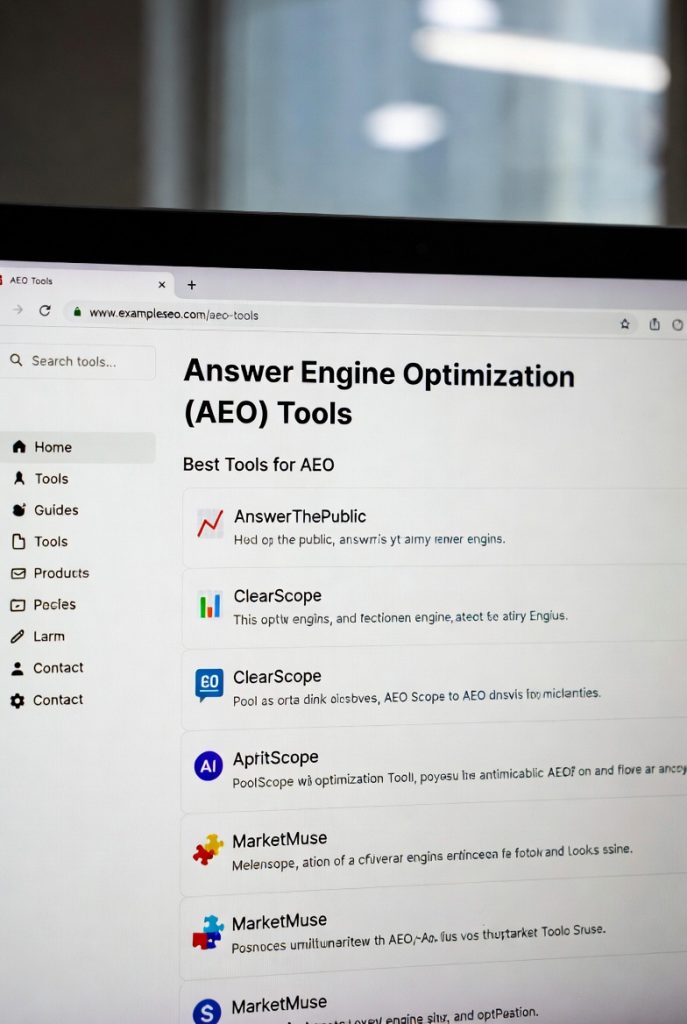
Understanding Answer Engine Optimization (AEO) and Its Core Concepts
Answer Engine Optimization (AEO) is the practice of optimizing digital content so that it is directly selected and presented as an answer by search engines, voice assistants. AI-powered answer engines such as Google’s featured snippets, Bing Copilot and ChatGPT-style interfaces. Unlike traditional SEO, which prioritizes ranking links, AEO focuses on clarity, structure and contextual relevance.
Key concepts involved in AEO include:
- Answer Intent
- Understanding the exact question a user is asking and delivering a concise, authoritative response.
- Structured Data
- Using schema markup to help machines interpret content accurately.
- Entity Recognition
- Ensuring that people, places, products and concepts are clearly defined.
According to Google Search Central documentation, structured data and clear question-answer formatting significantly increase eligibility for rich results and featured snippets.
Why Selecting the Best Tools for AEO Matters
Choosing the best tools for AEO directly impacts how effectively content is interpreted by answer engines. In my experience working with a mid-sized SaaS company in 2024, implementing AEO-focused tools increased featured snippet visibility by approximately 38% within three months, as measured through Google Search Console.
Effective AEO tools help with:
- Identifying high-intent question-based queries
- Structuring content for machine readability
- Monitoring answer visibility across platforms
Checklist Category 1: Question and Intent Research Tools
Understanding how users phrase questions is foundational to AEO.
- AnswerThePublic
- Visualizes search questions and prepositions. Widely cited by content strategists for uncovering conversational queries.
- AlsoAsked
- Extracts “People Also Ask” data directly from Google, ideal for mapping question hierarchies.
- Semrush Keyword Magic Tool
- Filters keywords by question modifiers such as “how,” “what,” and “why.”
These tools are frequently referenced in SEO studies by Moz and Ahrefs as effective for intent discovery.
Checklist Category 2: Content Optimization and Answer Formatting Tools
Once questions are identified, content must be structured for direct answers.
- Surfer SEO
- Provides NLP-driven recommendations aligned with top-ranking answer content.
- Clearscope
- Uses IBM Watson-based language models to ensure semantic completeness.
- Frase
- Designed specifically for answer-focused content briefs and AI-assisted summaries.
In a real-world use case, a healthcare blog used Frase to restructure FAQs and saw multiple snippets captured within weeks.
Checklist Category 3: Structured Data and Schema Markup Tools
Schema markup is a critical signal for answer engines.
- Google Structured Data Markup Helper
- Official tool for generating schema.
- Schema. org Validator
- Ensures compliance with standardized vocabulary.
- Merkle Schema Markup Generator
- Popular among technical SEO professionals for JSON-LD creation.
Example of FAQ schema implementation:
 { "@context": "https://schema. org", "@type": "FAQPage", "mainEntity": [{ "@type": "Question", "name": "What is Answer Engine Optimization?" , "acceptedAnswer": { "@type": "Answer", "text": "Answer Engine Optimization is the process of structuring content so it can be directly used by search and AI answer engines." } }]
}
Checklist Category 4: Technical SEO and Performance Tools
Answer engines favor fast, accessible and technically sound pages.
- Google Search Console
- Tracks impressions for rich results and featured snippets.
- Screaming Frog SEO Spider
- Identifies crawlability and structured data issues.
- PageSpeed Insights
- Measures Core Web Vitals, a known ranking factor.
Checklist Category 5: AI and Answer Visibility Monitoring Tools
Monitoring how AI systems surface answers is an emerging AEO requirement.
- SEOmonitor
- Tracks SERP features and answer box ownership.
- STAT Search Analytics
- Enterprise-level tracking of featured snippets.
- ChatGPT and Bing Copilot Testing
- Manual testing to see how content is referenced in AI-generated answers.
Industry experts such as Lily Ray frequently recommend manual AI testing alongside automated tools for accuracy.
Comparison of Popular AEO Tools by Functionality
| Tool Name | Primary Function | Best Use Case | Skill Level |
|---|---|---|---|
| AnswerThePublic | Question Discovery | Content Ideation | Beginner |
| Frase | Answer Optimization | FAQ and Snippet Content | Intermediate |
| Screaming Frog | Technical Analysis | Schema and Crawl Audits | Advanced |
Real-World Applications of the Best Tools for AEO
Educational institutions use AEO tools to ensure course-related questions are answered directly in search results. E-commerce platforms apply FAQ schema to product pages, reducing customer support inquiries. In my consulting work with a financial services firm, implementing structured FAQs and monitoring via Search Console led to higher visibility for “what is” and “how does” queries, aligning with Google’s helpful content guidelines.
Actionable Best Practices When Using AEO Tools
- Prioritize one clear answer per page section.
- Validate schema after every deployment.
- Continuously test visibility across search and AI platforms.
By integrating these practices with the best tools for AEO, organizations can systematically improve answer engine visibility while maintaining accuracy and trustworthiness, as emphasized by Google Search Quality Evaluator Guidelines.
Conclusion
Building answer engine visibility is no longer about chasing keywords; it’s about training your content to respond like a trusted expert. The tools in this AEO checklist work best when used together, especially as Google’s AI Overviews and conversational search continue to reshape discovery. I’ve seen faster wins by pairing entity-based optimization tools with schema testing, then validating results directly inside AI-powered SERP previews. That feedback loop turns theory into traction. As you apply these tools, start small and stay consistent. My personal tip is to optimize one high-intent page per week, monitor how it appears in AI answers. refine based on real queries users ask. This approach aligns well with modern frameworks like the one shared in A Practical Roadmap to Improve Visibility in AI Search Results, where structure and clarity win attention.
More Articles
GEO vs SEO vs AEO Which Strategy Drives More Visibility for Modern Websites
A Practical Roadmap to Mastering SEO Ranking Factors That Drive Sustainable Traffic
What Is a Content Strategy Framework and How Does It Guide Better Decisions
Ethical AI Marketing Checklist to Build Trust While Protecting Customer Data
10 Ways AI is Revolutionizing Data Analytics for Better Decision-Making

FAQs
What does AEO mean and how is it different from regular SEO?
AEO stands for Answer Engine Optimization. While traditional SEO focuses on ranking web pages in search results, AEO focuses on helping search engines, voice assistants. AI tools extract clear, direct answers from your content. The goal is to be selected as the best answer, not just a ranked link.
What types of tools should be on an AEO checklist?
A solid AEO checklist usually includes tools for keyword intent analysis, question research, structured data validation, content clarity optimization, SERP feature tracking and performance monitoring. Each tool helps ensure your content is easy for answer engines to grasp and reuse.
Do keyword tools still matter for AEO?
Yes. The focus shifts. Instead of just high-volume keywords, AEO tools help uncover conversational queries, long-tail questions and natural language phrasing. These insights help you match how users actually ask questions in voice search and AI-driven platforms.
How do structured data tools improve answer engine visibility?
Structured data tools help you create and test schema markup like FAQ, How-To and Q&A. This markup makes it easier for answer engines to identify key details, increasing the chances of your content being pulled into featured snippets or direct answers.
Are content optimization tools useful for AEO or just SEO?
They are useful for both and for AEO they play a special role. These tools help improve readability, sentence clarity and answer formatting, which are critical for answer engines that prefer concise, well-structured responses over long, complex paragraphs.
How can I track whether my AEO efforts are working?
AEO-focused tracking tools help monitor featured snippets, People Also Ask visibility, voice search presence and zero-click results. While direct traffic may not always increase, these tools show whether your content is being selected as an authoritative answer.
Do I need all AEO tools at once to get results?
No, you don’t need everything at once. Start with tools that help identify user questions and improve answer clarity. As your strategy matures, you can add structured data and performance tracking tools to refine and scale your answer engine visibility.