


API publishing has become a critical foundation for modern content operations. As enterprises scale across channels, regions, and platforms, manual publishing workflows quickly break down. At PromotoAI, we see API publishing as the engine that enables speed, consistency, and automation across the entire content lifecycle.
In this article, we explain what API publishing is, why it matters, and how organizations use it to build resilient, scalable content ecosystems. We also share practical insights from our experience helping brands implement automated publishing workflows that grow with their business.
What Is API Publishing?
API publishing refers to the programmatic creation, updating, and distribution of content through Application Programming Interfaces. Instead of relying on manual uploads or platform-specific dashboards, teams use APIs to push content directly into websites, apps, CMS platforms, marketplaces, and third-party systems.
In simple terms, API publishing connects content systems through code. It allows content to move automatically between tools, databases, and channels without human intervention.
At PromotoAI, we treat API publishing as more than a technical integration. We see it as a strategic layer that unlocks automation, governance, and scale across enterprise workflows.
Why API Publishing Matters for Modern Enterprises
Content demand continues to grow. Brands now publish across websites, mobile apps, marketplaces, partner portals, and internal platforms. At the same time, teams expect faster turnaround times and consistent quality.
API publishing solves these challenges by enabling centralized control and distributed execution.
First, it removes manual bottlenecks. Instead of logging into multiple systems, teams publish content programmatically from a single source of truth.
Second, it improves accuracy and consistency. APIs reduce human error and ensure content follows predefined structures and rules.
Third, it supports scale. Whether publishing hundreds or millions of content items, APIs handle volume without increasing operational overhead.
As a result, API publishing becomes essential for organizations that want to grow without chaos.
How API Publishing Fits into Content Automation
API publishing plays a central role in automated content workflows. It acts as the delivery layer that connects content creation, management, and distribution systems.
For example, teams often generate structured content using internal tools, AI systems, or databases. APIs then push this content into CMS platforms, headless architectures, or frontend applications.
In addition, APIs enable real-time updates. When content changes in one system, it automatically syncs across all connected platforms.
At PromotoAI, we design API publishing workflows that integrate seamlessly with content automation engines, scheduling tools, and analytics systems. This approach ensures content flows continuously from idea to execution.
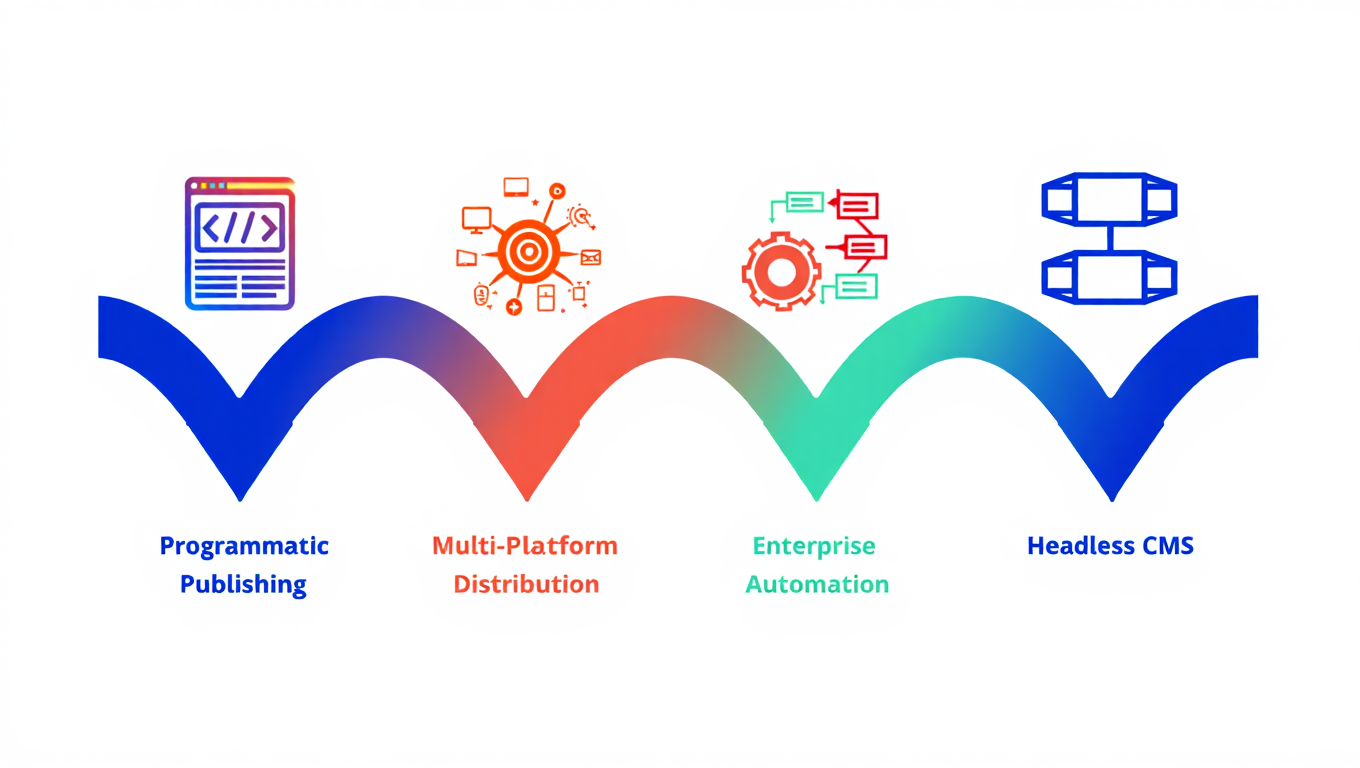
Key Use Cases of API Publishing
API publishing supports a wide range of enterprise use cases. While implementations vary, the underlying goal remains the same: publish content faster and more reliably.
Programmatic Website Publishing
Many organizations use APIs to publish pages, blogs, and landing pages at scale. This approach works especially well for SEO-driven content, location pages, and dynamic product pages.
By using APIs, teams generate structured content and deploy it instantly without manual CMS intervention.
Multi-Platform Content Distribution
API publishing enables simultaneous publishing across websites, apps, and partner platforms. Content teams define rules once, then distribute content everywhere through automated workflows.
This ensures message consistency while reducing duplication of effort.
Headless CMS Integrations
In headless architectures, APIs are the backbone of content delivery. Content lives independently of presentation, and APIs deliver it to multiple frontends.
At PromotoAI, we often implement API publishing as the bridge between headless CMS platforms and frontend frameworks.
Enterprise Workflow Automation
Large organizations rely on APIs to connect internal systems. Content can move automatically from editorial tools to approval systems, publishing engines, and analytics platforms.
This level of integration supports governance, compliance, and auditability.
Benefits of API Publishing for Content Teams
API publishing delivers tangible benefits across teams and departments.
First, it improves speed. Content reaches live environments in minutes instead of days.
Second, it increases efficiency. Teams spend less time on repetitive tasks and more time on strategy and optimization.
Third, it enhances scalability. API-driven workflows grow with content volume without adding complexity.
Fourth, it supports experimentation. Teams can test, iterate, and deploy content quickly using automated pipelines.
Finally, it strengthens collaboration. Developers, marketers, and content strategists work within shared systems instead of isolated tools.
API Publishing and SEO at Scale
From an SEO perspective, API publishing unlocks new possibilities. It allows teams to create and publish optimized content at scale while maintaining technical precision.
For example, APIs ensure consistent metadata, schema markup, and URL structures across thousands of pages. They also support rapid updates when search algorithms change.
At PromotoAI, we often combine API publishing with SEO automation to deploy content clusters, update internal links, and refresh pages programmatically. This approach helps brands stay competitive in search results.
Challenges in API Publishing and How We Address Them
While API publishing offers many advantages, it also introduces complexity. Without proper planning, teams may face issues related to governance, performance, or data integrity.
One common challenge is maintaining content quality at scale. APIs publish fast, but they must follow clear rules and validations.
Another challenge involves system reliability. API failures can disrupt publishing workflows if not handled properly.
Security is also critical. APIs require authentication, permissions, and monitoring to prevent unauthorized access.
At PromotoAI, we address these challenges by designing robust API architectures. We implement validation layers, error handling, version control, and monitoring systems. This ensures publishing workflows remain stable and secure.
Best Practices for Successful API Publishing
To get the most value from API publishing, organizations should follow proven best practices.
Start with a clear content model. Structured content ensures APIs deliver consistent data across platforms.
Next, define publishing rules and workflows. Automation works best when roles, approvals, and triggers are clearly mapped.
Use versioned APIs. This approach allows systems to evolve without breaking existing integrations.
Monitor performance and errors. Observability helps teams identify issues before they impact users.
Finally, align technical teams with content teams. API publishing succeeds when strategy and execution work together.
How PromotoAI Approaches API Publishing
At PromotoAI, we approach API publishing as a strategic capability, not just a technical feature. We help organizations design end-to-end publishing systems that support growth and flexibility.
We start by understanding content goals and operational constraints. Then we design API-first workflows that integrate seamlessly with existing systems.
Our focus remains on scalability, reliability, and long-term maintainability. As a result, our clients gain publishing infrastructures that support enterprise workflows without friction.
The Future of API Publishing
API publishing continues to evolve alongside content automation and AI-driven workflows. As content volume increases, programmatic publishing will become the default approach for enterprises.
In the future, APIs will not only publish content but also adapt it dynamically based on audience, channel, and context. This shift will further blur the line between content creation and delivery.
At PromotoAI, we see API publishing as a foundational pillar for modern content ecosystems. Organizations that invest in it today will gain a significant advantage tomorrow.
Strategic Perspective on API Publishing
API publishing empowers enterprises to move faster, operate smarter, and scale confidently. It transforms content from a manual process into a programmable system.
By adopting API-driven workflows, organizations gain control, consistency, and agility across their content operations. More importantly, they create a foundation that supports long-term growth.
At PromotoAI, we believe API publishing is not optional for modern enterprises. It is essential for building resilient, automated, and scalable content workflows that drive real business impact.