


App discovery now depends on precision, not guesswork, as Apple and Google tighten algorithms around relevance, conversion and user intent. An ASO platform brings that precision by unifying keyword intelligence, competitor tracking and conversion-rate optimization into a single workflow. For example, modern platforms review Apple Search Ads data alongside organic rankings to expose high-intent keywords, while Google Play metadata experiments reveal how icon or screenshot changes impact installs. With recent advances in AI-driven keyword clustering, predictive trend analysis and automated A/B testing, teams can react faster to seasonal demand, regional shifts and algorithm updates like Google Play’s 2024 emphasis on long-tail queries. Mastering these capabilities transforms ASO from manual optimization into a measurable growth system that consistently improves visibility and installs.
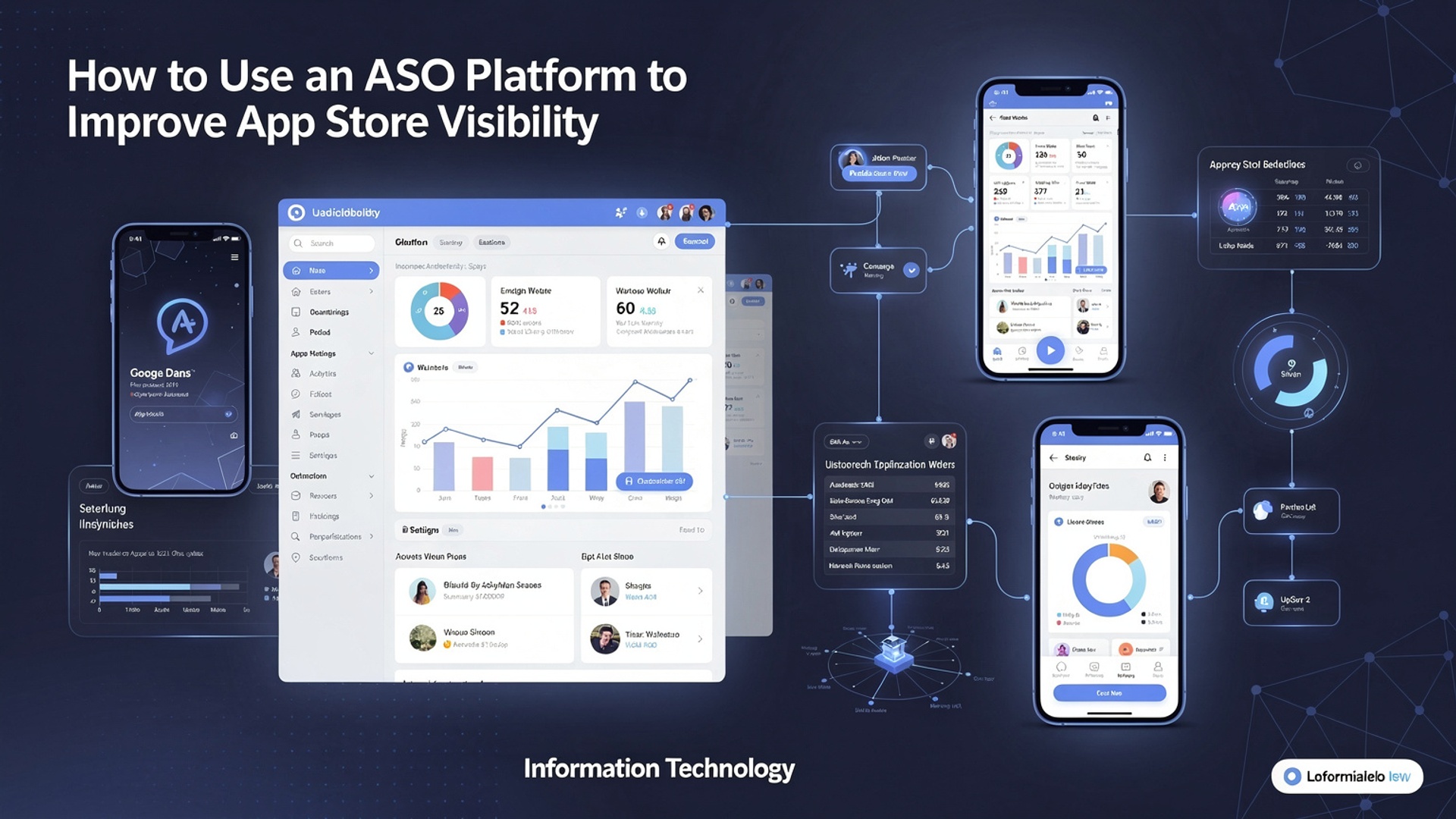
Understanding App Store Optimization and the Role of an ASO Platform
App Store Optimization (ASO) is the systematic process of improving an application’s visibility within app marketplaces such as Apple App Store and Google Play. Visibility directly influences discoverability, organic downloads and long-term growth. An ASO platform is a specialized software solution designed to centralize data, insights and optimization actions needed to execute ASO effectively. An ASO platform typically aggregates keyword intelligence, competitive benchmarks, performance analytics and experimentation tools into a single dashboard. According to Google Play documentation and Apple’s App Store Connect guidelines, ranking factors include keyword relevance, conversion rates, ratings, retention and engagement. Managing these variables manually is possible and often inefficient and prone to error, which is why dedicated platforms are widely adopted by professional app marketers and product teams.
Core Features of an ASO Platform Explained
An ASO platform provides multiple functional components that work together to improve app store performance. Understanding these components is essential before implementation.
- Keyword Research and Tracking
- Identifies high-volume, relevant search terms and monitors ranking changes over time.
- Metadata Optimization
- Assists with optimizing app titles, subtitles, descriptions and short descriptions based on store-specific rules.
- Competitive Intelligence
- Tracks competitor keywords, creatives and category movements.
- Creative Asset Optimization
- Supports testing of icons, screenshots and preview videos.
- Analytics and Reporting
- Centralizes performance metrics such as impressions, conversion rates and installs.
For example, platforms like AppTweak and Sensor Tower reference Apple’s Search Ads and Google Play ranking signals to provide data-backed recommendations rather than assumptions.
Selecting the Right ASO Platform for Your App
Not all ASO platforms are identical. Selection should be based on app maturity, geographic reach and internal resources. Early-stage developers may prioritize keyword discovery and basic tracking, while established publishers often require advanced analytics and automation.
| Feature Area | Basic ASO Platform | Advanced ASO Platform |
|---|---|---|
| Keyword Volume Data | Estimated ranges | Market-calibrated estimates |
| Competitor Tracking | Limited | Full historical analysis |
| A/B Testing Support | Manual guidance | Integrated experiment tracking |
| Team Collaboration | Single user | Multi-user workflows |
Conducting Keyword Research Using an ASO Platform
Keyword research is foundational to app store visibility. An ASO platform streamlines this by analyzing search volume, competition and relevance simultaneously. The typical workflow includes:
- Seed keyword discovery based on app functionality
- Expansion using related and long-tail keyword suggestions
- Difficulty scoring to assess ranking feasibility
- Localization insights for different markets
For example, a fitness app targeting “home workouts” may discover through its ASO platform that “no equipment workout” has lower competition but comparable search intent. This insight can significantly improve ranking efficiency without additional marketing spend.
Optimizing App Metadata with Data-Driven Insights
Metadata elements such as app title, subtitle and description are primary ranking signals. An ASO platform provides guidance on keyword placement density and compliance with store guidelines. Apple limits title length to 30 characters, while Google Play allows up to 50. ASO platforms automatically flag truncation risks and duplication issues. They also simulate how metadata appears in search results, reducing trial-and-error. A real-world example from a fintech app launch showed that restructuring the subtitle to include a high-volume keyword identified by the ASO platform improved search visibility within 10 days, as confirmed by App Store Connect impression data.
Leveraging Creative Optimization and A/B Testing
Visual assets strongly influence conversion rates. According to Google Play experiments, screenshots and icons can impact install conversion by over 20%. An ASO platform often integrates creative testing workflows or connects directly with Google Play Experiments.
- Icon variant testing
- Screenshot order optimization
- Localized creative analysis
In one use case, a gaming studio tested two icon variants using insights from its ASO platform and observed a statistically significant uplift in conversion after aligning visuals with top-performing competitors’ color schemes.
Monitoring Performance and Interpreting ASO Metrics
Tracking outcomes is critical to sustained improvement. An ASO platform consolidates metrics from multiple sources, reducing reliance on manual exports. Key metrics typically include:
- Keyword ranking trends
- Impressions and browse traffic
- Conversion rate from page view to install
- Ratings and review velocity
Platforms often align these metrics with official sources such as App Store Connect and Google Play Console, ensuring data consistency. Gartner’s Mobile App Analytics reports emphasize that continuous monitoring is essential for adapting to algorithm updates.
Using Competitive Intelligence to Identify Growth Opportunities
Competitive analysis is a distinguishing advantage of an ASO platform. By examining competitors’ keyword overlap, creative changes and ranking movements, teams can anticipate market shifts. For example, during a category surge in meditation apps, one publisher identified emerging keywords by monitoring competitors’ metadata updates through an ASO platform. This allowed faster adoption and early ranking before keyword saturation occurred.
Integrating an ASO Platform into a Broader App Marketing Strategy
An ASO platform is most effective when aligned with paid acquisition, user feedback and product updates. ASO insights can inform Apple Search Ads bidding strategies or highlight feature gaps based on review sentiment analysis. Many platforms export data via APIs, enabling integration with BI tools or marketing dashboards.
 { "keyword": "budget planner", "rank": 4, "search_volume": 78, "competition": "medium"
}
This type of structured output helps marketing and product teams collaborate using a shared data language.
Ensuring Ethical and Sustainable ASO Practices
Reputable ASO platforms emphasize compliance and transparency. Keyword stuffing, misleading creatives, or incentivized reviews violate store policies and can lead to penalties. Apple and Google both publish enforcement actions against manipulation tactics. Using an ASO platform responsibly means:
- Following official app store guidelines
- Validating recommendations against primary data
- Prioritizing user experience over short-term gains
Industry experts from organizations such as the Mobile Growth Association consistently advocate for sustainable ASO practices rooted in user value rather than algorithm exploitation.
Scaling App Store Visibility Across Regions and Languages
Global expansion introduces complexity in localization, cultural nuance and regional competition. An ASO platform simplifies this by providing country-specific keyword data and localization suggestions. For instance, the same keyword may perform differently in the US versus Germany due to language structure and search behavior. ASO platforms highlight these differences, allowing tailored optimization strategies that align with local user intent. In practice, a travel app expanding into Southeast Asia used its ASO platform to identify regionally relevant keywords rather than direct translations, resulting in stronger initial rankings and reduced acquisition costs.
Conclusion
Using an ASO platform effectively is less about chasing vanity metrics and more about building a repeatable optimization habit. Modern ASO tools now surface intent-based keywords and predict conversion impact, which aligns perfectly with today’s trend toward smarter, data-led growth. As you review keywords, screenshots and reviews together, transitions from insight to action become faster and more confident.
More Articles
A Practical Roadmap to Improve Visibility in AI Search Results
10 Ways AI is Revolutionizing Data Analytics for Better Decision-Making
How to Boost ROI with AIO Tools for Smarter Business Decisions
Data Analysis Automations vs Manual Processes Which is More Efficient

FAQs
What is an ASO platform and why would I use one?
An ASO (App Store Optimization) platform helps you review and improve how your app appears in app stores. It brings together keyword data, rankings, competitor insights and performance metrics so you can make informed decisions instead of guessing what might improve visibility.
How do I find the right keywords using an ASO platform?
Start by looking at keyword search volume, difficulty and relevance inside the platform. Focus on terms that users actually search for and that closely match your app’s core features. A good balance of high volume and lower competition usually works best.
Can an ASO platform help improve my app title and description?
Yes. Most ASO tools show how keywords perform in different text fields like the title, subtitle and description. You can test variations, track ranking changes and refine your wording to improve discoverability without keyword stuffing.
How often should I check rankings and update my metadata?
Checking rankings weekly is usually enough for most apps. Metadata updates should be based on data trends, not constant changes. Many developers update text every few weeks or alongside app updates to avoid unnecessary fluctuations.
Do ASO platforms help with competitors too?
They do. You can see which keywords competitors rank for, how their metadata changes over time and where they’re gaining visibility. This helps you spot gaps and opportunities you might otherwise miss.
What role do ratings and reviews play in ASO tools?
ASO platforms often track ratings, review volume and sentiment. While they don’t directly change reviews, they help you spot patterns, comprehend user feedback and prioritize fixes that may improve conversion and visibility.
Is using an ASO platform a one-time setup or ongoing work?
It’s ongoing. App stores, competitors and user behavior change constantly. An ASO platform is most effective when you use it regularly to monitor trends, test improvements and adjust your strategy over time.