


Cloud Strategy as a Growth Lever for App Store Optimization
In today’s fiercely competitive mobile ecosystem, infrastructure decisions shape far more than operational budgets. For App Store Optimization (ASO) teams, cloud computing strategy directly influences user experience, data governance, analytics velocity, and ultimately conversion performance. Milliseconds of latency, data locality rules, and scalability constraints can materially affect how quickly insights are generated and how smoothly users engage with app store assets. Choosing the right cloud model is therefore not merely an IT concern – it is a growth decision.
Foundational Cloud Models in the ASO Context
Public Cloud Environments
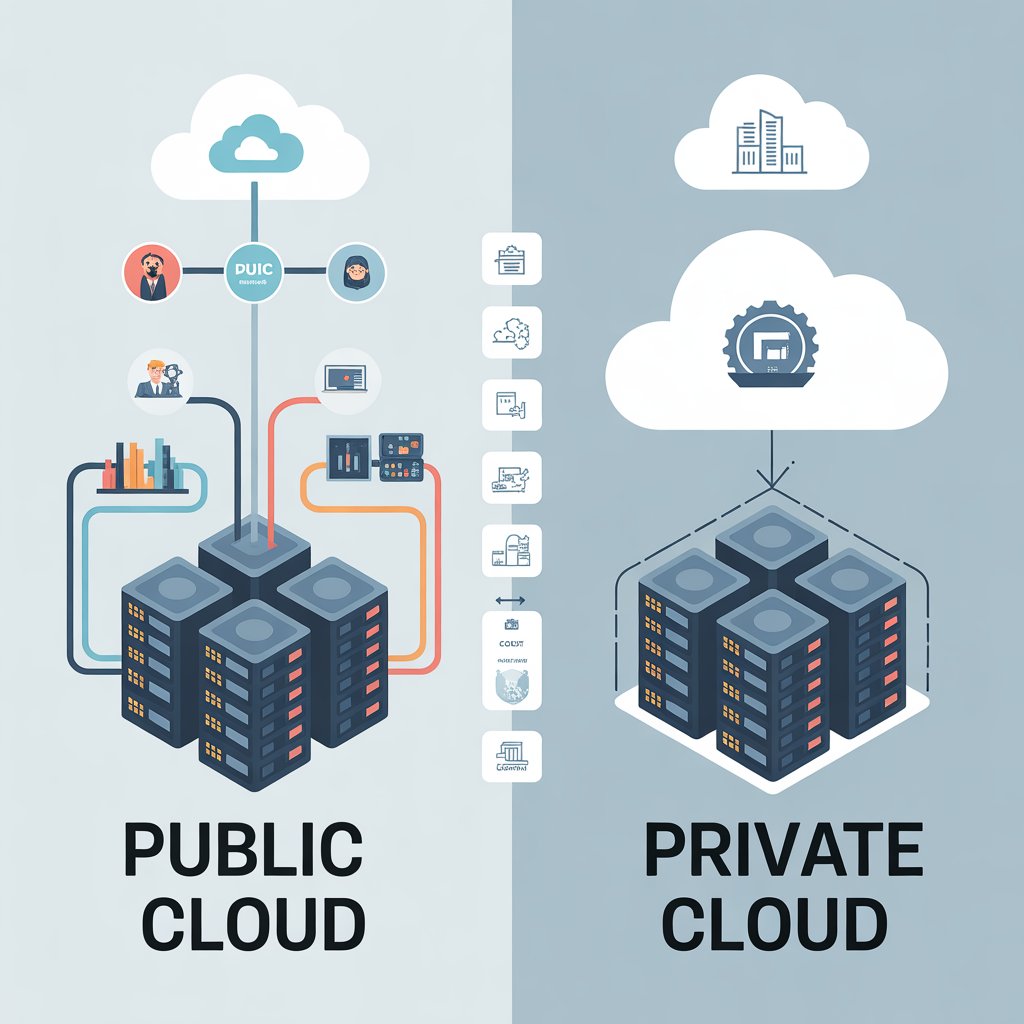
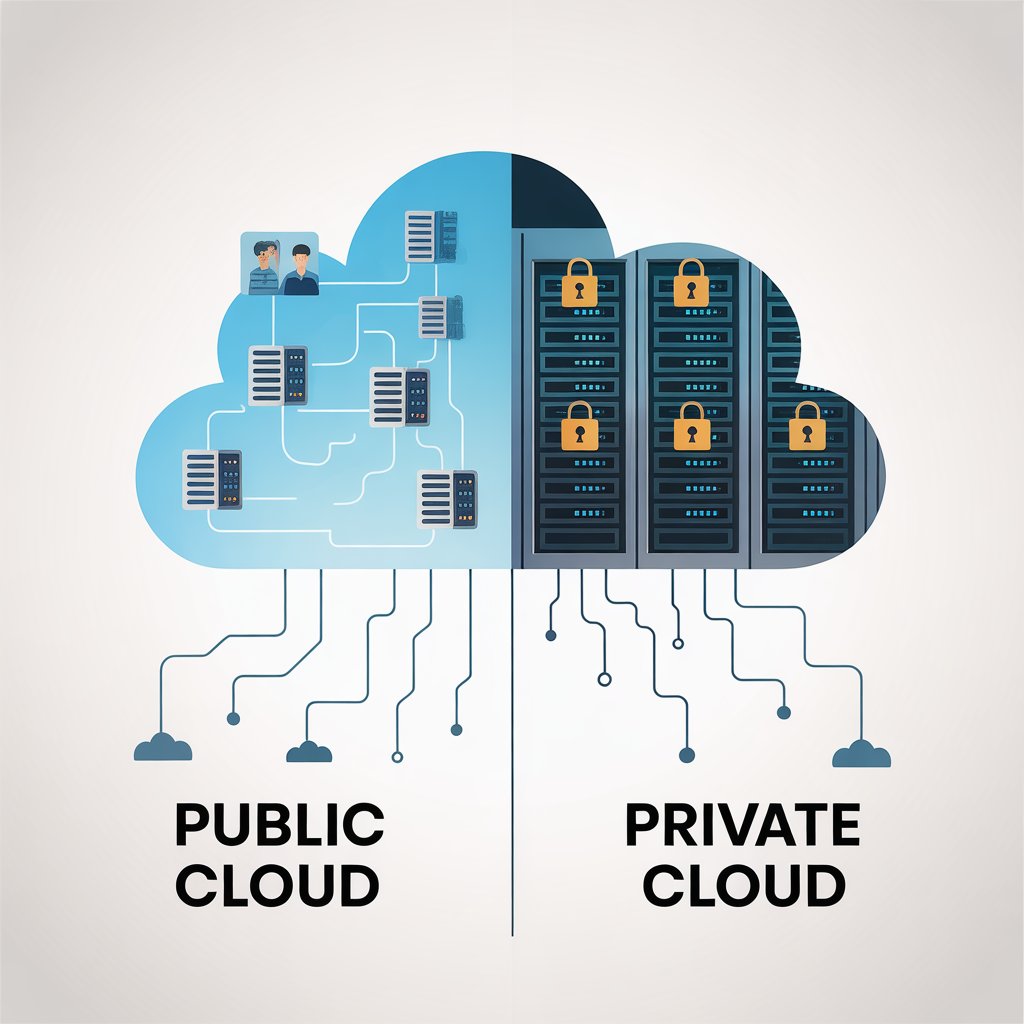
Public cloud platforms such as Amazon Web Services, Microsoft Azure, and Google Cloud Platform deliver shared, internet-accessible computing resources. These providers abstract hardware management while offering highly elastic compute, storage, and networking capabilities.
For ASO operations, public cloud models enable rapid provisioning of analytical workloads, experimentation environments, and automation pipelines without capital-intensive investments. Teams can spin up virtual machines, deploy containers, or consume managed services within minutes.
Private Cloud Architectures
Private clouds allocate dedicated infrastructure to a single organization, whether hosted internally or by a third-party provider. This model offers maximum control over hardware, security policies, and compliance configurations. It is particularly attractive for organizations handling sensitive datasets or proprietary algorithms that require strict isolation.
Hybrid Cloud Strategies
Hybrid architectures blend both models, allowing workloads and data to move between private environments and public cloud platforms. This approach provides flexibility, enabling organizations to optimize for performance, compliance, or cost on a per-workload basis.
Resource Abstraction and Service Layers
Cloud computing is commonly structured into service layers that influence how ASO teams build and operate systems.
Infrastructure as a Service
IaaS offers raw virtualized compute, storage, and networking resources. This model is useful when ASO teams need granular control over custom data pipelines, log processing systems, or specialized analytics stacks.
Platform as a Service
PaaS environments simplify development by abstracting operating systems and runtime management. They are well suited for microservices powering keyword tracking, sentiment analysis, or automation engines.
Software as a Service
SaaS solutions eliminate infrastructure management entirely. Many ASO tools fall into this category, enabling teams to focus on optimization rather than deployment mechanics.
Public cloud elasticity is typically powered by container orchestration technologies like Kubernetes, while private cloud virtualization frequently relies on platforms such as OpenStack or VMware vSphere.
Scalability and Workload Volatility in ASO
ASO workflows are inherently dynamic. A/B tests, ranking fluctuations, and seasonal events can trigger sudden spikes in compute demand. Infrastructure must therefore accommodate unpredictable load patterns.
Elastic Scaling Advantages
Public cloud systems dynamically allocate resources based on utilization metrics. Auto-scaling mechanisms monitor CPU, memory, or queue depth, provisioning additional instances when thresholds are exceeded. This capability prevents performance degradation during traffic bursts or computational surges.
For example, an ASO team running large-scale creative experiments may experience transient 10× increases in image processing or metadata analysis. Elastic scaling ensures responsiveness without permanent over-provisioning.
Private Cloud Constraints
Private environments operate within fixed hardware limits. To handle peak workloads, organizations often provision excess capacity, which leads to lower average utilization and higher idle costs. Scaling events may also involve manual intervention or complex resource reallocation.
For ASO teams reliant on real-time analytics, these delays can reduce data freshness and decision speed.
Security, Compliance, and Data Sovereignty
Handling user-generated content, performance metrics, or behavioral signals requires strong governance controls.
Shared Responsibility in Public Clouds
Public providers secure physical infrastructure, but customers remain responsible for configurations, identity management, and data protection. Misconfigurations – such as improperly exposed storage buckets – remain a leading source of cloud-related breaches.
Robust implementations typically involve encryption, granular access policies, network segmentation, and continuous monitoring.
Control Benefits of Private Clouds
Private clouds provide full authority over security architecture and data residency. Organizations with strict regulatory requirements or proprietary algorithms often value this degree of control. However, maintaining enterprise-grade security demands specialized expertise and sustained operational investment.
Performance, Latency, and Insight Velocity
Timely analytics are central to ASO effectiveness. Delays in ranking updates or review analysis can translate into missed optimization opportunities.
Global Performance Optimization
Public cloud providers leverage extensive backbone networks and distributed edge locations. Content Delivery Networks such as CloudFront and Cloudflare cache assets closer to users, reducing latency and improving responsiveness.
Distributed database technologies like Amazon Aurora Global Database and Google Cloud Spanner further minimize read delays for globally accessed dashboards.
Serverless Processing Models
Serverless services including AWS Lambda and Azure Functions execute workloads on demand, scaling automatically with event streams. These architectures are highly effective for near real-time transformations and alerts within ASO pipelines.
Cost Structures and Total Cost of Ownership
Financial models differ substantially between cloud types.
Public Cloud Economics
Public clouds operate on consumption-based pricing, converting capital expenditures into operational expenses. Cost efficiency depends on intelligent resource selection – including reserved capacity or spot markets – and disciplined FinOps practices.
Without governance controls, variable billing models can produce unexpected expenses, particularly from storage growth or network egress.
Private Cloud Cost Dynamics
Private clouds require significant upfront investment in hardware and facilities. While costs may stabilize over time, unused capacity and infrastructure maintenance inflate total ownership costs. Staffing requirements further compound long-term expenditure.
Ecosystem Integration and Advanced ASO Capabilities
Modern ASO increasingly relies on machine learning, automation, and large-scale data analysis.
Managed Service Acceleration
Public cloud ecosystems provide ready-to-use ML, analytics, and data warehousing solutions. Services like Snowflake integrate seamlessly with cloud storage and compute layers, accelerating model training and large dataset queries.
These managed services reduce engineering overhead and shorten experimentation cycles.
Private Cloud Trade-Offs
Private deployments enable deep customization but require substantial engineering effort. Replicating hyperscale service breadth often increases complexity and slows time-to-market.
Migration Patterns and Hybrid Evolution
Few organizations operate in purely greenfield environments. Legacy systems and data gravity frequently necessitate incremental transitions.
Hybrid strategies allow sensitive workloads to remain isolated while burstable or compute-intensive processes leverage public cloud elasticity. Containerization technologies like Docker improve portability, enabling consistent deployment across environments.
Migration success depends on benchmarking, integrity validation, and downtime minimization.
Conclusion: Prioritizing Workload Alignment Over Cloud Ideology
The public-versus-private debate often obscures the real objective: aligning infrastructure with workload characteristics and strategic priorities. ASO teams benefit most from architectures designed around performance requirements, compliance constraints, data movement costs, and scaling patterns.
Hybrid and composable strategies frequently deliver the optimal balance. Continuous observability, cost monitoring, and architectural flexibility are more valuable than rigid adherence to any single model. Cloud decisions should evolve alongside business needs, ensuring infrastructure remains a driver – not a limiter – of ASO performance and growth.
More Articles
How Can You Secure Your CMS Against Common Attacks and Data Breaches
Practical AI Deployment Best Practices Every Business Can Use Successfully Safely
Essential Checklist for Adopting Headless WordPress Trends That Improve Site Performance
Top 7 Best CMS Platforms for Small Business Growth and Easy Management
A Practical Roadmap to Mastering SEO Ranking Factors That Drive Sustainable Traffic

FAQs
So, what’s the big deal? What’s the core difference between public and private cloud?
The simplest way to put it is ownership and sharing. Public cloud services are owned and operated by a third-party provider and their resources (servers, storage, etc.) are shared among multiple users over the internet. Private cloud, on the other hand, is dedicated solely to one organization, either hosted on-site or by a third-party provider and with exclusive access.
When does going with a public cloud make the most sense for a business?
Public cloud is often ideal for businesses looking for flexibility, quick deployment and cost-efficiency without needing deep control over the infrastructure. It’s great for variable workloads, test and development environments, web applications and businesses with unpredictable resource demands, as you only pay for what you use.
My company has unique needs. Why might a private cloud be a better option for us?
Private cloud shines when you require maximum control, enhanced security and strict compliance with regulations (like HIPAA or GDPR). It’s perfect for handling sensitive data, critical applications, or when your business has very specific performance or customization requirements that shared public infrastructure can’t meet.
Is one cloud type inherently more secure than the other?
It’s not a simple ‘yes’ or ‘no.’ Public cloud providers invest heavily in security, often more than a single company could and you share infrastructure. Private cloud offers isolated environments, giving you more direct control over security measures. Ultimately, security depends more on how each environment is managed and configured rather than just its type.
Let’s talk money. Which cloud option is generally cheaper?
Public cloud often has a lower upfront cost and a pay-as-you-go model, making it seem cheaper, especially for fluctuating needs. But, for consistent, high-volume workloads, private cloud can sometimes be more cost-effective in the long run due to optimized resource utilization and no recurring subscription fees per use. It really depends on your usage patterns and scale.
How easy is it to scale resources up or down with public versus private cloud?
Public cloud offers almost infinite scalability on demand. You can instantly provision or de-provision resources as needed, making it incredibly agile. Private cloud scalability requires more planning and investment. While you can scale within your dedicated infrastructure, expanding beyond its current capacity means adding more hardware, which takes time and capital.
What if my business could benefit from both? Is there a way to combine them?
Absolutely! That’s where hybrid cloud comes in. A hybrid cloud strategy allows you to use both public and private cloud environments, often linked together, to get the best of both worlds. You might keep sensitive data or critical applications on a private cloud while using the public cloud for less sensitive data, web services, or burstable workloads. It offers great flexibility and control.