

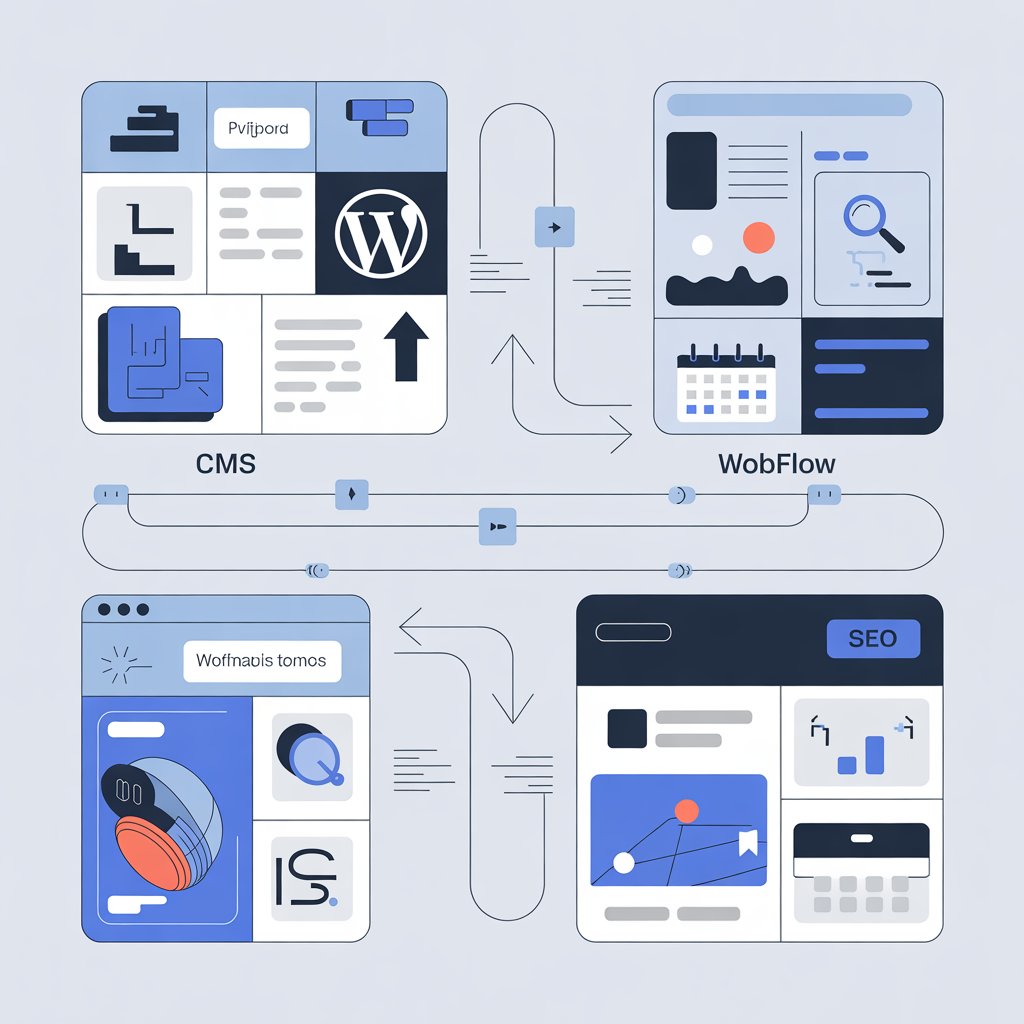

As a firm building AI-powered content solutions, we work with content every single day. We create it, optimise it, publish it, update it, and measure how it performs. Over time, we have learned one clear lesson. Without a strong Content Management System, content growth becomes chaotic, slow, and difficult to control.
Content Management Systems, often referred to as CMS platforms, allow us to manage digital content in a structured, efficient, and scalable way. They help us bring strategy, execution, and governance together in one place. More importantly, they give our teams the clarity and control needed to grow content without friction.
In this blog, we share how we view Content Management Systems, why they matter, and how they support long-term content performance.
Understanding Content Management Systems
A Content Management System is a platform that allows us to create, store, organise, edit, and publish digital content without relying heavily on manual processes. Instead of handling content across disconnected tools, a CMS centralises everything.
From blog posts and landing pages to metadata and updates, a CMS gives us a single source of truth. It ensures consistency while allowing flexibility. As content volume increases, this structure becomes essential.
We see CMS platforms not just as publishing tools, but as operational systems that support content lifecycle management from creation to optimisation.
Why Content Management Systems Matter Today
Content demands continue to grow. Search engines, AI-driven platforms, and users expect fresh, accurate, and relevant content at scale. Managing this manually slows teams down and increases risk.
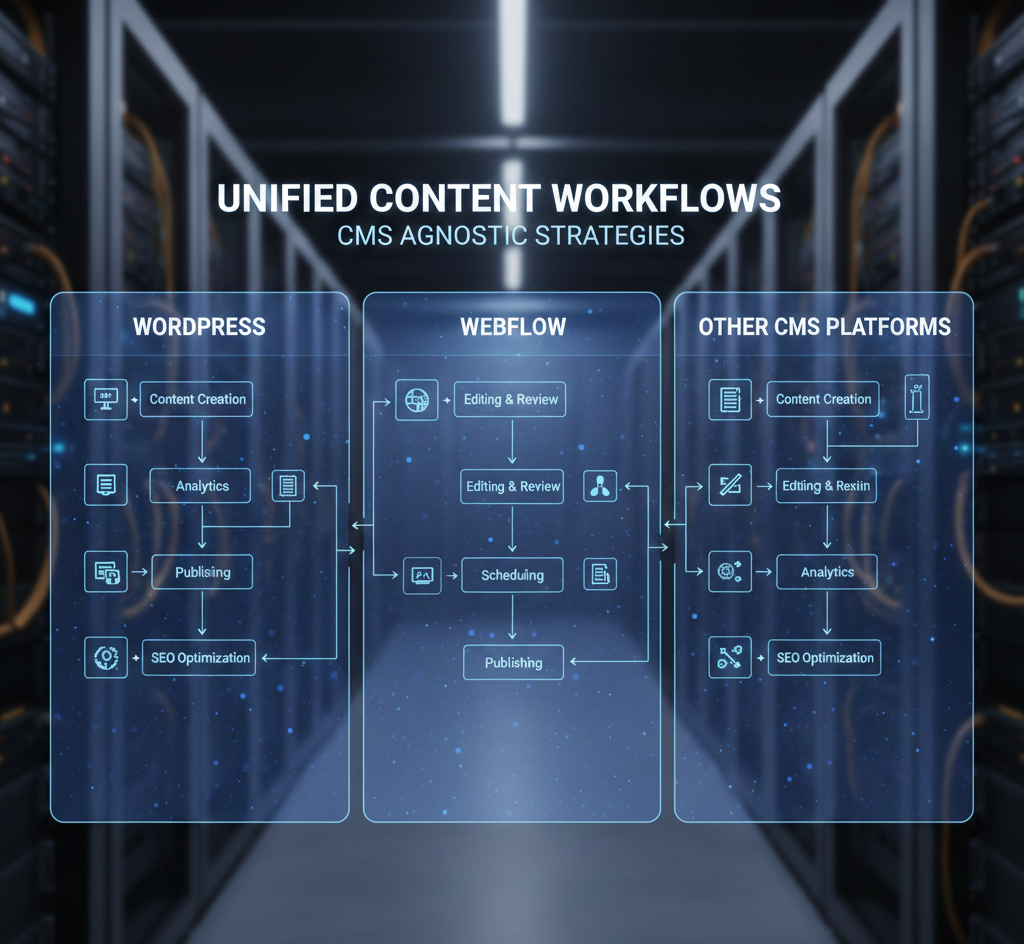
A Content Management System solves this by enabling repeatable workflows. It allows us to standardise how content is created, reviewed, approved, and published. As a result, we move faster without compromising quality.
Additionally, CMS platforms help maintain consistency across large content libraries. This consistency supports both user experience and discoverability.
Centralised Content Creation and Control
One of the biggest advantages of using a CMS is centralisation. Instead of scattered files and disconnected tools, everything lives in one environment.
We create content directly within the system. We manage revisions, collaborate across teams, and maintain version control. This reduces confusion and eliminates duplicate work.
Centralisation also improves accountability. Everyone knows where content lives and who owns each stage of the process.
Structured Content for Better Performance
Content performs best when it follows a clear structure. A Content Management System enforces that structure naturally.
We use CMS frameworks to organise content into fields, sections, and formats. This approach makes content easier to read, update, and optimise. It also supports consistency across pages and posts.
Structured content allows us to scale without sacrificing clarity. Whether we publish ten pages or ten thousand, the experience remains cohesive.
Efficient Publishing Workflows
Speed matters in content operations. A CMS streamlines publishing by removing unnecessary steps.
We rely on built-in workflows that guide content from draft to publication. These workflows ensure reviews happen on time and approvals stay aligned with standards.
Because everything happens inside the system, we reduce delays and maintain momentum. Content reaches audiences faster while remaining accurate and compliant.
Optimisation Starts Inside the CMS
Modern Content Management Systems go beyond basic publishing. They support content optimisation from the very beginning.
We manage titles, descriptions, internal linking, and content updates directly within the CMS. This makes optimisation part of the workflow rather than an afterthought.
By integrating optimisation into content creation, we improve discoverability and long-term performance without adding complexity.
Scalability Without Operational Stress
As content grows, manual processes break down. A CMS prevents this by scaling alongside our needs.
We add new content types, categories, and workflows without rebuilding systems. The platform adapts as volume increases.
This scalability allows us to focus on strategy and quality instead of operational overhead. Growth becomes predictable rather than stressful.
Consistency Across Teams and Channels
When multiple teams create content, consistency becomes a challenge. A Content Management System solves this by setting clear guidelines.
We define templates, formatting rules, and content standards inside the CMS. As a result, every piece of content aligns with our brand and messaging.
Consistency builds trust with users and improves overall content experience across channels.
Simplified Content Updates and Maintenance
Content does not end at publication. It requires regular updates to stay relevant.
A CMS makes maintenance simple. We update content centrally without rebuilding pages from scratch. Changes reflect instantly across platforms.
This flexibility helps us keep content accurate, current, and aligned with evolving goals.
Improved Collaboration and Transparency
Content creation is rarely a solo effort. Writers, editors, strategists, and reviewers all play a role.
A Content Management System supports collaboration by providing shared access, comments, and revision history. Everyone stays aligned without relying on external communication tools.
Transparency improves efficiency and reduces errors throughout the process.
Data-Driven Content Decisions
CMS platforms support better decision-making by connecting content with performance insights.
We analyse how content performs and use that data to refine future creation. Because content and management live in the same system, insights translate into action faster.
This approach allows continuous improvement instead of static publishing.
Future-Ready Content Operations
Content Management Systems continue to evolve. They now support automation, structured data, and integration with intelligent tools.
By building our content operations on a CMS foundation, we prepare for future growth. The system adapts as technology and user expectations change.
This future-ready approach ensures long-term sustainability.
Final Perspective on Content Management Systems
We see Content Management Systems as more than technical platforms. They are strategic assets that support efficiency, scalability, and quality.
By centralising content, enforcing structure, and streamlining workflows, a CMS enables us to manage content with confidence. It reduces complexity while supporting growth.
For any organisation serious about content, a strong CMS is not optional. It is the foundation that turns content from a challenge into a competitive advantage.
At PromotoAI, we build and optimize content with this mindset. A well-implemented Content Management System allows us to move faster, scale smarter, and deliver meaningful content experiences consistently.