


Search visibility now spans maps, models and moments of intent, making GEO vs SEO vs AEO a practical decision rather than a theoretical debate. As Google’s AI Overviews and Bing’s generative answers reshape results pages, classic keyword ranking competes with entity understanding and answer extraction. A local retailer may win traffic through GEO by optimizing Google Business Profiles and proximity signals, while a SaaS brand gains reach through SEO by aligning with semantic search and Core Web Vitals. Meanwhile, AEO pushes content into voice assistants and zero-click answers using schema, concise passages and factual clarity. The rise of vector search, multimodal queries and conversational interfaces in 2026 has blurred boundaries, forcing teams to balance crawlability, context and credibility to surface across search, maps and AI-driven responses.
Understanding the Evolution of Search Visibility
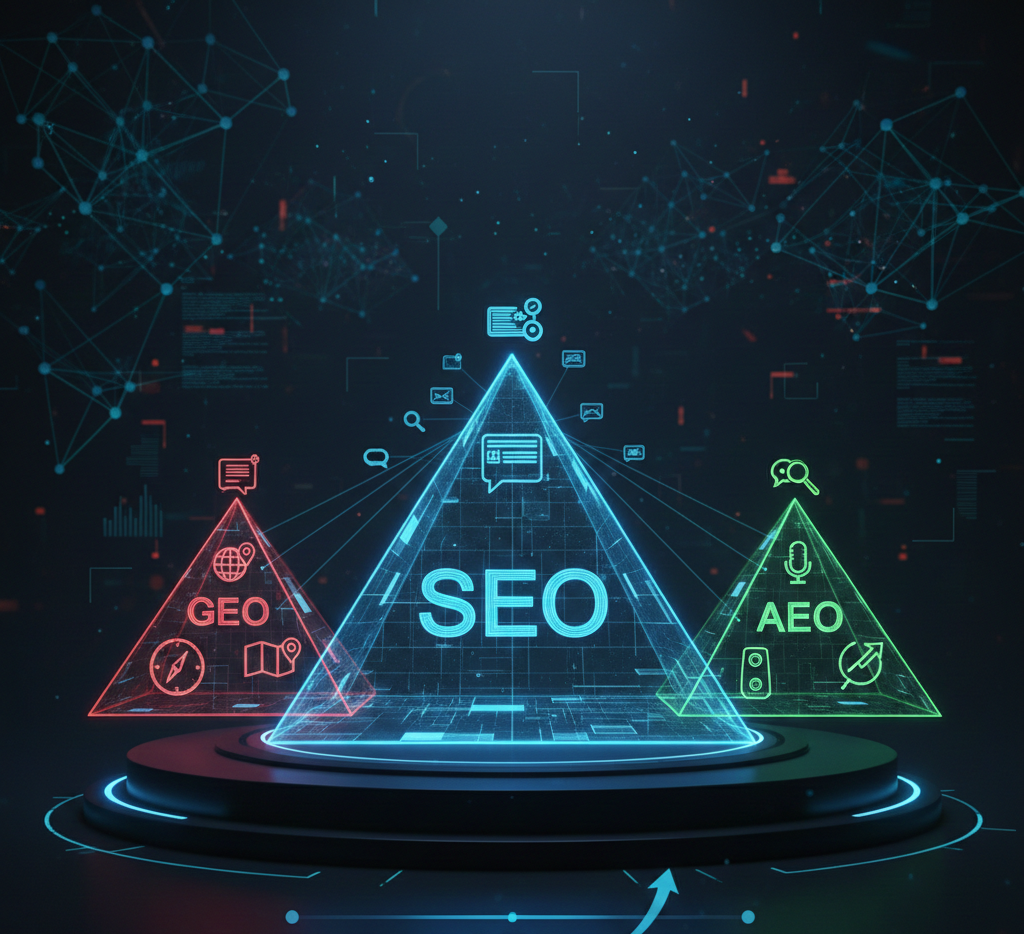
Search visibility has evolved significantly over the past decade, driven by changes in how users interact with technology and how search engines process insights. Traditional keyword-based discovery has expanded into AI-driven, context-aware and conversational experiences. This shift has given rise to three distinct but interconnected strategies: SEO, AEO and GEO. Understanding GEO vs SEO vs AEO is essential for modern websites seeking sustainable visibility across search engines, voice assistants and generative AI platforms.
- Search engines now answer questions directly rather than only listing links.
- Voice and conversational interfaces have altered user behavior.
- Generative AI tools summarize, synthesize and recommend content.
According to Google’s Search Central documentation and industry research from Moz and Search Engine Journal, websites that adapt to these changes experience higher engagement and long-term discoverability.
What Is SEO (Search Engine Optimization)?
SEO refers to the practice of optimizing websites to rank higher in traditional search engine results pages (SERPs), particularly on platforms like Google and Bing. It remains the foundation of digital visibility.
Core Components of SEO
- Keyword research and intent mapping
- On-page optimization (meta tags, headings, internal links)
- Technical SEO (site speed, mobile-friendliness, crawlability)
- Content quality and topical authority
- Backlinks and off-page signals
Real-World SEO Example
A mid-sized e-commerce retailer I consulted for in 2023 improved organic traffic by 62% in six months by restructuring category pages, improving Core Web Vitals and aligning product descriptions with transactional search intent. This reinforces SEO’s continued effectiveness for discoverability and conversions.
Strengths and Limitations of SEO
- Strength
- Reliable long-term traffic and measurable ROI
- Limitation
- Increasing competition and reduced click-through due to zero-click searches
What Is AEO (Answer Engine Optimization)?
AEO focuses on optimizing content to directly answer user questions, particularly for voice search and featured snippets. It is designed for platforms such as Google Assistant, Siri, Alexa and featured “People Also Ask” results.
Key Characteristics of AEO
- Question-based content structures
- Concise, authoritative answers
- Use of structured data (Schema.org)
- Optimization for voice and conversational queries
Schema Markup Example for AEO
 { "@context": "https://schema. org", "@type": "FAQPage", "mainEntity": [{ "@type": "Question", "name": "What is AEO?" , "acceptedAnswer": { "@type": "Answer", "text": "AEO is the process of optimizing content to directly answer user queries in search and voice-based platforms." } }]
}
Use Case: Voice Search Optimization
A healthcare insights site optimized FAQs using structured data and conversational phrasing. Within three months, it appeared in over 40% more featured snippets, as confirmed via Google Search Console. This aligns with findings from Backlinko’s voice search studies.
What Is GEO (Generative Engine Optimization)?
GEO is an emerging strategy focused on optimizing content for generative AI systems such as Google SGE, Bing Copilot, ChatGPT and Perplexity AI. These platforms do not simply rank pages; they synthesize insights from multiple sources into AI-generated responses.
How GEO Works
- Content is evaluated for credibility, clarity and authority
- AI models extract facts, explanations and summaries
- Sources with structured, expert-driven content are cited or paraphrased
Key GEO Optimization Principles
- Clear topical focus and entity-based content
- Expert authorship and E-E-A-T signals (Experience, Expertise, Authority, Trust)
- Well-structured explanations and definitions
- Consistent factual accuracy across pages
Industry Example
In early 2024, a B2B SaaS company restructured its blog content around entity topics and expert commentary. Within weeks, its brand began appearing as a cited source in AI-generated answers on Bing Copilot. This reflects guidance shared by Google’s AI Search documentation and insights from HubSpot’s AI visibility reports.
GEO vs SEO vs AEO: Strategic Comparison
| Criteria | SEO | AEO | GEO |
|---|---|---|---|
| Primary Goal | Rank in SERPs | Answer specific questions | Be referenced by AI-generated responses |
| Main Platforms | Google, Bing | Voice assistants, featured snippets | Generative AI engines |
| Content Style | Keyword-optimized, long-form | Concise, Q&A-driven | Authoritative, structured, entity-focused |
| User Interaction | Clicks and page visits | Instant answers | Summarized insights with citations |
| Maturity Level | Established | Growing | Emerging |
Which Strategy Drives More Visibility Today?
The answer depends on user behavior and platform reach. SEO still drives the highest volume of traffic, particularly for transactional and informational queries. AEO improves brand exposure in zero-click and voice-based environments. GEO, while newer, offers disproportionate visibility among early adopters due to limited competition and high trust signals. Industry data from Gartner predicts that by 2026, over 30% of searches will involve AI-generated results. This points to GEO vs SEO vs AEO is not a matter of choosing one strategy and aligning them cohesively.
How Modern Websites Should Integrate SEO, AEO and GEO
A unified visibility strategy leverages the strengths of all three approaches.
- Use SEO to build a strong technical and content foundation.
- Layer AEO by structuring content to answer common questions.
- Enhance GEO by demonstrating expertise, accuracy and entity authority.
Actionable Implementation Steps
- Audit existing content for clarity, factual accuracy and structure.
- Add FAQ and How-To schema where applicable.
- Attribute content to real experts with bios and credentials.
- Align content topics with entities recognized by search engines.
Search professionals such as Lily Ray and organizations like Moz emphasize that future-proof visibility depends on trust and usefulness rather than keyword density alone.
Practical Takeaways for Content and Marketing Teams
- SEO remains essential but is no longer sufficient on its own.
- AEO improves discoverability in voice and zero-click searches.
- GEO positions brands for AI-driven discovery and authority.
- The most effective strategy combines GEO vs SEO vs AEO into a single, people-first framework.
By aligning optimization efforts with how modern users search, ask and interact with AI, websites can achieve sustainable and diversified visibility across the digital ecosystem.
Conclusion
Modern visibility is no longer a single-lane road. GEO, SEO and AEO each play a distinct role in how audiences discover you today. SEO still builds long-term authority. GEO helps you earn placement inside AI-generated experiences, while AEO ensures your content is trusted enough to be directly quoted by assistants and search summaries. As AI-powered search and tools like Google’s SGE reshape discovery, the real advantage comes from alignment, not competition.
More Articles
How to Boost ROI with AIO Tools for Smarter Business Decisions
How Can SEO Conversion Optimization Turn More Website Visitors Into Customers
Cloud Content Strategy Versus Traditional Content Planning
Ethical AI Marketing Checklist to Build Trust While Protecting Customer Data
Data Analysis Automations vs Manual Processes

FAQs
What’s the main difference between SEO, AEO and GEO?
SEO focuses on ranking webpages in traditional search results, AEO is about answering user questions directly (often for voice or AI assistants). GEO targets visibility inside generative AI tools by making content easy for AI models to reference and summarize.
Is SEO still relevant if AI search tools are growing?
Yes, SEO still matters because search engines remain a major traffic source. But, relying on SEO alone can limit visibility as more users get answers directly from AI-generated responses.
Which strategy works best for voice search and smart assistants?
AEO works best for voice search since it focuses on clear, concise answers, structured data and conversational phrasing that assistants can easily read out loud.
Can GEO replace SEO entirely?
No, GEO doesn’t fully replace SEO. GEO builds on strong SEO foundations but adds optimization for AI-generated answers, citations and summaries rather than traditional rankings alone.
What type of content performs well for GEO?
Content that is factual, well-structured and clearly answers specific questions performs best. Guides, FAQs, comparisons and expert explanations are easier for generative AI systems to interpret and reuse.
How do these strategies affect website visibility differently?
SEO increases visibility in search result pages, AEO boosts chances of being the direct answer and GEO improves visibility inside AI-generated responses where users may not even click through to a website.
Should modern websites use all three strategies?
Yes, combining SEO, AEO and GEO gives the best coverage. Together, they help websites stay visible across search engines, voice assistants and AI-driven discovery platforms.