

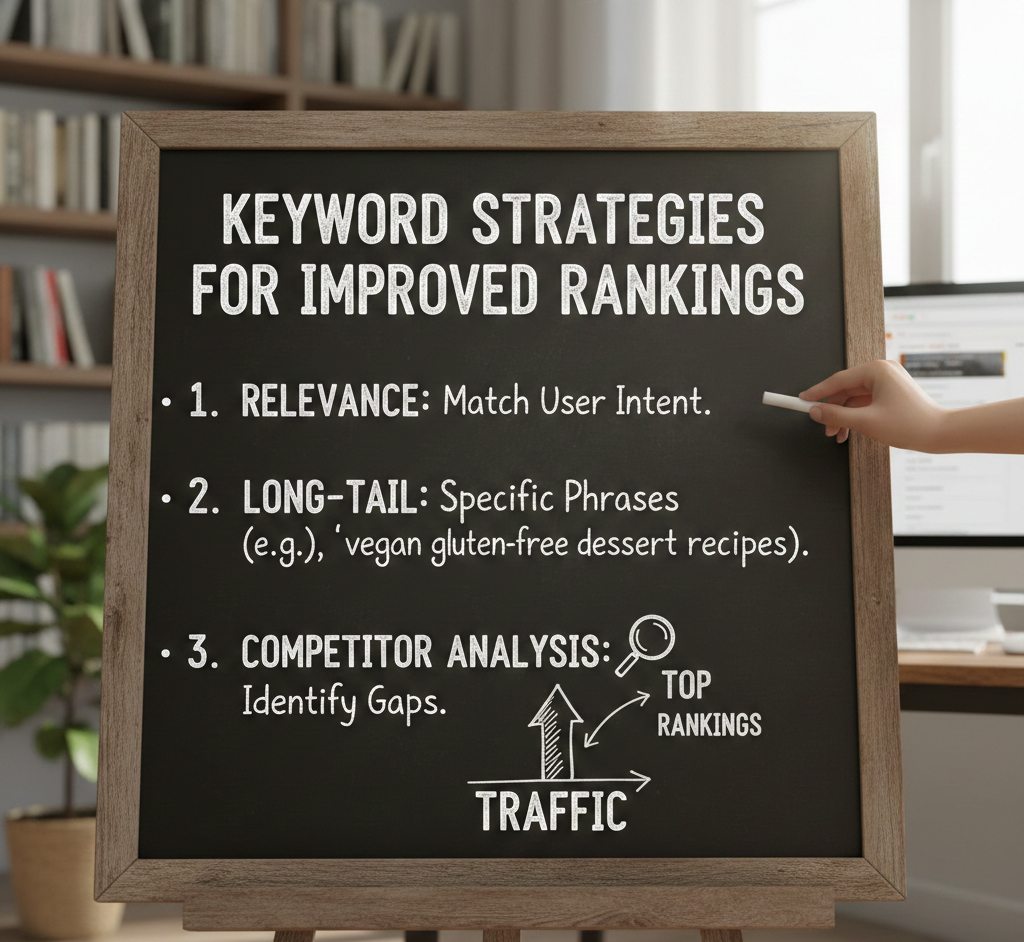

Beyond Search Volume: Mastering Modern Keyword Strategy
Effective organic visibility no longer hinges on identifying popular search terms. It requires a sophisticated strategy that deciphers user intent across complex query permutations and dynamic SERP architectures. Modern keyword analysis transcends rudimentary volume metrics, demanding a technical understanding of semantic relationships and the algorithmic parsing of lexical density. To unlock incremental performance gains – often quantified in sub-2.5s LCP impact and tangible conversion uplifts – practitioners must dive into the underlying mechanisms of search results.
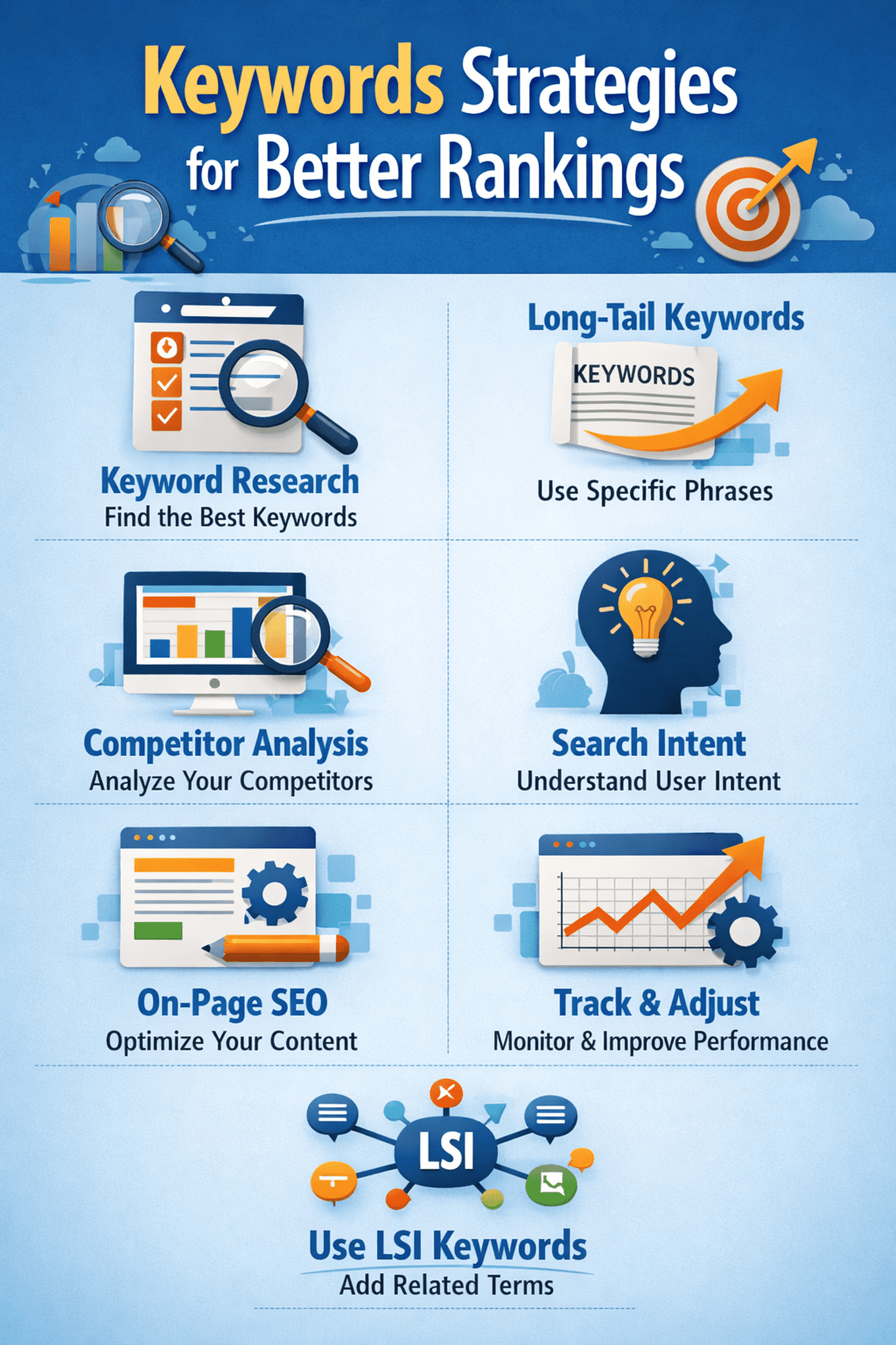
Decoding User Intent with Algorithmic Precision
A robust keyword strategy extends far beyond search volume. Google’s evolution through algorithms like RankBrain, BERT, and MUM signifies a shift toward understanding the nuanced intent behind a query. Historically, SEO prioritized exact-match volume, but this superficial approach often leads to content misalignment.
The mechanism of intent decoding involves natural language processing (NLP) to examine context and syntax. For example, the query “how to make coffee” triggers different SERP features (recipes, videos, or product comparisons) based on implicit signals like location or history. An expert analyst discerns whether a user seeks a guide (informational), a specific technique (navigational), or a repair solution (problem-solving). Failing to align content with this intent results in high bounce rates, signaling irrelevance to search engines. Use intent filters in tools like Semrush or Ahrefs to ensure your content matches the dominant user goal.
The Semantic Web: LSI and Entity-Based Grouping
The era of keyword stuffing is dead. Modern search engines operate on a semantic understanding of topics. To excel, you must embrace Latent Semantic Indexing (LSI) and entity-based grouping. LSI keywords are not mere synonyms; they are terms semantically related to your primary keyword that provide context. If targeting “digital marketing strategy,” LSI terms include “SEO tactics,” “PPC campaigns,” and “conversion rate optimization.”
Google’s Knowledge Graph connects these entities. When your content features related concepts, it builds topical authority. Tools like Surfer SEO or Clearscope can identify co-occurring terms used by top-ranking pages. For “best running shoes,” incorporating terms like “pronation,” “arch support,” and “cushioning” signals expertise. Neglecting this integration results in shallow content that fails to compete with entity-dense narratives.
Competitive Intelligence: Unearthing Gaps and Opportunities
Sophisticated research involves dissecting a competitor’s entire organic footprint to find strategic weaknesses. This isn’t about imitation; it’s about algorithmic differentiation. By analyzing a competitor’s “near-miss” keywords – those ranking on pages 2 or 3 – you can identify low-hanging fruit.
If a competitor ranks #15 for “enterprise cloud solutions” with outdated content, you have an opportunity to create a superior, technically detailed resource. Furthermore, a page ranking well with few backlinks suggests a strong content-to-keyword fit, meaning high-quality content could easily leapfrog it. Focus on “blue ocean” opportunities where competitors are absent, targeting long-tail, high-intent queries that offer high conversion potential despite lower volumes.
Long-Tail Mastery and Conversion Pathways
While head terms have high volume, the true power for niche markets lies in long-tail keywords. These phrases reflect specific user journeys and high conversion intent. A user searching for “best project management software for remote marketing teams with agile features” is much further along the buying journey than one searching for “project management software.”
Precision in intent leads to conversion rates often exceeding 5–10%. While individual volumes are lower, the cumulative traffic from hundreds of long-tail queries is substantial. Use tools like AnswerThePublic or Google’s “People Also Ask” to find question-based queries. Addressing these specific pain points builds immediate trust and authority while avoiding the prohibitive competition of head terms.
SERP Feature Engineering for Rich Results
The modern SERP is a dynamic interface featuring snippets, “People Also Ask” boxes, and video carousels. An advanced strategy targets these specific features to dominate the page. Occupying “Position Zero” (Featured Snippets) can capture over 8% of all clicks, even if your organic rank is lower.
Optimization is feature-specific. For snippets, provide concise answers (40–60 words) using clear HTML structures like <ol> or <table>. For “People Also Ask,” use questions as subheadings followed by direct answers. While some features provide the answer on the SERP (potentially reducing clicks), the gains in brand authority and visibility often outweigh the trade-off.
Data-Driven Validation and Iteration
A keyword strategy is only as good as its measurable impact. This requires a feedback loop: plan, implement, measure, and adjust. Google Search Console (GSC) is vital for identifying “query opportunities”- keywords with high impressions but low CTR. Updating a title tag to include a year or a specific benefit can double your CTR without changing your rank.
GA4 provides insights into post-click behavior. If a high-intent page has a bounce rate over 70%, there is a misalignment between the keyword and the content. Regular rank tracking allows for quick responses to algorithmic shifts, ensuring your strategy remains agile rather than static.
Scaling and Future-Proofing via Programmatic SEO
For large-scale operations, keyword research must move toward programmatic approaches and entity-based models. Programmatic SEO allows you to manage thousands of keywords by dynamically assembling landing pages for structured datasets (e.g., “best [product] in [city]”).
Future-proofing also requires preparing for conversational search and multimodal AI. This means focusing on natural language queries and structured data (schema markup) to help AI categorize your content. While the initial infrastructure cost is higher, the ROI in organic footprint and efficiency is immense for growing brands.
More Articles
A Practical Roadmap to Mastering SEO Ranking Factors That Drive Sustainable Traffic
How to Optimize Product Pages That Increase Conversions and Improve Search Rankings
How Domain Age Impacts SEO Trust Rankings and Buying Decisions
What Is a Content Strategy Framework and How Does It Guide Better Decisions
GEO vs SEO vs AEO Which Strategy Drives More Visibility for Modern Websites

FAQs
What’s the main idea behind ‘Uncover Winning Keywords’?
It’s all about helping you find the best keywords that will get your website noticed by search engines and rank higher. We’re talking about smart strategies to pick keywords that really work for your content and audience.
Why should I care so much about keywords for my search rankings?
Keywords are the bridge between what people are searching for and your content. If you use the right ones, search engines comprehend what your page is about and show it to the right audience, leading to better visibility and more traffic.
Can you give me a hint about the 7 essential strategies?
While I can’t list all seven here, they generally cover things like understanding user intent, competitive analysis, long-tail keyword research, using keyword research tools effectively and identifying untapped keyword opportunities. They’re designed to give you a comprehensive approach.
Is this guide suitable for beginners in SEO, or is it more for advanced users?
Absolutely, it’s designed to be helpful for both! Beginners will get a solid foundation in keyword research, while more experienced users can pick up new insights and refine their existing strategies to stay ahead.
How soon can I expect to see improvements in my search rankings after applying these strategies?
SEO is a marathon, not a sprint. While some tactical changes might show quick boosts, significant and lasting improvements typically take a few weeks to a few months. Consistency and patience are key!
My industry is super competitive. Will these strategies still help me find winning keywords?
Definitely! The strategies are designed to help you identify less competitive, high-value keywords (often long-tail ones) that your bigger rivals might overlook. This allows you to carve out your own niche and attract targeted traffic even in crowded markets.
Do I need any special tools to implement these keyword strategies?
While many free and paid keyword research tools can certainly make the process easier and more efficient, the core principles of these strategies can be understood and applied even with basic tools or manual research. Using dedicated tools will just supercharge your efforts.