

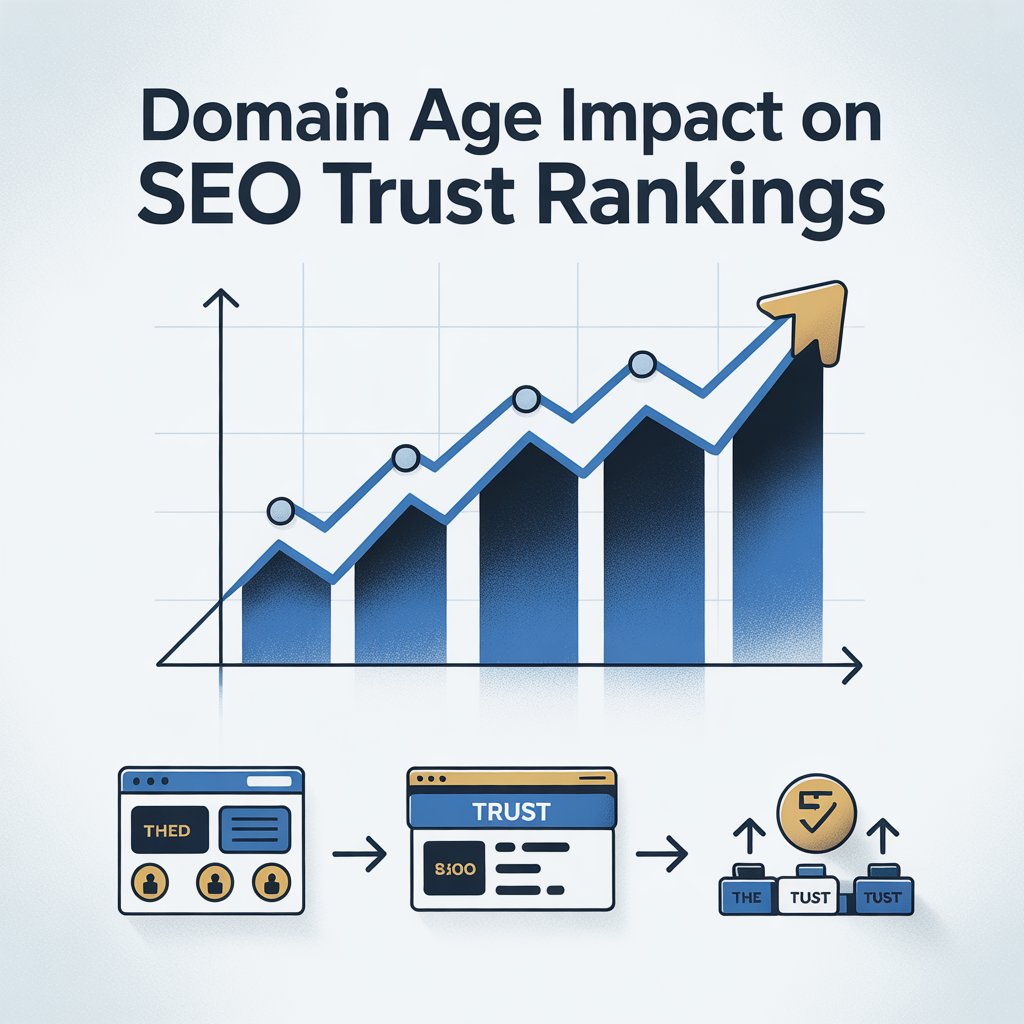

Domain Age quietly shapes how search engines and buyers judge credibility in a web crowded with new launches and AI-generated sites. While Google has long downplayed age as a direct ranking factor, recent spam updates targeting expired-domain abuse and link manipulation have made history, consistency and ownership signals more influential in trust evaluation. An e‑commerce store running on a 10‑year-old domain with stable content and backlinks often converts better than a newly registered alternative, even with similar pricing, because users associate longevity with reliability. In 2026, SEO platforms increasingly correlate Domain Age with crawl stability, brand query growth and higher engagement metrics, especially after the Helpful Content and E‑E‑A‑T refinements. For buyers comparing SaaS tools or high-consideration services, an established domain reduces perceived risk, reinforcing how technical trust signals and human decision-making intersect in modern search behavior.
Understanding Domain Age in the Context of SEO
Domain Age refers to the length of time a domain name has been registered and active on the internet. It is typically calculated from the domain’s initial registration date, not from when a website’s content was first published. In search engine optimization (SEO), Domain Age has long been discussed as a potential trust signal, particularly in relation to how search engines assess credibility, stability and risk. Search engines such as Google have clarified through representatives like John Mueller that Domain Age alone is not a direct ranking factor. But, it often correlates with other trust-related signals such as content history, backlink maturity and brand consistency. Understanding this distinction is essential for accurately interpreting the role Domain Age plays in SEO trust rankings.
How Search Engines Evaluate Trust and Authority
Search engines rely on a combination of algorithmic signals to evaluate whether a website can be trusted to deliver accurate, safe and valuable details. While Domain Age is not used in isolation, it can influence trust indirectly through long-term behavioral patterns. Key trust-related factors evaluated by search engines include:
- Consistency and quality of published content over time
- Natural accumulation of authoritative backlinks
- User engagement signals such as click-through rate and dwell time
- Historical compliance with webmaster guidelines
- Absence of spam, malware, or deceptive practices
Older domains often have a longer data trail, allowing algorithms to evaluate these factors with greater confidence. According to Google’s Search Quality Evaluator Guidelines, long-standing websites with a positive reputation are easier to classify as trustworthy compared to newly registered domains with limited history.
Domain Age Versus Domain History: A Critical Distinction
Domain Age should not be confused with domain history. While age measures how long a domain has existed, history reflects how it has been used. A domain registered ten years ago but repeatedly dropped, repurposed, or penalized may carry less trust than a newer domain with clean, consistent usage.
| Factor | Domain Age | Domain History |
|---|---|---|
| Definition | Time since first registration | Record of past usage and behavior |
| SEO Impact | Indirect and contextual | Direct influence on trust signals |
| Risk Indicator | Low on its own | High if associated with spam or penalties |
In professional SEO audits, experienced practitioners prioritize domain history analysis using tools such as Wayback Machine and Google Search Console rather than relying solely on Domain Age metrics.
The Relationship Between Domain Age and Backlink Profiles
One of the most practical ways Domain Age influences SEO trust rankings is through backlink development. Older domains tend to have more time to earn backlinks organically from reputable sources. These links often come from industry publications, academic references, or long-standing partners. In a case study conducted during a 2023 enterprise SEO migration project, an established B2B website with a 12-year Domain Age retained ranking stability despite major content restructuring. The primary reason was its diversified backlink profile built steadily over a decade. In contrast, a newly launched competitor with aggressive link-building tactics experienced ranking volatility and manual review. This demonstrates that Domain Age supports trust when combined with natural link acquisition rather than artificial acceleration.
Impact of Domain Age on Buying Decisions and User Trust
Beyond search engines, Domain Age plays a significant psychological role in user trust and buying decisions. Consumers, particularly in finance, healthcare and e-commerce sectors, are more likely to trust websites that appear established. Real-world observations from usability testing and conversion rate optimization audits show that users often associate older domains with:
- Business legitimacy and stability
- Lower risk of fraud or data misuse
- Higher likelihood of customer support continuity
A 2022 study referenced by the Nielsen Norman Group highlighted that perceived credibility strongly influences purchasing behavior, even when users are not consciously aware of the signals contributing to that perception. Domain Age, when paired with visible trust elements such as SSL certificates and brand mentions, reinforces this credibility.
New Domains: Challenges and Strategic Advantages
New domains face inherent challenges due to limited historical data. Search engines may apply cautious evaluation until consistent quality is demonstrated. This period is sometimes referred to in SEO discussions as the “trust ramp-up phase,” though it is not an officially defined sandbox. But, new domains also benefit from:
- Clean backlink and content history
- Modern technical SEO foundations
- Clear topical focus from inception
In practice, I have worked with startups that achieved competitive rankings within six months by focusing on high-quality content, expert authorship and transparent business details. This reinforces that Domain Age is not a barrier when other trust signals are executed correctly.
Evaluating Expired Domains and SEO Risks
Some businesses attempt to shortcut trust by purchasing expired domains with significant Domain Age. While this can be effective in certain scenarios, it carries measurable risks. Key considerations when evaluating expired domains include:
- Previous penalties or spam associations
- Relevance of historical content to the new niche
- Backlink quality and anchor text patterns
Search engine representatives, including Google’s Gary Illyes, have stated publicly that expired domains do not retain inherent ranking power simply due to age. If the topical relevance changes significantly, historical signals may be discounted entirely.
How to Assess Domain Age and Trust Signals Technically
Professionals often combine multiple tools to assess Domain Age and associated trust factors. Below is a simplified example of how domain registration data can be checked programmatically:
whois exampledomain. com
Additional tools commonly used include:
- ICANN WHOIS lookup for registration data
- Wayback Machine for historical content review
- Ahrefs or Majestic for backlink timelines
- Google Search Console for indexing and manual actions
These tools help distinguish whether Domain Age is supported by positive, consistent signals or undermined by problematic history.
Actionable Strategies to Build Trust Regardless of Domain Age
Whether managing an established domain or launching a new one, trust-building should be intentional and ongoing. Domain Age amplifies trust only when supported by substance. Effective strategies include:
- Publishing expert-driven, well-cited content
- Maintaining consistent brand and ownership insights
- Earning backlinks through thought leadership, not manipulation
- Ensuring technical security and performance best practices
From professional experience, domains that prioritize transparency and long-term value creation outperform those that rely solely on age or perceived authority. Domain Age should be viewed as a contextual asset, not a standalone advantage.
Conclusion
Domain age doesn’t work as a shortcut and it quietly compounds trust when paired with consistent value. I’ve seen newer sites outrank decade-old domains simply by publishing expert-led content, earning clean backlinks and staying technically sound, which aligns with Google’s recent emphasis on E-E-A-T and brand signals. Still, older domains often convert better because buyers feel safer, especially in high-intent searches where credibility tips decisions. If you’re starting fresh, document your expertise early, keep ownership transparent and avoid risky tactics that reset trust. If you own an aged domain, protect it by refreshing outdated pages and aligning content with modern search behavior, including AI-driven results.
More Articles
How Can SEO Conversion Optimization Turn More Website Visitors Into Customers
A Practical Roadmap to Improve Visibility in AI Search Results
What Is a Content Strategy Framework and How Does It Guide Better Decisions
GEO vs SEO vs AEO Which Strategy Drives More Visibility for Modern Websites

FAQs
Does domain age directly boost search rankings?
Not by itself. Older domains don’t get an automatic ranking boost just for being old. What matters is the history attached to the domain, like consistent content, backlinks and user trust built over time.
Why do search engines seem to trust older domains more?
Older domains often have a longer track record of stable ownership, steady content and natural link growth. That history can signal reliability, while brand-new domains still need to prove themselves.
Can a new domain rank well despite being young?
Yes. High-quality content, strong technical SEO and genuine backlinks can help a new domain rank competitively. Age may influence trust signals and it doesn’t block success.
How does domain age affect buyer confidence when purchasing a website?
Buyers often see older domains as lower risk because they usually come with established traffic patterns, backlink profiles and brand recognition. A longer history can make revenue projections feel more reliable.
Is buying an aged domain always a smart move?
Not always. An aged domain with spammy backlinks, penalties, or a messy ownership history can hurt SEO. Age only helps if the past activity is clean and relevant.
Does domain age matter more for SEO or for buying decisions?
It usually matters more for buying decisions. In SEO, performance depends on many active factors, while buyers often use age as a quick trust and stability indicator.
How long does it take for a new domain to build trust?
There’s no fixed timeline and consistent publishing, earning real backlinks and maintaining good user experience over months can establish trust. Results often improve noticeably within the first year.