


Mastering On-Page SEO Copywriting in the Modern Search Landscape
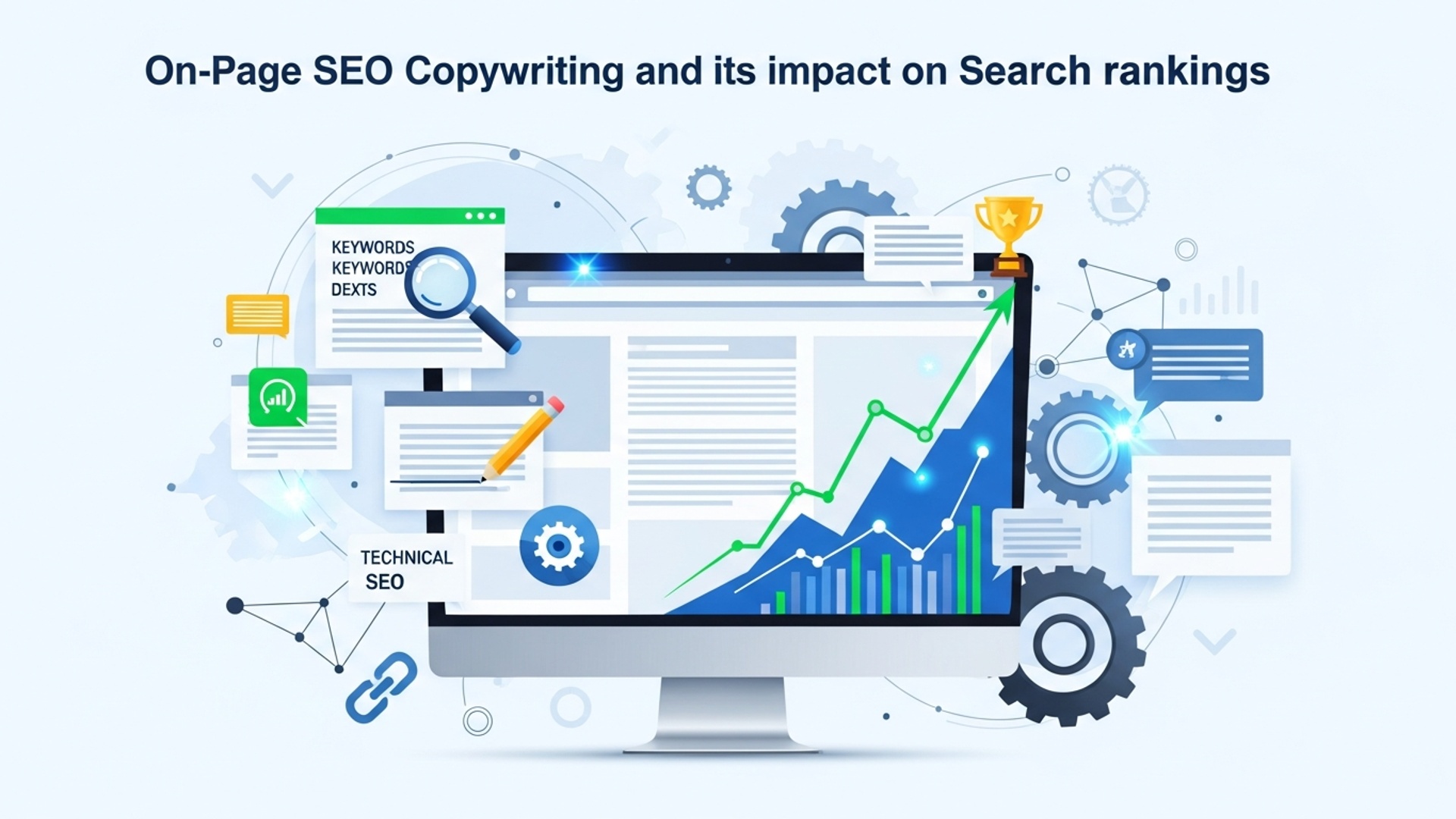
In today’s search environment, effective on-page SEO copywriting is far more than inserting keywords into a page. It is a strategic discipline that shapes how search engines interpret content and how users engage with it. Success now depends on aligning semantic relevance, search intent, user experience, and technical structure rather than relying on outdated tactics like keyword density alone.
Modern search algorithms evaluate meaning, context, and relationships between concepts. This shift demands a more intelligent approach to content creation – one that engineers relevance instead of merely optimizing for keywords.
Understanding the Core Mechanics of On-Page SEO Copywriting
At its core, on-page SEO copywriting is about crafting content that satisfies both human readers and search engine systems. Search engines use advanced natural language processing models to interpret pages in a contextual and semantic manner. Instead of matching isolated keywords, they analyze how ideas connect across sentences and paragraphs.
This means that high-performing content must demonstrate topical depth. Writers should naturally incorporate semantically related terms, supporting concepts, and contextual language. For example, a page discussing an “apple pie recipe” should logically reference ingredients, baking techniques, crust preparation, and variations. Such semantic completeness signals expertise and relevance.
The focus, therefore, moves from keyword repetition to intent satisfaction and entity-rich content. Pages that thoroughly answer user questions tend to perform better because they align with how search engines understand information.
How Search Engines Interpret and Evaluate Content
Search engines assess pages through multiple quality and credibility signals. Beyond relevance, algorithms attempt to determine whether content reflects experience, expertise, authority, and trustworthiness. These factors influence how information is ranked and displayed.
Accuracy, depth, clarity, and contextual consistency play a significant role. Content that correctly uses terminology within a subject area indicates stronger topical understanding. A technical article, for instance, should apply industry concepts naturally and correctly rather than superficially mentioning them.
Entity recognition also plays an important role. When content references clearly defined concepts and their relationships, search systems can better categorize and contextualize the material. This improves visibility for complex queries and strengthens perceived authority.
Strategic Keyword Integration for Semantic Relevance
Keyword usage remains important, but the strategy has evolved. Instead of optimizing around rigid density targets, writers should prioritize natural language variation and semantic coverage.
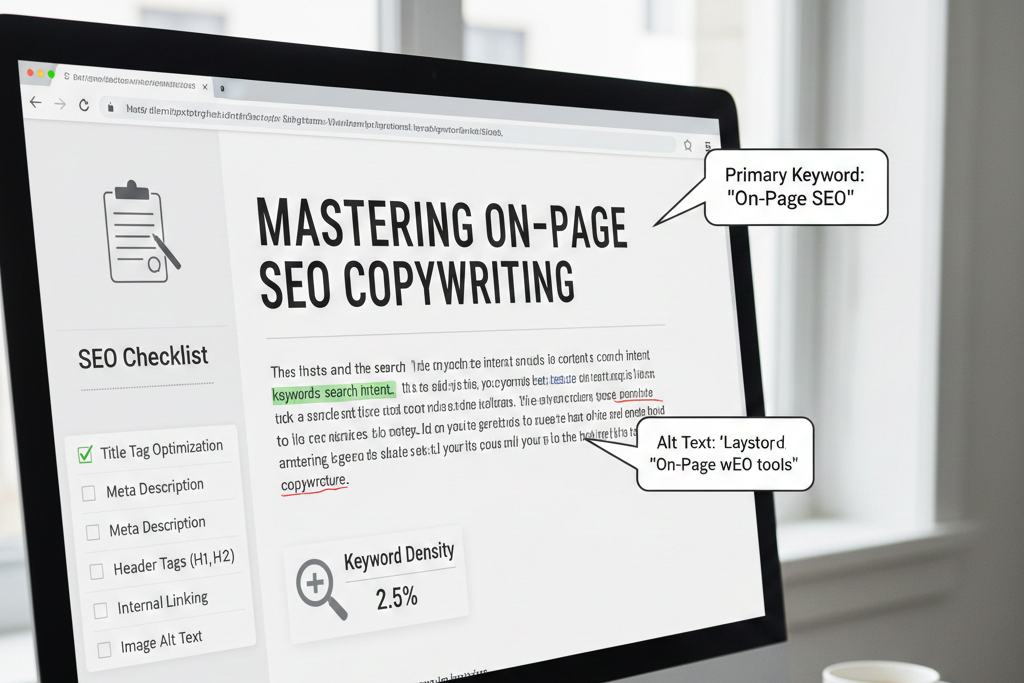
Primary keywords should appear in foundational elements such as the title tag, headings, and meta descriptions. However, within the body content, variations and related phrases create stronger signals than repetition. Diverse vocabulary improves readability while reinforcing topical relevance.
Over-optimization can harm both rankings and user experience. Forced keyword placement disrupts flow and can trigger algorithmic devaluation. Effective SEO copywriting blends optimization with natural communication, ensuring the text reads smoothly and addresses real user needs.
The Critical Role of User Experience and Core Web Vitals
Content quality alone cannot guarantee performance if user experience is poor. Search engines increasingly consider how users interact with pages, particularly through metrics tied to loading speed, responsiveness, and visual stability.
Slow pages reduce engagement and increase abandonment rates, weakening behavioral signals. Even compelling copy loses value if users struggle to access or navigate the page. Optimized presentation, logical structure, and readability are therefore essential components of SEO success.
Effective formatting enhances comprehension and engagement. Clear headings, concise paragraphs, bullet points, and visual elements break up dense text and guide readers. The goal is to make information easy to consume while maintaining depth and authority.
Enhancing Visibility with Advanced On-Page Elements
Beyond written content, several structural components strengthen SEO performance. Structured data, metadata, and internal linking collectively improve discoverability and user navigation.
Schema markup helps search engines interpret page meaning more precisely. While not a direct ranking factor, it can improve search result presentation and increase click-through rates by enabling rich results. Enhanced listings often attract greater attention and engagement.
Meta descriptions also influence performance by shaping how users perceive a search result. Well-crafted descriptions that communicate value and relevance can significantly improve click behavior, even without ranking changes.
Internal linking further supports SEO by distributing authority across pages and reinforcing topical relationships. Strategic linking improves crawl efficiency, clarifies site architecture, and enhances user journeys. The emphasis should be on relevance and usability rather than excessive link volume.
Measuring Results and Iterative Optimization
On-page SEO copywriting is inherently iterative. Performance must be evaluated continuously using behavioral and visibility metrics. Improvements emerge through refinement, testing, and adaptation rather than one-time adjustments.
Monitoring impressions, clicks, and click-through rates reveals how effectively pages attract search traffic. Engagement metrics such as time on page and bounce rate help diagnose content alignment and readability issues. Conversion tracking determines whether content achieves its intended business objectives.
A/B testing headlines, titles, and descriptions can uncover meaningful gains. Qualitative tools like heatmaps and session analysis provide additional insight into user behavior patterns. Data-driven adjustments ensure content remains competitive within evolving search landscapes.
Navigating Common Trade-Offs in Content Strategy
SEO decisions frequently involve trade-offs. Longer content may enhance topical authority, but excessive verbosity can reduce engagement. Concise writing improves readability but may risk insufficient depth. The optimal balance depends on search intent and competitive context.
User experience should remain the guiding priority. Content designed primarily for algorithms often underperforms if it neglects human readability. Search engines increasingly reward people-first approaches that demonstrate genuine value.
Complex scenarios such as multilingual SEO, site migrations, and legacy content updates require careful planning. Translation alone is insufficient for international audiences; cultural and semantic adaptation are necessary. Migrations demand meticulous content mapping and redirect strategies to preserve visibility. Older content benefits from modernization, structural improvements, and semantic enrichment.
Conclusion
Effective on-page SEO copywriting is a sophisticated blend of semantic relevance, user experience design, and technical optimization. It is not simply about ranking higher but about engineering meaningful visibility and engagement.
Content that aligns with search intent, demonstrates topical authority, and delivers a seamless user experience consistently outperforms superficial optimization tactics. Sustained gains emerge from structured strategy, measurement, and continuous refinement rather than isolated techniques.
More Articles
Your Practical Checklist to Optimize Website Content for SGE Success
7 Actionable Steps to Build Topical Authority for Better Search Rankings
How to Fix a Slow WordPress Site and Boost Your Website Speed
The Ultimate Roadmap for E-commerce Keyword Research and Sales Growth
Unlock Smarter Answers 7 Ways Generative AI Transforms Your Online Search

FAQs
What exactly is On-Page SEO Copywriting?
It’s all about crafting the text and content that lives directly on your website pages (like blog posts, service descriptions, product pages) in a way that appeals to both search engines and the real people visiting your site. This includes strategically placing keywords, optimizing headlines. making sure the content is high-quality, relevant. easy to digest.
How does this type of copywriting actually help my site rank better?
By clearly signaling to search engines what your page is about and that it’s a super valuable resource for users searching for specific topics. When your content is well-optimized with relevant keywords, a clear structure. engaging details, search engines see it as authoritative and helpful, which helps push it higher in search results.
So, it’s just about stuffing keywords, right?
Absolutely not! Keyword stuffing is an outdated and harmful practice that can actually hurt your rankings. On-Page SEO copywriting is about natural keyword integration within high-quality, user-focused content. The main goal is to provide real value to your audience first, using keywords strategically to help search engines interpret that value.
What are the key elements involved in successful on-page SEO copywriting?
It involves several key pieces! Think about compelling headlines (H1s, H2s), informative and engaging body text, optimized meta descriptions and title tags, using internal and external links wisely, descriptive image alt text. making sure the content thoroughly answers user questions. Readability and overall user experience are also incredibly essential.
Why is user experience so essential for on-page SEO?
Search engines are increasingly prioritizing user satisfaction. If visitors land on your page and quickly bounce back (because the content is hard to read, irrelevant, or poorly structured), it tells search engines your page isn’t very helpful. Good on-page copywriting creates an engaging experience, keeping users on your site longer, which is a strong positive ranking signal.
Can I really do effective on-page SEO copywriting myself, or do I need to hire someone?
You can definitely learn the basics and apply them yourself, especially for smaller projects or if you’re passionate about writing. But, for highly competitive niches or if you need to scale content quickly and professionally, hiring an experienced SEO copywriter can provide a significant advantage due to their expertise in research, strategy. conversion-focused writing.
Does on-page SEO copywriting still matter in the age of AI content generation?
More than ever! While AI can generate content quickly, human-led on-page SEO copywriting ensures authenticity, unique perspectives, deep understanding of audience intent. a distinctive brand voice. Search engines are getting smarter at identifying truly high-quality, helpful content, which often comes from human expertise and creative flair, even if AI tools are used for assistance in the process.