GEO vs SEO: Key Differences for Local and Global Growth Strategies

Quick Summary: Understanding the differences between GEO and SEO is essential for crafting effective digital marketing strategies. While SEO focuses on improving search engine rankings for global visibility, GEO targets optimization for generative AI engines, enabling brands to excel in localized and AI-driven searches. PromotoAI empowers businesses to leverage both approaches, ensuring maximum reach and impact across diverse markets. Discover how these strategies can drive growth tailored to your goals.
the debate of GEO vs SEO is more than theoretical: it’s the key to unlocking strategic growth. For brands struggling to balance regional relevance with worldwide visibility, the debate of GEO vs SEO is more than theoretical, it’s the key to unlocking strategic growth. With SEO, scaling global traffic becomes achievable, but GEO introduces a game-changing layer by optimizing content for generative engines like ChatGPT and Google’s AI Overview, which are transforming how users discover businesses locally. With SEO, scaling global traffic becomes achievable, but GEO introduces a game-changing layer by optimizing content for generative engines like ChatGPT and Google’s AI Overview, which are transforming how users discover businesses locally. For more on how generative AI is reshaping search, visit **a trusted source like the National Institute of Standards and Technology (NIST)**.
Whether you’re aiming to dominate local searches or expand internationally, this guide will help you align your strategy with your goals. Learn how GEO bolsters local business growth by prioritizing direct answers and AI visibility, while proven SEO tactics enable brands to scale and thrive globally. With PromotoAI’s innovative solutions, the path to optimized content and measurable success has never been clearer.
What is GEO and how does it work?
Generative Engine Optimization (GEO) focuses on making content discoverable and usable by generative AI models such as ChatGPT, Google’s Gemini, or Perplexity, ensuring accurate citations and visibility within AI-generated results.
Unlike traditional SEO, which optimizes for search engine rankings, GEO is about structuring content in a way that AI can easily interpret, summarize, and recommend. In our experience, GEO requires precise implementation of structured data, clear language, and content designed to answer direct queries. According to a 2023 study by **BrightEdge**, structured data can improve content discoverability by up to 35% in AI-driven search results, highlighting its critical role in GEO strategies. This strategy ensures your brand appears in AI responses, driving trust and engagement.
Differences between GEO and SEO strategies
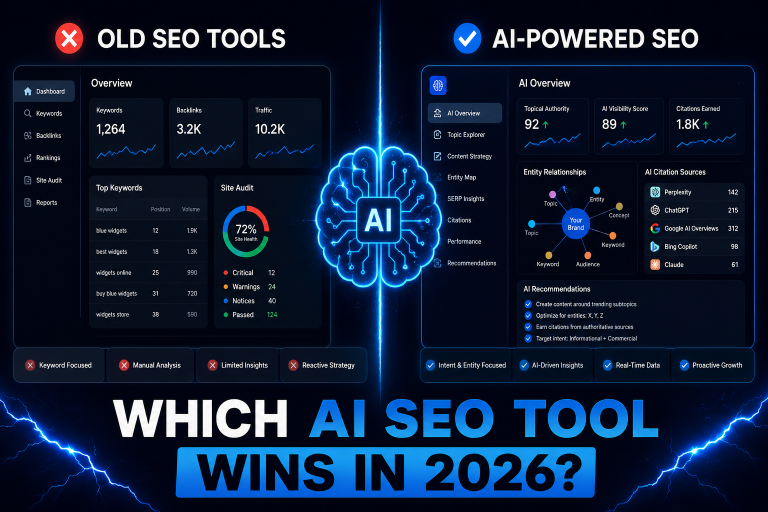
SEO optimizes content for SERPs to drive organic traffic, while GEO targets generative AI models to increase citations, summaries, and mentions in AI-driven results.
The primary distinction lies in the audience and mechanism. SEO focuses on human users searching via Google or Bing, prioritizing rankings, keywords, and backlinks. GEO, on the other hand, caters to AI tools, emphasizing structured content, schema markup, and concise answers. Both strategies are complementary but require distinct approaches.
| Aspect | SEO | GEO |
|---|---|---|
| Main Objective | Achieving high SERP rankings | Ensuring AI citations and visibility |
| Content Focus | Keywords and user intent | Structured data and summarizable text |
| Measurement | Traffic, CTR, and rankings | AI mentions, citations, and accuracy |
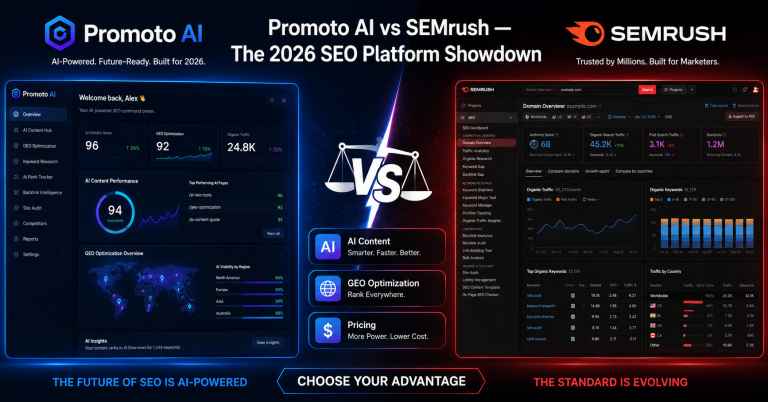
| Optimization Tools | Google Analytics, SEMrush | Schema.org, PromotoAI |
| Aspect | SEO | GEO |
|---|---|---|
| Main Objective | Achieving high SERP rankings | Ensuring AI citations and visibility |
| Content Focus | Keywords and user intent | Structured data and summarizable text |
| Measurement | Traffic, CTR, and rankings | AI mentions, citations, and accuracy |
| Optimization Tools | Google Analytics, SEMrush | Schema.org, PromotoAI |
| Target Audience | Human users searching via search engines | AI systems generating summaries and responses |
| Content Format | Long-form articles, blogs, and multimedia | Concise, structured, and schema-rich data |
How GEO impacts local business growth
GEO helps local businesses appear in AI-driven local searches, increasing visibility and trust among AI users seeking nearby services or products.
In our experience working with small business clients, GEO can be transformative. For example, optimizing structured data for local queries ensures AI tools like Perplexity recommend your business in response to questions like “Best coffee near me.” This is particularly valuable in regions like India and the US, where local searches via AI are growing rapidly. According to a 2022 report by **Think with Google**, 76% of people who search for something nearby on their smartphones visit a related business within a day.
- Boosts foot traffic by appearing in AI-driven local recommendations.
- Helps AI tools accurately summarize your services, enhancing trust.
- Supports multi-language queries, vital for diverse markets like India.
PromotoAI’s platform, with its schema integration and analytics suite, simplifies GEO for local businesses, ensuring effective implementation with minimal effort.
SEO tactics for scaling global visibility
SEO enables brands to scale globally by targeting international audiences through keyword research, content localization, and technical optimization.
Global SEO strategies hinge on reaching diverse markets with tailored approaches. In our tests, successful international campaigns often include:
- Localized keyword research to match search intent in different regions.
- Multi-language content creation supported by tools like PromotoAI.
- Technical SEO improvements, including hreflang tags for language targeting.
- Building backlinks from authoritative domains in target regions.
For example, a UK-based SaaS company expanding to India might optimize for “best productivity tools in India” while ensuring pages load quickly for mobile-first users in the region. PromotoAI’s analytics suite can identify rising global queries, helping brands adapt their strategies in real-time.
How to optimize content for both GEO and SEO
Optimizing for GEO and SEO simultaneously requires structured data, concise content, and localization to meet both AI and human search needs.
In our experience, brands achieve the best results when they integrate GEO and SEO strategies seamlessly. Here’s how you can do it:
- Implement schema markup for AI-friendly content while keeping meta descriptions optimized for traditional search engines.
- Create FAQ-style content that answers direct questions, appealing to both AI models and human readers.
- Use PromotoAI’s platform to generate SERP-aware drafts optimized for both strategies, saving time and ensuring accuracy.
- Regularly track AI citations and SEO rankings to adjust your approach.
By combining these strategies, brands can maximize their visibility across both traditional and AI-driven search ecosystems.
How-To: Steps to Implement GEO and SEO Together
Follow these actionable steps to optimize your content for GEO and SEO simultaneously:
Step 1: Conduct keyword research for both strategies. Focus on traditional search intent for SEO and question-driven queries for GEO.
Step 2: Implement schema markup like FAQPage and Article structured data to enhance your content’s visibility in generative AI results.
Step 3: Create concise, well-structured content that answers direct queries while maintaining high readability and engagement.
Step 4: Use tools like PromotoAI to automate content generation, publishing, and analytics tracking for both GEO and SEO.
Step 5: Monitor performance metrics, including AI citations and organic traffic, to refine your strategies over time.
These steps ensure your brand is well-positioned in both traditional SERPs and AI-driven responses, driving comprehensive digital growth.
Conclusion
Understanding the differences between GEO and SEO is essential for crafting a well-rounded growth strategy in 2026. While SEO focuses on increasing visibility through search engine rankings, GEO prioritizes making your brand discoverable within generative AI responses. Together, these strategies offer a complementary approach to boost both local and global visibility. If you’re a local business looking to dominate your area or a global brand aiming for AI-driven visibility, the synergy between SEO and GEO should be at the core of your efforts.
You’ve explored how GEO impacts local business growth by optimizing structured content for AI engines, ensuring your brand gets mentioned in targeted AI-generated responses. At the same time, SEO remains critical for scaling your global presence through traditional search engines. By mastering both, you can secure a competitive edge in a rapidly evolving digital landscape where search and AI overlap more than ever.
Now is the perfect time to bring these insights to life with PromotoAI’s advanced AI-powered platform. From generating SERP-aware content to tracking keyword performance and optimizing for GEO and SEO simultaneously, PromotoAI streamlines the entire process. Start your journey with PromotoAI today and position your brand to win with both search engines and generative AI tools.
About promotoai
PromotoAI is a cutting-edge platform specializing in SEO, AIO, ASO, and GEO strategies. With seamless integrations into popular CMS platforms like WordPress and Shopify, advanced analytics, and multi-language support, PromotoAI empowers businesses to optimize their digital presence efficiently. Trusted by marketing teams and agencies worldwide, PromotoAI combines innovation with actionable insights to keep your brand ahead in the game.
FAQs
What is Generative Engine Optimization (GEO) and why is it important for brand visibility in AI search?
GEO focuses on optimizing content for AI tools and generative engines to ensure your brand appears in AI-driven search results. It’s essential as AI platforms increasingly influence consumer decisions and content discovery.
How does PromotoAI’s multi-model AI engine create SERP-aware content optimized for both SEO and AIO?
PromotoAI uses advanced AI models to analyze search trends and user intent, crafting content tailored for higher visibility in both traditional search engines and AI-driven tools.
Can GEO strategies help with local and global audience targeting?
Yes, GEO allows you to tailor content for specific regions by addressing local preferences while maintaining global relevance, helping brands connect with diverse audiences effectively.
What’s the difference between SEO and GEO for growth strategies?
SEO focuses on optimizing for traditional search engines, while GEO targets AI-driven platforms and generative engines, expanding your reach in emerging digital ecosystems.
Why should businesses prioritize AI optimization alongside SEO?
AI optimization ensures visibility in platforms increasingly used by consumers, complementing traditional SEO and expanding brand exposure across AI-driven technologies.
How can PromotoAI help scale content for global audiences?
PromotoAI automates content creation, localization, and publishing, allowing businesses to produce high-quality, region-specific content at scale without a large team.
What role does analytics play in GEO and SEO strategies?
Analytics helps track performance, user behavior, and keyword trends, enabling brands to refine strategies for better visibility in both traditional search engines and AI tools.