How to Get Your Brand Cited in ChatGPT Responses
Millions of people have stopped Googling. They’re asking ChatGPT. They’re querying Perplexity AI. They’re letting AI assistants do the searching — and trusting whatever answer comes back. Here’s the problem: if your brand isn’t being cited inside those AI-generated responses, you simply don’t exist for that user in that moment. This isn’t a future trend. It’s happening right now, at scale, in 2026. And most brands are completely unprepared for it. This guide breaks down exactly what you need to know — from understanding how AI search engines process information, to building a concrete Answer Engine Optimization strategy that gets your brand mentioned, cited, and trusted by LLMs like ChatGPT and Perplexity AI.
What Is GEO (Generative Engine Optimization)?
GEO stands for Generative Engine Optimization. It is the practice of structuring, writing, and positioning your content so that large language models (LLMs) — like ChatGPT, Perplexity AI, Google Gemini, and Bing Copilot — recognize your brand as a credible, citable source and surface it in their generated responses. Where traditional SEO optimization is about satisfying a search algorithm’s ranking signals, GEO is about satisfying an AI’s reasoning process. An LLM doesn’t just crawl keywords — it synthesizes information, evaluates authority, and decides whose voice deserves to appear in a final answer. Think of it this way: Google decides who ranks. ChatGPT decides who gets quoted. GEO is not a replacement for SEO. It is the natural evolution of it — one that demands a fundamentally different content philosophy built around clarity, depth, and demonstrated expertise.
SEO vs. AEO vs. GEO — Understanding the Difference
Before jumping into tactics, it’s worth getting clear on how these three disciplines fit together.
Traditional SEO focuses on getting your web pages to rank on search engine results pages. The goal is a high-ranking blue link on Google or Bing.
Answer Engine Optimization (AEO) goes one step further. It targets featured snippets, People Also Ask boxes, and zero-click answers — places where the search engine serves a direct answer rather than just a list of links.
GEO takes this even further into AI-generated territory. It focuses specifically on getting your brand cited inside the responses produced by AI tools like ChatGPT and Perplexity AI — where there is no traditional SERP, and where the AI itself is deciding which sources to trust and reference. All three matter. But in 2026, GEO is where the largest untapped opportunity exists — because the majority of brands haven’t started optimizing for it yet.
How AI Search Engines (LLMs) Actually Work
To optimize for AI, you need to understand what AI is actually doing when it generates a response. LLMs are trained on enormous amounts of text. But when tools like ChatGPT (with browsing) or Perplexity AI answer a live question, they go further than just recalling training data. They retrieve relevant pages from the web in real time, extract the most credible and clearly written content, and synthesize it into a cohesive answer — often with citations. The factors that influence which sources get cited include:
- Content clarity — Is the answer easy to find, or buried inside filler paragraphs?
- Topical authority — Does the website consistently and deeply cover this subject?
- Structured formatting — Are headings, definitions, and lists easy for an AI to parse?
- Trust signals — Does the domain have credible backlinks, author credentials, and accurate information?
- Semantic completeness — Does the content cover the topic holistically, addressing related questions and subtopics, not just a single keyword?
This is why a well-structured article from a focused niche expert can outperform a thin piece from a massive publication inside AI responses. The AI is looking for the best answer, not just the most popular page.
Why GEO Matters for Your Brand in 2026
Consider how behavior has shifted. A user who wants to know “what’s the best CRM for a small business” no longer scrolls through ten blue links. They ask ChatGPT, read the three-paragraph answer, and click the one or two sources cited at the bottom. If your brand is one of those citations, you get a warm, pre-qualified visitor who already trusts you because an AI vouched for you. If you’re not cited, that user never sees you — even if you rank on page one of Google. The stakes are significant:
- AI-powered search tools now handle hundreds of millions of queries per day
- Users engaging with AI-generated answers show higher intent and lower bounce rates
- Early-mover brands that establish authority in AI responses are building a competitive moat that will be very difficult for latecomers to break
Scalable organic growth in 2026 increasingly runs through AI citation — not just keyword ranking.
The Key Components of a GEO Strategy
1. Semantic SEO Content Strategy
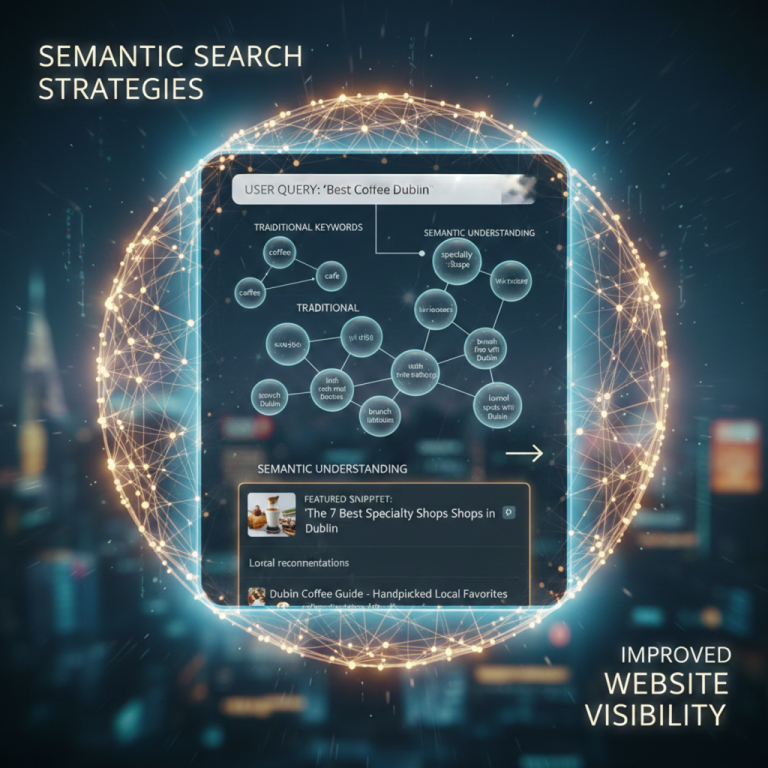
Semantic SEO moves beyond targeting individual keywords toward building comprehensive, interconnected content that covers an entire topic. AI systems understand context and relationships between ideas. They reward content that answers not just the primary question but the surrounding questions a curious reader would naturally ask. This means creating content clusters — a pillar page supported by a series of related articles — all internally linked and topically coherent. When an LLM encounters your content, it should find an authoritative ecosystem, not an isolated article.
2. Structured Data Implementation
Structured data (Schema markup) is one of the most direct ways to communicate clearly with both traditional search engines and AI tools. By tagging your content with the appropriate schema — FAQPage, HowTo, Article, Organization, Product — you make it significantly easier for AI systems to identify, extract, and cite your content accurately. Structured data implementation is not optional for serious GEO. It is the foundation.
3. AI Readability and Answer Formatting
AI systems extract information more easily from content that is formatted with clear intent. Practically, this means:
- Using direct, declarative sentences to state key facts
- Leading with the answer, then supporting it with explanation
- Breaking content into short paragraphs with descriptive subheadings
- Including definition-style explanations for key concepts
- Using numbered lists and bullet points where sequence or comparison matters
Content written for human skimmability is also, it turns out, content that AI can parse effectively. The two goals align.
4. Authority and Trust Signals
AI tools evaluate trustworthiness. A brand with strong topical authority — demonstrated through consistent publishing, credible backlinks, author bios with real credentials, and accurate information over time — is far more likely to be cited than a newer or thinner source. This is why brand visibility in AI tools is not just a content problem. It is a brand-building problem. The more your name appears in credible contexts across the web, the more an LLM’s training and retrieval processes associate your brand with authority on a given topic.
How to Optimize Content for ChatGPT and Perplexity AI
Here are the specific practices that improve your chances of being cited in AI-generated responses:
Write in a question-and-answer structure. AI tools frequently process queries phrased as questions. Content that mirrors this structure — posing the question as a subheading, then answering it directly beneath — is naturally well-positioned for extraction.
Define your terms. LLMs love clear definitions. If your content clearly defines what something is in one or two sentences, that definition is highly citable.
Be specific. Vague, hedged content gets ignored. Specific claims, named examples, cited statistics, and concrete recommendations are what AI tools look for when constructing a trustworthy answer.
Optimize for Perplexity AI specifically. To optimize content for Perplexity AI, focus on recency (it heavily weights fresh content), clear sourcing (link to original data), and concise expert summaries at the top of each article or section.
Earn external citations. Get your content mentioned in industry publications, roundups, and authoritative blogs. When many credible sources point to your content, AI retrieval systems take note.
Keep content current. AI tools that retrieve live web content penalize stale information. Regularly update cornerstone content with new data, examples, and context.
Step-by-Step Answer Engine Optimization Strategy
Here is a practical framework to execute your GEO and Answer Engine Optimization strategy:
Step 1 — Audit your existing content. Identify your top-performing articles and assess how AI-readable they are. Are answers clearly stated? Is schema markup present? Are subheadings written as questions?
Step 2 — Build topic clusters. Choose five to ten core topics your brand should own. For each, create a comprehensive pillar page and a set of supporting articles that address related subtopics and questions.
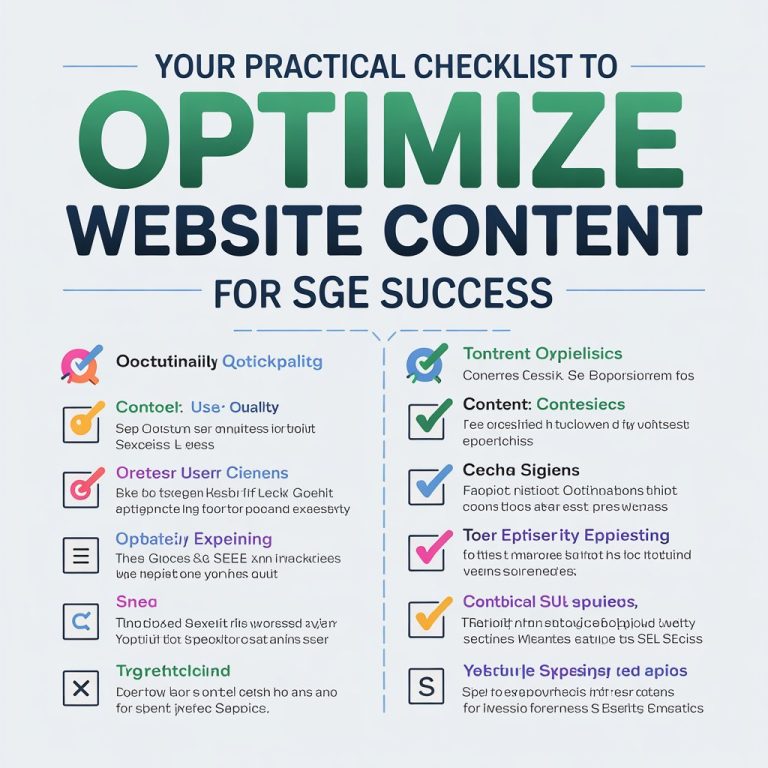
Step 3 — Reformat for AI extraction. Go back to your highest-value pages and restructure them: add FAQ sections, sharpen definitions, improve heading clarity, and tighten opening paragraphs so the key answer appears within the first 100 words.
Step 4 — Implement structured data. Add FAQPage, HowTo, and Article schema to relevant pages. Ensure your Organization schema is correctly set up sitewide.
Step 5 — Strengthen authority signals. Pursue backlinks from credible industry sources, add detailed author bios, and publish original research or data your industry will reference.
Step 6 — Monitor AI citations. Use tools like Promoto.ai to track when and how your brand is appearing in AI-generated responses. Track competitor mentions. Identify gaps and opportunities.
Step 7 — Iterate continuously. GEO is not a one-time project. AI systems are updated constantly. Stay ahead by consistently publishing authoritative, well-structured content.
Common Mistakes Brands Make with GEO
Writing for algorithms instead of clarity. Keyword-stuffed content designed to trick a traditional search crawler is the opposite of what AI tools reward. Write for the reader first.
Neglecting structured data. Many brands still treat schema markup as optional. In GEO, it is essential infrastructure.
Publishing thin content. A 400-word article that barely scratches the surface of a topic will rarely earn a citation. Depth and specificity matter.
Ignoring brand mentions off their own site. Your brand’s presence in external publications, reviews, and industry discussions directly influences how LLMs perceive your authority. PR and digital marketing are now part of your SEO optimization strategy.
Treating GEO as a one-time fix. Brands that optimize once and move on will lose ground. AI search visibility requires ongoing investment in content quality and authority building.
The Future of AI-Powered Search Visibility
The trajectory is clear. AI-powered assistants are becoming the default starting point for information queries, product research, and purchasing decisions. Traditional search engines are themselves integrating generative AI into their results pages. This means the line between “SEO” and “GEO” will continue to blur. Within the next few years, optimizing for AI citation will simply be what content marketing means — because AI-mediated search will be the dominant channel through which people discover brands, products, and services. The brands building their AI search visibility now are establishing authority that will compound over time. The brands waiting are creating a gap that will become increasingly difficult to close. Scalable organic growth in the next decade will belong to those who mastered GEO while others were still debating whether it mattered.
Conclusion — Start Getting Cited Today
Getting your brand cited in ChatGPT responses is not about gaming a system. It is about genuinely being the most credible, clearly communicated, and well-structured answer to the questions your audience is asking. That means investing in semantic SEO content strategy, structured data implementation, deep topical authority, and AI-readable formatting — consistently, over time. The opportunity is significant. The competition is still catching up. And the tools to help you execute exist right now. Promoto.ai is built specifically to help brands win in the era of AI-powered search. From tracking your brand’s visibility inside ChatGPT and Perplexity AI responses, to helping you identify exactly where and how to optimize your content for LLM citation — Promoto.ai is your Answer Engine Optimization command center. If you’re serious about AI-powered search visibility in 2026, the best time to start was six months ago. The second best time is today.