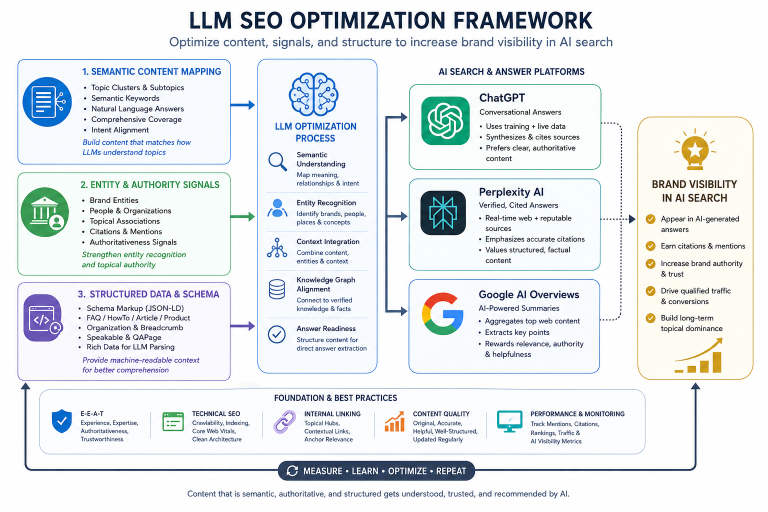
The Technical SEO Audit Playbook for 2026: How AI-Driven Tools Are Closing the Gaps Agencies Still Miss

Most websites don’t have a content problem. They have a technical SEO problem they’ve never actually found.
You could be publishing great content every week, running link-building campaigns, and still watching competitors outrank you. The reason? Silent technical issues — broken links, missing schema, slow server response, thin metadata — that your current tools either miss or bury in a 200-page report nobody reads.
That’s exactly what AI-driven SEO strategies are built to fix. And in 2026, the gap between teams using smart audit tools and those still relying on spreadsheets has never been wider.
Why Technical SEO Is the Unfair Advantage Most Brands Are Wasting
Everyone talks about content strategy and backlinks. Very few talk about what’s quietly blocking their rankings at the infrastructure level.
Technical SEO is the foundation your content sits on. If the foundation is cracked — slow server responses, unindexable pages, broken internal links, misconfigured robots.txt — your best content will struggle to surface. And with Google’s crawl budget becoming increasingly selective, getting this layer right has never mattered more.
The good news? AI-powered SEO tools have made technical audits dramatically faster and more accurate. What once took agencies days now takes minutes.
What a Real Technical SEO Audit Actually Covers
A real site audit isn’t just a Lighthouse score. It’s a layered diagnostic across multiple signals. Here’s what a comprehensive technical SEO audit should examine in 2026:
- Crawlability: Can search engines access and index your key pages?
- Page speed and Core Web Vitals: Are your load times competitive?
- Broken links: Are internal and external links leading to dead ends?
- Server health: Is your server consistently reachable and fast?
- Metadata quality: Are title tags, descriptions, and headers optimized?
- Schema markup and structured data: Are you sending rich signals to search engines and AI answer engines?
- Keyword density balance: Are you over-optimizing or under-serving your focus terms?
- Link profile health: Are your backlinks building authority or dragging it down?
Each of these requires a specific tool or workflow — and doing it manually across a growing site is simply not viable anymore.
The AI-Driven SEO Toolkit You Need in 2026
1. Site Audit Tools — Your Diagnostic Starting Point
A proper site audit scans your entire website for technical issues. Think of it as the annual health checkup your site desperately needs but rarely gets.
Modern AI-powered site audit tools go beyond crawl errors. They prioritize issues by SEO impact, map them to affected pages, and suggest fixes — all in a single dashboard view. Platforms like Semrush, Ahrefs, and Promoto AI’s built-in analytics help you move from raw data to prioritized action plans without the manual noise.
Site audit best practices for 2026:
- Run a full crawl at least once per month
- Prioritize 4xx errors, redirect chains, and duplicate content immediately
- Cross-reference audit findings with GSC performance data
- Check mobile and desktop separately — they often surface different issues
2. Link Analyzer Tools — Because Your Link Profile Tells a Story
Internal links shape how Google distributes authority across your site. External links tell Google what kind of neighborhood you’re operating in.
A solid link analyzer tool gives you a complete picture of both. You can identify orphan pages (pages with zero internal links pointing to them), anchor text patterns, broken links that waste crawl budget, and toxic backlinks that may be suppressing your domain authority.
According to Google Search Central, having clean, crawlable internal links remains one of the most reliable signals for helping Google understand your site structure.
Use a link analyzer at least quarterly. Pay special attention to your highest-traffic pages — if they’re poorly linked internally, you’re leaving ranking equity on the table.
3. Backlink Maker Tools — Building Authority the Right Way
Not all backlink strategies are created equal. In 2026, quality and relevance still dominate quantity. That said, having a systematic approach to building links is something every serious brand needs.
A backlink maker tool can help you identify high-authority directories, niche platforms, and content syndication opportunities relevant to your industry. Used correctly, it accelerates your off-page SEO without exposing you to risky black-hat tactics.
The key is pairing backlink building with genuine content worth linking to. AI content platforms — like Promoto AI’s content generation engine — help ensure the content you’re promoting is actually authoritative and link-worthy.
4. Keyword Density Checker — Avoiding the Invisible Penalty
Keyword stuffing is dead. But that doesn’t mean keyword density doesn’t matter.
There’s a balance between under-optimization (where Google isn’t sure what your page is about) and over-optimization (where it looks manipulative). A keyword density checker helps you find that balance quickly.
In 2026, semantic SEO matters more than exact-match density. That means using related terms, synonyms, and entity-based language around your primary keyword — rather than just repeating it mechanically. Tools that analyze TF-IDF patterns and semantic relevance give you a real edge here.
For AI keyword research, platforms like Promoto AI analyze SERP data to suggest not just primary keywords, but the semantic clusters you need to cover for topical authority.
5. Server Status Checker — The Silent Ranking Killer Nobody Monitors
Here’s something most content teams completely ignore: their server’s health.
If your server goes down — even briefly — during a Googlebot crawl, your pages don’t get indexed. Repeated server issues signal unreliability to search engines and can lead to reduced crawl frequency over time. A server status checker gives you real-time visibility into uptime, response codes, and latency issues.
Monitor your server status weekly. If you’re running a high-traffic site, consider setting up automated alerts so you know the moment something goes wrong — before Google does.
Schema Markup: The Structured Data Edge Most Sites Are Missing
Schema markup is one of the most underutilized technical SEO advantages available today. And in an era of AI-powered search — where systems like Google’s AI Overviews and ChatGPT need to parse and understand your content quickly — structured data is no longer optional.
Schema tells search engines exactly what your content means: Is this a product? A review? An FAQ? An article? A local business? This precision directly influences your chances of appearing in featured snippets, knowledge panels, and AI-generated search summaries.
Use Promoto AI’s Schema Validator tool to test your structured data implementation before publishing. Cross-reference with Schema.org to ensure your markup types are correctly structured. And use Google’s Rich Results Test to preview how your schema will actually render in search results.
High-impact schema types to prioritize:
- Article and BlogPosting schema for content pages
- FAQPage schema for question-and-answer sections
- BreadcrumbList for navigation clarity
- Organization and WebSite schema for brand signals
- Product and Review schema for e-commerce
AI-Powered Keyword Research: Moving Beyond Volume Metrics
Traditional keyword research was about finding high-volume, low-competition terms. In 2026, that model is incomplete.
AI-assisted keyword research tools analyze intent signals, SERP feature opportunities, competitive content gaps, and topical authority clusters simultaneously. This means you’re not just targeting keywords — you’re building content architectures that satisfy both human readers and AI systems.
According to Moz’s research on search intent, aligning content with the underlying intent behind a query is now one of the strongest predictors of ranking success — more important than keyword frequency alone.
The best AI for keyword research combines GSC performance data (which queries are already sending you impressions?), competitive gap analysis (what are you missing that rivals rank for?), and semantic cluster mapping (what related topics do you need to own for topical authority?).
Promoto AI’s Keyword Analysis dashboard integrates all three into a single workflow, making it far easier to build a content strategy that compounds over time.
On-Page SEO Checklist: What Every Page Should Have in 2026
Before you publish any page, run it through this quick on-page SEO checklist:
- Title tag: Includes the primary keyword, under 60 characters, naturally compelling
- Meta description: Under 155 characters, includes a secondary keyword, encourages the click
- H1 tag: Clear, one per page, aligned with the primary keyword
- Header hierarchy: H2s and H3s used logically, not decoratively
- Internal links: At least 2–3 contextual links to related pages on your site
- Image alt text: Descriptive, natural, keyword-aware
- Schema markup: Appropriate type implemented and validated
- Page speed: Core Web Vitals passing on both mobile and desktop
- Canonical tag: Set correctly, especially for paginated or filtered pages
Use Promoto AI’s Meta Tag Analyzer and Meta Tag Generator to audit and improve your metadata at scale.
The Future of SEO Tools: Where AI Takes This Next
The best SEO tools in 2026 don’t just report problems. They predict them, prioritize them, and in many cases, resolve them automatically.
We’re moving toward AI-native SEO workflows where your platform monitors your site health, surfaces content refresh opportunities based on ranking decay, suggests schema updates when algorithm signals shift, and auto-publishes optimized content based on performance triggers.
Promoto AI’s automation engine already operates in this direction — connecting content generation, keyword analysis, on-page optimization, and publishing into a single, AI-orchestrated workflow.
According to HubSpot’s marketing trends data, teams that automate core SEO workflows report significantly higher content output with lower resource investment — a compounding advantage that only grows over time.
The future of SEO tools is autonomous, intent-aware, and cross-platform. Getting your technical foundation right today means you’ll be positioned to take full advantage of that future.
Key Takeaways
- A genuine technical SEO audit covers crawlability, server health, link structure, metadata, schema, and keyword balance — not just page speed.
- Use a link analyzer tool quarterly to catch internal link gaps and toxic backlinks before they suppress rankings.
- Schema markup is a critical signal for both Google and AI-powered answer engines — validate it regularly.
- AI-assisted keyword research goes beyond volume — it maps intent, semantic clusters, and topical authority.
- Monitor your server status proactively; brief downtime during a crawl can reduce your indexing frequency.
- On-page SEO should be treated as a system, not a checklist — every element works together.
- The future of SEO is automated, AI-driven, and built around intent signals rather than keyword tricks.
Conclusion
Technical SEO isn’t glamorous. It doesn’t go viral on LinkedIn. But it’s the layer that either amplifies or undermines everything else you do in digital marketing.
In 2026, the brands winning in search — and in AI-powered answer engines — are the ones who treat their site’s technical health as a strategic priority, not an afterthought. They’re running regular audits. They’re fixing broken links before they compound. They’re implementing schema that makes their content machine-readable for both Google and ChatGPT. And they’re using AI-driven tools to do it faster and smarter than manual processes ever allowed.
If you’re ready to stop guessing and start seeing exactly what’s holding your site back, explore Promoto AI’s full suite of free SEO tools and AI-powered optimization platform. Your technical foundation is the one investment that pays compound interest — start building it properly today.
More Articles
How AI Search Snippet Optimization Boosts Organic Visibility
Automating SEO Workflows with PromotoAI: A Comprehensive Guide
How to Choose the Best AI Content Tool for Scalable Organic Growth
How AI Search Snippet Optimization Boosts Organic Growth Strategies
How AI Content Visibility Boosts Organic Growth Across Digital Platforms
FAQ Section
Q1: What is a technical SEO audit and why does it matter in 2026?
A technical SEO audit is a systematic review of your website’s infrastructure to identify issues that prevent search engines from crawling, indexing, or ranking your pages effectively. In 2026, it matters more than ever because AI-powered search engines use structured signals — schema, server health, link structure — to evaluate content quality and trustworthiness. A healthy technical foundation directly improves visibility in both Google and AI answer engines like ChatGPT and Perplexity.
Q2: How often should I run a site audit?
For most websites, a full technical site audit should be run monthly. High-traffic or frequently updated sites — like e-commerce stores or content-heavy blogs — benefit from weekly crawl monitoring. At a minimum, always run a fresh audit after major site changes, platform migrations, or CMS updates, as these events frequently introduce new technical issues.
Q3: What does a keyword density checker actually do?
A keyword density checker analyzes how frequently your target keyword appears on a page relative to the total word count. It helps you avoid two common pitfalls: under-optimization (where the page isn’t clearly associated with a topic) and over-optimization (which can appear manipulative to search engines). Modern tools also evaluate semantic keyword usage and related term coverage, giving you a more complete picture of topical relevance.
Q4: Why is schema markup important for AI search visibility?
Schema markup provides machine-readable context about your content. For AI search systems — such as Google’s AI Overviews, ChatGPT browsing features, and Perplexity — structured data makes it significantly easier to understand, extract, and cite your content accurately. Pages with proper schema implementation are more likely to appear in featured snippets, rich results, and AI-generated summaries, directly increasing visibility without requiring additional ranking improvement.
Q5: What’s the difference between a link analyzer tool and a backlink checker?
A link analyzer tool examines both internal links (how your own pages connect to each other) and external links (outbound links from your site). A backlink checker focuses specifically on inbound links — who is linking to you from other websites. Both are essential for different reasons. Internal link analysis helps you distribute authority effectively across your site, while backlink analysis reveals off-page authority signals and potential toxic link risks.