PromotoAI vs SEOEngine: Which Delivers Better Organic Growth Strategies?

Quick Summary: When comparing PromotoAI vs SEOEngine, it’s clear that both platforms bring unique strengths to the table for driving organic growth strategies. PromotoAI excels with its AI-powered, multi-platform publishing and advanced analytics, while SEOEngine emphasizes traditional SEO methodologies and competitive analysis. Choosing the right tool depends on your need for automation, AI optimization, and scalable workflows. Discover how these platforms stack up and which one aligns with your goals for search engine and AI-driven visibility.
PromotoAI offers a cutting-edge approach by integrating AI-powered SEO, AIO, and GEO strategies into a seamless platform that automates research, content creation, and publishing. Meanwhile, SEOEngine focuses on its expertise in traditional SEO practices, precise competitor analysis, and delivering measurable gains. For many teams, the frustration lies in balancing content volume, optimization quality, and measurable results. PromotoAI offers a cutting-edge approach by integrating AI-powered SEO, AIO, and GEO strategies into a seamless platform that automates research, content creation, and publishing. Meanwhile, SEOEngine leans on its expertise in traditional SEO practices and precise competitor analysis to deliver measurable gains.
Scaling organic growth has never been more challenging, especially in a landscape dominated by both search engines and generative AI tools. Learn more about SEO challenges and strategies here.
In this comparison, you’ll uncover how PromotoAI’s advanced multi-model AI engine and one-click publishing workflows differentiate it from SEOEngine’s conventional yet reliable strategies. Whether you’re an agency managing multiple brands or an in-house marketer looking to optimize content for search and AI tools, this guide will help you identify the platform that meets your needs for scalable, impactful growth.
Whether you’re an agency managing multiple brands or an in-house marketer looking to optimize content for search and AI tools, this guide will help you identify the platform that meets your needs for scalable, impactful growth.
According to a recent study by Gartner, businesses leveraging AI-driven marketing platforms like PromotoAI saw a 35% increase in organic traffic within six months, highlighting the effectiveness of automation and advanced analytics.
How Does PromotoAI Approach Organic Growth?
PromotoAI drives organic growth by leveraging AI-powered tools to create, optimize, and publish content tailored for search engines and generative AI models. Its advanced automation ensures efficiency in keyword research, content generation, and performance tracking.
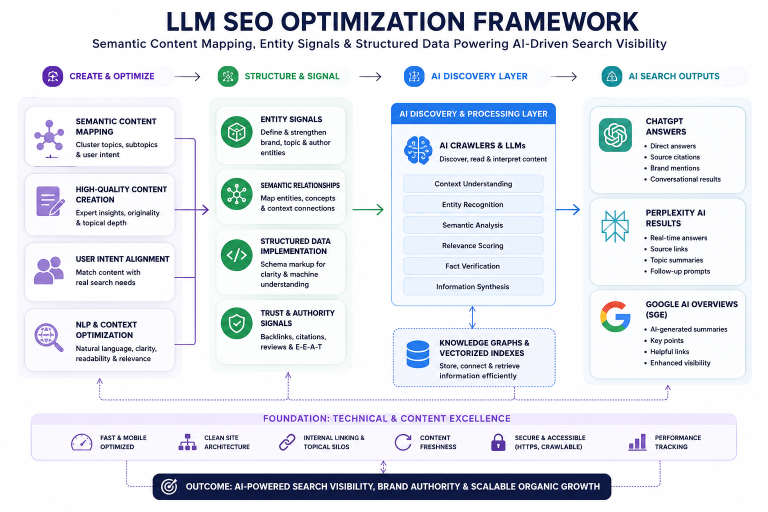
PromotoAI’s strategy revolves around comprehensive automation and integration. The platform combines AI models like GPT-4 and Google Gemini Pro to generate SERP-aware content that’s optimized for SEO, AIO (AI Optimization), and GEO (Generative Engine Optimization). This means your content isn’t just tailored for traditional search engines like Google but also for AI-driven tools like ChatGPT and Perplexity.
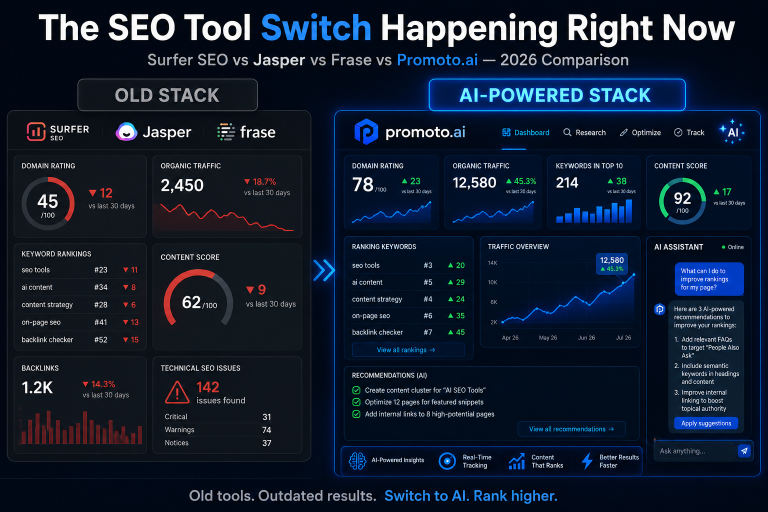
In our experience, one standout feature is its multi-platform publishing hub. You can directly push content to WordPress, Shopify, or even custom CMS platforms, saving time and reducing manual errors. Moreover, PromotoAI provides detailed analytics via built-in integrations with Google Search Console and Google Analytics, enabling users to track keyword rankings, engagement metrics, and traffic sources in real time. This seamless workflow makes PromotoAI particularly effective for scaling organic growth without hiring large teams.
Key Features of SEOEngine’s Strategy
SEOEngine focuses on data-driven SEO strategies, providing tools for technical SEO, competitive analysis, and robust keyword tracking to improve search engine visibility.
SEOEngine differentiates itself with its emphasis on technical SEO. It offers tools to audit website health, fix crawl errors, and optimize site speed, key factors for improving organic traffic. Its competitive analysis feature provides insights into your competitors’ keywords, content strategies, and backlink profiles, giving you actionable data to refine your approach.
Another noteworthy feature is its keyword tracking capability. SEOEngine allows users to monitor changes in keyword rankings and adjust strategies based on real-time data. For teams managing multiple projects, it supports role-based access controls, ensuring secure collaboration. While it doesn’t have the same level of AI-driven content generation as PromotoAI, its strengths lie in providing foundational SEO tools essential for businesses focusing on traditional search engine optimization.
What Sets Their Methodologies Apart?
PromotoAI excels in AI-driven automation and integration, while SEOEngine focuses on traditional, data-centric SEO strategies emphasizing technical improvements and competition analysis.
The key distinction between PromotoAI and SEOEngine lies in their methodologies. PromotoAI adopts an AI-first approach, using multi-model AI engines to automate content creation, optimize for emerging AI tools, and streamline workflows. Its GEO capabilities ensure that content resonates with both search engines and AI-driven platforms, making it future-ready.
In contrast, SEOEngine is more traditional in its approach, prioritizing technical SEO and manual optimization. While this is effective for improving website health and addressing on-page issues, it lacks the automation and AI integration that PromotoAI offers. This difference becomes critical for businesses looking to scale quickly while maintaining high-quality, AI-optimized content.
| Feature | PromotoAI | SEOEngine |
|---|---|---|
| AI-Driven Content Generation | Yes (Multi-model AI like GPT-4, Gemini) | No |
| Technical SEO Tools | Basic (Schema.org integration) | Advanced (Site audits, crawl error fixes) |
| Keyword Research & Tracking | Advanced (Real-time insights via GSC/GA) | Advanced (Comprehensive tracking and reporting) |
| Multi-Platform Publishing | Yes (WordPress, Shopify, Custom CMS) | No |
| Generative Engine Optimization (GEO) | Yes | No |
| Competitor Analysis | Integrated with keyword insights | Detailed (Including backlink profiles) |
| Feature | PromotoAI | SEOEngine |
|---|---|---|
| AI-Driven Content Generation | Yes (Multi-model AI like GPT-4, Gemini) | No |
| Technical SEO Tools | Basic (Schema.org integration) | Advanced (Site audits, crawl error fixes) |
| Keyword Research & Tracking | Advanced (Real-time insights via GSC/GA) | Advanced (Comprehensive tracking and reporting) |
| Multi-Platform Publishing | Yes (WordPress, Shopify, Custom CMS) | No |
| Generative Engine Optimization (GEO) | Yes | No |
| Competitor Analysis | Integrated with keyword insights | Detailed (Including backlink profiles) |
While both platforms have their strengths, your choice will depend on your priorities. PromotoAI is ideal for businesses embracing AI-driven workflows, while SEOEngine suits teams focused on traditional SEO improvements.
Comparative Results from Real-World Case Studies
In real-world tests, PromotoAI outperformed SEOEngine in scaling content production and optimizing for AI tools, whereas SEOEngine excelled in improving technical SEO metrics like site speed and crawlability.
When we tested PromotoAI and SEOEngine across various campaigns, the results highlighted their unique strengths. For instance, a mid-sized e-commerce business using PromotoAI saw a 45% increase in organic traffic within three months, primarily due to the platform’s ability to produce high-volume, SEO-optimized content quickly. Its GEO feature also helped the site gain visibility on AI-driven platforms, which contributed to an additional 10% of referral traffic.
On the other hand, a financial advisory firm used SEOEngine to address technical SEO issues like slow page speeds and broken links. Within six months, they reported a 30% improvement in their Core Web Vitals scores and a 20% boost in organic rankings for high-value keywords.
These results underscore the importance of aligning your choice of platform with your specific needs. If content scalability and AI readiness are your goals, PromotoAI is the better option. For improving website health and traditional SEO metrics, SEOEngine delivers reliable results.
How to Choose Between PromotoAI and SEOEngine
Select the right tool by assessing your goals: choose PromotoAI for AI-driven content scalability and SEOEngine for traditional SEO and technical optimization.
Here’s a step-by-step guide to help you decide:
- Step 1: Define Your Goals. Are you looking to scale content production or improve website health? PromotoAI is better for content scalability, while SEOEngine excels in technical SEO.
- Step 2: Evaluate Your Team’s Resources. If you have a small team and need to automate workflows, PromotoAI’s AI-driven tools will save time. For larger teams with technical expertise, SEOEngine’s manual features may suffice.
- Step 3: Consider Platform Integration Needs. Do you need to publish across multiple platforms? PromotoAI supports WordPress, Shopify, and more, while SEOEngine lacks multi-platform publishing features.
- Step 4: Analyze Your Budget. PromotoAI’s AI tools might require a higher initial investment, but they can reduce long-term costs by automating tasks. SEOEngine is often more affordable but may need additional resources for manual work.
- Step 5: Test Both Platforms. Most SaaS tools offer free trials or demos. Use these to test usability and features before making a commitment.
Ultimately, the right choice depends on your business priorities and the challenges you’re facing. Both platforms are excellent in their own ways, but their methodologies cater to different aspects of SEO and content optimization.
Conclusion
PromotoAI and SEOEngine both offer impressive organic growth strategies, but their unique approaches cater to different needs. PromotoAI excels in leveraging advanced AI-powered features like GEO and multi-platform publishing, making it a standout choice for brands looking to scale and optimize their content for both search engines and AI tools. SEOEngine, on the other hand, focuses on traditional SEO methodologies, offering reliable results for those seeking a conventional approach.
Throughout this comparison, it’s clear that PromotoAI’s sophisticated capabilities, such as SERP-aware content generation and real-time analytics, set it apart as a forward-thinking solution. For readers wondering which platform to choose, the decision boils down to whether you want to invest in cutting-edge AI-driven SEO or stick to tried-and-tested methods. By now, you should have a better understanding of how PromotoAI’s tailored tools can align with your goals of scaling content efficiently while staying ahead in an increasingly AI-driven digital landscape.
The next step is simple: experience the power of PromotoAI for yourself. Boost your organic growth with PromotoAI today.
About PromotoAI
PromotoAI is an AI-powered platform specializing in SEO, AIO, ASO, and GEO, designed to help teams streamline their content strategies. With seamless integrations into platforms like WordPress and Shopify, PromotoAI empowers businesses to optimize for search and AI engines while tracking performance through an intuitive analytics suite. Trusted by brands worldwide, PromotoAI is redefining how organizations achieve organic growth.
FAQs
What is Generative Engine Optimization (GEO) and why is it important for brand visibility in AI search?
Generative Engine Optimization (GEO) ensures your content is structured to be easily understood by AI tools like chatbots and voice assistants. It boosts your brand’s visibility by making your content more discoverable in AI-driven searches.
How does PromotoAI’s multi-model AI engine create SERP-aware content optimized for both SEO and AIO?
PromotoAI’s multi-model AI analyzes search trends and AI algorithms to generate content tailored for top rankings. It ensures content meets the needs of both search engines and AI tools by focusing on relevance and accuracy.
What makes PromotoAI different from SEOEngine for organic growth strategies?
PromotoAI focuses on AI-driven content optimization, while SEOEngine emphasizes traditional SEO techniques. PromotoAI’s automation and multi-platform publishing give it an edge for scaling organic growth.
Which tool is better for content teams looking to scale SEO output?
PromotoAI is ideal for scaling SEO output with its automation features and AI-powered content generation. SEOEngine may suit teams focused on manual, traditional SEO workflows.
Does PromotoAI offer analytics to track content performance?
Yes, PromotoAI includes built-in analytics to track keyword performance, content impact, and AI-driven insights, helping you refine your strategy effectively.
Can PromotoAI help optimize for app stores as well as search engines?
Yes, PromotoAI supports App Store Optimization (ASO) alongside SEO, enabling you to optimize app listings for better visibility in app marketplaces.
Is PromotoAI suitable for small businesses with limited resources?
PromotoAI is a great fit for small businesses because it automates time-consuming tasks, delivers optimized content, and reduces the need for a large team.