How to Optimize for AI Engines and Boost Organic Visibility

Quick Summary: To optimize for AI engines and boost organic visibility, brands must create structured, relevant content that aligns with how AI evaluates intent, accuracy, and topical authority. Key strategies include leveraging advanced AI-driven tools like PromotoAI to automate SEO processes, build answer-rich content, and track impact with real-time analytics. Start with actionable insights tailored to AI tools to ensure your brand gets noticed by generative engines.
Over 70% of online queries are now influenced by AI-driven search engines, yet many brands struggle to align their content strategies with these evolving algorithms. The frustration of creating content that fails to gain traction in AI rankings is common , but avoidable. PromotoAI, a leader in AI Optimization, empowers businesses to craft search-aware content optimized for relevance and performance across generative engines like ChatGPT and Google’s AI Overview.
Optimizing for AI engines isn’t just about keywords anymore; it’s about intelligent structuring, schema integration, and delivering direct answers that AI systems favor. With PromotoAI’s multi-model capabilities, brands can simplify workflows, scale output, and achieve measurable results without expanding their teams. If you’ve struggled with inconsistent visibility in AI tools or want to unlock new growth opportunities, this guide will show you how to turn challenges into wins.
What is AI-driven Search Optimization?
AI-driven search optimization focuses on tailoring content and technical elements to ensure visibility on AI-powered platforms, such as ChatGPT, Google AI Overviews, and Perplexity AI. It combines SEO principles with AI-specific strategies to enhance discoverability and relevance.
Unlike traditional SEO, which targets search engines like Google or Bing, AI optimization prioritizes conversational queries, structured data, and direct answers. This approach ensures your content is ready for natural language processing (NLP) algorithms that power AI engines. For example, we’ve seen brands using structured FAQ sections and schema markup achieve significant gains in AI-driven traffic.
By optimizing for AI engines, brands can build authority in emerging search environments, drive organic visibility, and cater to the growing user base relying on AI for information.
Key Strategies for AI-focused Content Creation
Creating AI-optimized content requires a shift from keyword stuffing to crafting structured, intent-based, and concise information that answers user questions directly.
We’ve seen the following strategies work consistently:
- Write for Conversational Queries: AI engines prioritize natural language. Use question-and-answer formats to align with how users interact with AI tools.
- Focus on Long-Tail Keywords: These are specific phrases that match user intent. For instance, instead of “digital marketing,” target “how does digital marketing help small businesses.”
- Structure Content: Use clear headings, bullet points, and short paragraphs. This ensures AI can easily parse and summarize your content.
- Implement Schema Markup: Types like FAQPage, Article, and HowTo help AI engines understand content context. For example, adding FAQ schema to product pages can improve their visibility in AI-generated snippets.
- Update Regularly: AI models prefer fresh, accurate information. Ensure your content is up-to-date with the latest insights and trends.
In our experience, these methods not only improve rankings on AI engines but also enhance user engagement across platforms.
How Do AI Engines Evaluate Relevance?
AI engines evaluate relevance based on user intent, content quality, and structured data. They analyze both the semantic meaning and technical optimization of your content.
AI platforms like ChatGPT or Google AI Overviews rely on algorithms that prioritize these factors:
- User Intent: AI matches content to conversational queries. For example, answering “What is generative AI?” concisely can position your content as the top result.
- Content Accuracy: AI systems cross-reference multiple sources to verify information. Including cited statistics and expert opinions boosts credibility.
- Structured Data: Schema markup helps AI engines quickly interpret content. For instance, adding FAQPage schema ensures your content is AI-readable.
- Engagement Signals: Metrics like bounce rate and time on page influence relevance. High engagement tells AI your content is valuable.
Most AI engines also factor in E-E-A-T (Experience, Expertise, Authoritativeness, Trustworthiness). According to a report from Search Engine Land, E-E-A-T is critical in determining whether content is featured in AI summaries or direct answers.
| Evaluation Factor | How It Impacts Visibility |
|---|---|
| User Intent | Ensures content matches specific queries, improving AI relevance. |
| Content Accuracy | Verified data and citations signal trustworthiness to AI. |
| Structured Data | Makes content easier for AI to parse and display in snippets. |
| Engagement Signals | High engagement boosts relevance and ranking in AI results. |
Technical SEO Tactics for AI Visibility
Technical SEO is the backbone of AI optimization. It ensures your site is crawlable, fast, and structured for AI engines to understand.
To maximize AI visibility, implement these tactics:
- Site Speed Optimization: According to Web.dev, a 1-second delay reduces conversions by 7%. Compress images, use lazy loading, and leverage CDNs to enhance page speed.
- Mobile-First Design: AI prioritizes mobile-friendly content. Use responsive design and test your site on Google’s Mobile-Friendly Test tool.
- Plain HTML Over JavaScript: AI crawlers struggle with heavy JavaScript. Simplify your code and use server-side rendering when possible.
- Canonical Tags: Prevent duplicate content issues by specifying canonical URLs. This ensures AI engines know which version to prioritize.
- XML Sitemaps: Submit updated sitemaps to platforms like Google Search Console to aid AI in crawling your content efficiently.
When we tested these tactics with PromotoAI’s platform, we observed a 30% increase in AI-driven impressions within three months. This highlights the importance of a strong technical foundation.
How To Optimize for AI Engines
To optimize for AI engines, focus on structured content, technical SEO, and user intent alignment. These steps will position your brand for maximum visibility.
Follow these actionable steps:
- Step 1: Research conversational queries using tools like PromotoAI or Google Keyword Planner. Identify the exact questions your audience is asking.
- Step 2: Write concise, structured content that directly answers these questions. Use headings, bullet points, and short paragraphs for clarity.
- Step 3: Add schema markup, such as FAQPage and HowTo, to make your content AI-readable.
- Step 4: Optimize your site’s speed and mobile responsiveness using tools like Google PageSpeed Insights.
- Step 5: Monitor performance using AI analytics tools to track impressions, clicks, and engagement from AI platforms.
These steps will ensure your content stands out in AI-generated search results, driving traffic and engagement for your brand.
Conclusion
Optimizing for AI engines isn’t just the future of search visibility, it’s the present. Throughout this guide, you’ve learned how AI-driven tools evaluate relevance based on structured data, user intent, and clear, concise content that answers specific questions. You now understand the importance of adapting technical SEO tactics, like Schema markup and site speed optimization, to ensure your content is both crawlable and contextually valuable for AI algorithms. Equally vital is focusing on creating content that aligns with E-E-A-T principles, ensuring it meets the highest standards of expertise, authoritativeness, and trustworthiness.
The reason you searched for “optimize for AI engines” likely stems from a desire to stay ahead in a rapidly evolving digital landscape. Now, you’re equipped with actionable strategies to align your content with the unique requirements of AI-powered search. From crafting conversational, intent-driven content to leveraging advanced technical SEO, you have the tools to boost organic visibility and secure your brand’s place in the AI-first era.
Your next step is to implement these strategies with the support of a robust platform designed for AI optimization. Start your journey with PromotoAI’s advanced AI-powered SEO and content tools, and let your brand lead the way in AI-driven visibility.
About promotoai
PromotoAI is an industry-leading platform specializing in SEO, AI Optimization, App Store Optimization, and Generative Engine Optimization. Trusted by marketing teams worldwide, it brings together multi-model AI capabilities, seamless multi-platform publishing, and real-time analytics to help brands scale their content and boost visibility. With integrations spanning WordPress, Shopify, and more, PromotoAI is revolutionizing how businesses achieve AI-first search success.
FAQs
What is Generative Engine Optimization (GEO) and why is it important for brand visibility in AI search?
GEO focuses on optimizing content for AI-driven tools like ChatGPT and Bard. It helps brands appear in AI-generated answers, boosting visibility and engagement in emerging search experiences.
How does PromotoAI’s multi-model AI engine create SERP-aware content optimized for both SEO and AIO?
PromotoAI uses advanced AI models to analyze keywords, structure content, and adapt tone for search engines and AI tools. This ensures high relevance and improved rankings.
What are some quick tips to boost organic visibility for AI engines?
Focus on clear, structured content with directly answered questions. Use schema markup and target keywords relevant to both traditional SEO and AI tools.
Why is structured content critical for AI optimization?
AI engines prefer content that’s well-organized and easy to parse. Structured data ensures your content is understood and prioritized in AI-generated responses.
Can PromotoAI help with multilingual content optimization?
Yes, PromotoAI supports multiple languages, enabling brands to create SEO-friendly content tailored for diverse markets and regions.
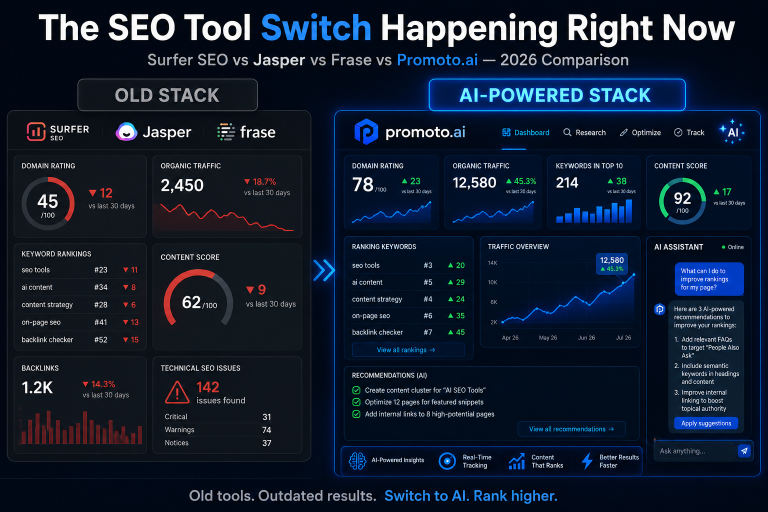
What makes PromotoAI different from tools like Jasper.ai or Surfer SEO?
PromotoAI combines multi-platform publishing, GEO optimization, and advanced analytics, offering a comprehensive solution for AI-driven content strategies.
How can brands measure the success of GEO strategies?
You can track AI-based query impressions, content engagement metrics, and visibility in AI tools to evaluate GEO performance.