The Hidden SEO Gaps Killing Your Rankings — And How AI-Driven SEO Strategies Close Them in 2026

Most websites aren’t failing because of bad content. They’re failing because of invisible technical problems nobody ever found — and outdated SEO workflows that can’t keep up with how search actually works today.
In 2026, search has changed. AI answer engines, semantic indexing, and real-time crawling have rewritten the rules. If your SEO strategy still relies on manual checks and disconnected tools, you’re not just behind — you’re actively losing ground.
This guide breaks down exactly where those hidden gaps are and how modern AI-driven SEO strategies and the right tools close them for good.
Why Traditional SEO Workflows Are Breaking Down
For years, SEO meant picking keywords, writing content, building links, and waiting. That linear process made sense when Google was the only game in town and ranking signals were predictable.
That’s no longer the case.
AI-powered search systems like Google’s AI Overviews, Perplexity, and ChatGPT now answer questions directly — often without sending users to a website at all. If your content isn’t structured to be cited by these systems, your impressions drop even when your rankings hold.
At the same time, technical SEO debt quietly compounds. Broken internal links, slow server response times, missing schema, and poor keyword density all drag down performance in ways that basic analytics dashboards never surface.
The fix isn’t working harder on the same workflow. It’s replacing outdated tools with AI-driven ones that actually diagnose what’s wrong.
The 6 Hidden SEO Gaps Most Teams Miss
1. Keyword Research That Stops at Volume
Most keyword tools tell you what people search for. The better question is: why they search for it and which format ranks for it.
In 2026, effective AI for keyword research goes beyond monthly search volume. It maps search intent, identifies semantic clusters, and shows you how a topic is being answered — by Google’s featured snippets, AI Overviews, and competing pages simultaneously.
If your keyword strategy only tracks volume and competition, you’re missing the context that determines whether you’ll actually rank.
2. Unchecked Keyword Density
Keyword usage is still a ranking signal — but balance matters more than ever. Too little and your page loses relevance. Too much and modern NLP algorithms treat it as low-quality.
The solution is surprisingly simple: run regular checks with a keyword density checker that maps your primary and secondary keyword ratios across headings, body copy, and metadata. It takes under 60 seconds and can dramatically improve how your page scores for semantic relevance.
Most teams never do this. They write, publish, and wonder why rankings plateau.
3. Backlink Profiles That Look Strong but Aren’t
Backlinks still matter. But the source quality, anchor text distribution, and link velocity matter far more than raw count.
If you’re using a backlink maker tool just to accumulate links without auditing your existing profile first, you’re building on a shaky foundation. A toxic backlink cluster can suppress rankings across your entire domain — not just individual pages.
Use a link analyzer tool to audit what’s already pointing to your site before you build further. Fix the foundation before adding to it.
4. Site Audits That Only Run Once
A site audit isn’t a one-time event. It’s an ongoing diagnostic process. Pages break. Redirects fail. New content introduces duplicate title tags or missing meta descriptions.
The teams that win at SEO in 2026 treat site audit best practices as a continuous workflow — not a quarterly project. Automated audits that surface issues in real time, categorize them by impact, and push alerts to your dashboard are no longer a luxury. They’re table stakes.
You can start with a manual check using Promoto AI’s broken links checker and meta tag analyzer. But for scale, automation is the only sustainable answer.
5. No Schema Markup on Key Pages
Structured data is one of the most consistently underused SEO levers available to website owners today. Schema markup tells search engines — and AI answer systems — exactly what your content is: a product, a review, a how-to guide, an FAQ, an event.
Pages with proper schema markup are significantly more likely to earn featured snippets, rich results, and AI citations. Yet the majority of small business and mid-market websites have zero structured data on their most important pages.
Start with Google’s Schema.org vocabulary definitions, then validate your implementation using Promoto AI’s Schema Validator. Even adding FAQPage or HowTo schema to five key pages can move the needle meaningfully.
6. Server Status Issues Nobody Monitors
This one gets almost no attention — and it quietly kills SEO for countless websites.
If your server returns slow response times, intermittent 500 errors, or inconsistent uptime, Googlebot notices. Crawl budgets get wasted. Pages that should be indexed aren’t. Rankings fluctuate without any obvious content reason.
A simple server status checker run on a regular cadence tells you whether your hosting infrastructure is actually performing at the level your SEO strategy demands. It’s a two-minute check that most SEO audits don’t include — and should.
How AI-Driven SEO Strategies Connect These Dots
The problem with fixing SEO gaps in isolation is that they’re all connected. A page with great content but poor schema, thin backlinks, and slow server response will still underperform — even if each issue seems minor on its own.
This is where AI-driven SEO strategies provide a structural advantage over manual workflows.
AI Connects Intent to Architecture
Modern AI SEO platforms analyze what users want, how competitors serve that intent, and what technical gaps prevent your pages from competing — all in a single workflow.
Rather than switching between six tools to get a fragmented picture, tools like Promoto AI’s Keyword Analysis and Analytics Dashboard bring keyword intelligence, content performance, and technical health signals into a single view.
AI Scales What Humans Can’t
Manual SEO audits have a ceiling. A human can audit 50 pages. An AI-powered system can audit 50,000 — and prioritize fixes by projected ranking impact.
This is especially important for e-commerce sites, agencies managing multiple client properties, and content-heavy publishers where technical debt accumulates faster than teams can review it.
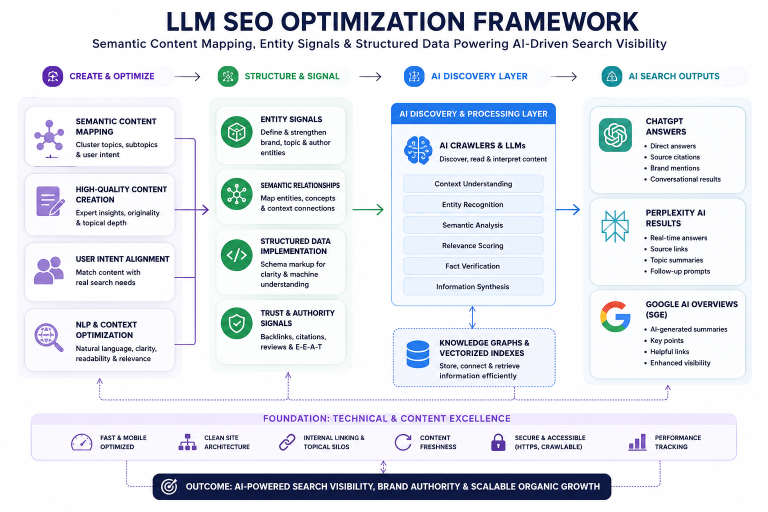
AI Optimizes for Both Google and Answer Engines
In 2026, optimizing only for traditional Google rankings is a partial strategy. Your content also needs to be structured for AI answer engines — the systems that power Google’s AI Overviews, ChatGPT browse mode, and Perplexity.
Promoto AI’s Rank on AI Engine solution is built specifically for this dual-optimization challenge: helping your content rank in traditional SERPs and get cited by AI-powered answer systems simultaneously.
Building Your AI-Driven SEO Workflow in 2026
Here’s a practical, repeatable workflow that integrates the tools and strategies covered above:
Step 1 — Keyword Foundation Run intent-based keyword research using an AI tool that clusters topics semantically, not just by volume. Identify featured snippet opportunities and questions that map to your audience’s real search behavior.
Step 2 — Content Density Audit Before publishing or optimizing existing pages, check keyword density across all page elements. Confirm your primary keyword appears naturally in your title tag, H1, first paragraph, at least one H2, and your meta description.
Step 3 — Technical Health Check Run a full site audit covering broken links, redirect chains, duplicate meta tags, missing alt text, and page speed signals. Flag server status issues and confirm your sitemap is properly submitted via Google Search Central.
Step 4 — Schema Implementation Add structured data to your top-performing pages first. Prioritize FAQPage, HowTo, Article, and Product schemas based on your content type. Validate every implementation using the Promoto AI Schema Validator.
Step 5 — Backlink Profile Review Analyze your existing backlink profile before any new link building. Use a link analyzer tool to identify toxic domains and over-optimized anchor text. Then build new links with varied anchor text from topically relevant sources.
Step 6 — AI Visibility Optimization Structure your content with clear definitions, concise answers to common questions, and proper entity mentions. This signals to AI answer engines that your content is a reliable, citable source — which is where the future of SEO tools is unambiguously heading.
What the Best SEO Tools in 2026 Actually Do Differently
The market is flooded with SEO tools. The ones that genuinely move rankings in 2026 share three characteristics that older tools don’t.
They’re predictive, not just diagnostic. Instead of reporting what happened, they surface what’s likely to happen if you don’t act — before rankings drop.
They’re connected, not siloed. According to research from Ahrefs and Semrush, the most impactful SEO improvements typically require changes across content, technical infrastructure, and link profiles simultaneously. Tools that only cover one dimension give an incomplete picture.
They optimize for AI search, not just traditional SERPs. The emergence of AI Overviews and LLM-powered search has fundamentally changed what “ranking” means. As Moz regularly reports, visibility in AI answers is increasingly becoming its own metric, separate from position 1 rankings.
Key Takeaways
- Most ranking problems are technical and structural — not content quality issues alone.
- Keyword density, schema markup, backlink profile health, and server uptime are four commonly ignored signals that compound over time.
- AI-driven SEO strategies connect these signals into a single, actionable workflow rather than treating each as a separate problem.
- In 2026, optimizing for AI answer engines is no longer optional — it directly impacts how often your brand appears in AI-generated responses.
- The best SEO tools combine predictive intelligence, cross-signal connectivity, and dual optimization for both traditional search and AI-powered search.
- Free tools like Promoto AI’s Keyword Density Checker, Link Analyzer, and Server Status Checker are practical starting points for diagnosing hidden gaps today.
Conclusion
The websites that dominate search in 2026 aren’t necessarily the ones with the biggest content budgets or the most backlinks. They’re the ones with the cleanest technical foundation, the most semantically structured content, and the smartest workflows for connecting keyword intelligence to real optimization decisions.
The hidden SEO gaps covered in this guide aren’t exotic edge cases. They’re the everyday issues that quietly suppress rankings for thousands of websites while their owners focus on content production and wonder why organic traffic won’t grow.
AI-driven SEO strategies don’t eliminate the need for good judgment — they amplify it. They help you find what’s broken, prioritize what matters most, and execute fixes at a scale that no manual workflow can match.
If you’re ready to stop guessing and start diagnosing, explore Promoto AI’s full suite of free SEO tools and the AI Content Generation platform purpose-built for exactly this kind of intelligent, connected SEO work.
The gap between where you rank and where you could rank is almost always smaller than you think. You just need the right tools to see it.
More Articles
How AI Search Snippet Optimization Boosts Organic Visibility
Automating SEO Workflows with PromotoAI: A Comprehensive Guide
How to Choose the Best AI Content Tool for Scalable Organic Growth
How AI Search Snippet Optimization Boosts Organic Growth Strategies
How AI Content Visibility Boosts Organic Growth Across Digital Platforms
Frequently Asked Questions
What are AI-driven SEO strategies and how are they different from traditional SEO?
AI-driven SEO strategies use machine learning and natural language processing to analyze search intent, identify technical issues, and optimize content across both traditional search engines and AI-powered answer engines like Google AI Overviews and Perplexity. Unlike traditional SEO, which relies heavily on manual audits and single-signal analysis, AI-driven approaches connect keyword research, technical health, content structure, and backlink signals into one integrated workflow.
What are the best SEO tools to use in 2026?
The best SEO tools in 2026 are platforms that combine keyword research, site audit automation, backlink analysis, schema validation, and AI search optimization in a single dashboard. Promoto AI offers a complete suite that includes a keyword research tool, link analyzer, broken links checker, meta tag analyzer, and schema validator, alongside its full AI content and analytics platform.
How does a keyword density checker improve on-page SEO?
A keyword density checker scans your page content and shows the percentage frequency of your primary and secondary keywords across body text, headings, and metadata. This helps ensure your page signals strong relevance to search engines without over-optimization, which modern algorithms penalize. Promoto AI’s Keyword Density tool provides a fast, free analysis of any URL.
Why is schema markup important for AI search visibility?
Schema markup — also called structured data — provides explicit signals to search engines and AI answer systems about what your content represents. Pages with properly implemented schema are more likely to earn rich results in traditional SERPs and be cited accurately by AI answer engines. Schema.org defines the vocabulary, and tools like the Promoto AI Schema Validator help you confirm your implementation is error-free.
What does a site audit actually check and how often should I run one?
A comprehensive site audit checks for broken links, redirect chains, duplicate or missing meta tags, slow page speed, crawl errors, missing image alt text, canonical issues, and sitemap health. In 2026, site audit best practices recommend automated, continuous auditing rather than periodic manual reviews — especially for websites with more than 100 pages. Promoto AI’s Broken Links and Meta Tag Analyzer tools offer a solid starting point.